
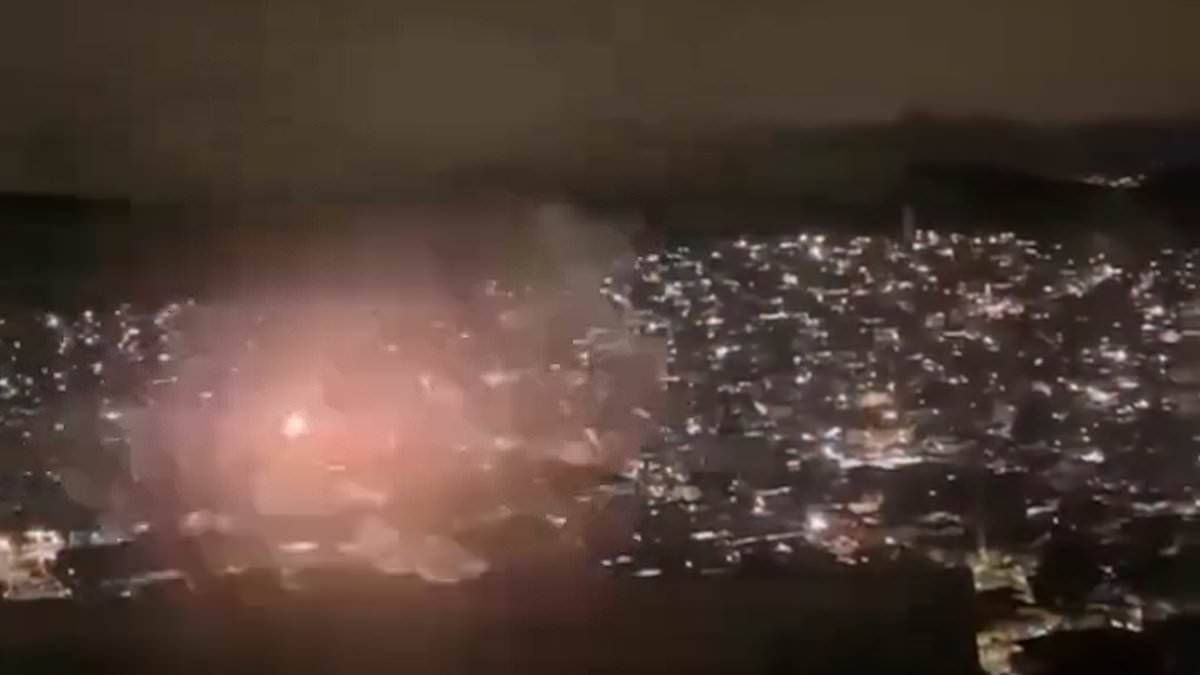
Rio de Janeiro's favelas erupted with celebratory gunfire after left-wing Luiz Inácio Lula da Silva won a historic fourth term in a shock result that defied polls.Lula won 51.7 per cent of the vote, compared to 48.2 per cent for challenger Senator Flavio Bolsonaro. Lula remains a revered figure on the region’s left, having governed Brazil from 2003 to 2010, when leftist leaders held power across much of Latin America. Lula's supporters erupted in celebration, with swarms of Brazilians flooding streets draped in the country's flag to mark his dramatic victoryIn footage shared on social media, gunshots rang out as residents fired bullets into the air in celebration. Elsewhere, fireworks lit up Rio's night sky, a separate video showed. In Sao Paulo, thousands of people dressed in red, the colour of Lula's Workers' Party, packed central squares and waved banners while setting off flares.Despite Lula's big win, the Brazilian currency and stock market tumbled as the surprise re-election of the Leftist leader sparked panic among investors. Rio de Janeiro's favelas erupted with celebratory gunfire after left-wing Luiz Inácio Lula da Silva won a historic fourth termSupporters Lula gather at Avenida Paulista in Sao Paulo after the 80-year-old won a fourth termThe real dropped by nearly 12 per cent against the US dollar when trading began on Monday after Lula, 80, clinched a historic fourth term in a tight election on Sunday.The benchmark Bovespa stock market index fell 10 per cent at the opening in Sao Paulo – triggering a circuit breaker safety mechanism that forced trading to be halted.Jerson Zanlorenzi, head of equities and derivatives trading at BTG Pactual in Sao Paulo, described the election result as ‘a tsunami that will hit all Brazilian assets’. In New York, an exchange-traded fund tracking Brazilian stocks slumped as much as 26 per cent as investors expecting right-wing challenger Bolsonaro to win and usher in a period of fiscal responsibility dumped their holdings. Lula, who convinced an extra 10 million voters to support him in the runoff, is expected to take office on January 5, 2027, for his fourth non-consecutive term. He will serve as a counterweight in a region where leaders are shifting to the right and aligning with US President Donald Trump. Bolsonaro, son of former President Jair Bolsonaro, promised to cosy up to the Trump administration.In a press conference Sunday, Bolsonaro said he planned to request an annulment of the election following a chaotic extension of voting at the request of both candidates.However, it’s unclear what legal avenue he would seek to do that. Celebrations in Sao Paulo. Lula defeated Flavio Bolsonaro with 51.7 percent of the vote, compared to Mr Bolsonaro's 48.2 per cent Right-wing candidate Mr Bolsonaro, son of imprisoned former president Jair Bolsonaro, casting his vote early on Sunday morningLula pulled off a dramatic turnaround after a shock second-place finish in the first roundHis father also contested his loss to Lula four years ago and now serves a 27-year prison sentence for a coup attempt.Bolsonaro had finished first in the election's first round and hoped to revive his father's far-Right movement and pardon him.The shock result defied polls, precedent and global anti-incumbent sentiment to put the brakes on a wave of Right-wing election victories across Latin America.At times, Lula's re-election looked like a long shot, as voters soured on him and his Workers' Party after years of corruption scandals and rising prices, while sweeping societal changes left the former metalworker and union leader looking out of touch with an increasingly app-based economy and its growing ranks of informal workers.But Lula's victory marks another comeback in a career full of them. He was jailed from 2018 to 2019 on corruption charges that were later overturned, paving the way for him to beat Jair Bolsonaro in the 2022 election.Speaking after his victory, Lula said Brazil 'will not accept being anyone's backyard', in reference to the United States. The hotly contested election became, in effect, a referendum on whether Brazil remains one of Latin America's few Leftist nations or joins a regional swing to the Right championed by Trump. 'Brazil can't stand another four years like this; everyone's life has gotten worse,' said Bolsonaro outside a polling booth. Supporters of Lula celebrate in Rio de Janeiro after their candidate won the presidential election A supporter of Brazil's presidential candidate Flavio Bolsonaro of the Liberal Party (PL) reacts with dismay after the preliminary results of the presidential election Supporters of Lula's the Workers' Party embrace and weep with joy afterthe victory Lula supporters embrace as they celebrate his presidential win Lula celebrates after the results of the general eection Lula supporters celebrate with hand gestures of an 'L' in honor of him Bolsonaro had said he would hand Brazil to 'the Lord Jesus Christ' and had vowed to crack down on crime and slash government spending if victorious.During the campaign, Lula pointed to a track record of falling poverty and inequality, while unemployment, illiteracy and deforestation hit record lows during his third term.He warned his rival would cut welfare spending, backslide on social advances and hand over Brazil's sovereignty to US President Donald Trump, whose State Department led a campaign to get Bolsonaro back to power.Lula's win deprives Mr Trump of a major addition to what has been a growing bloc of friendly Right-wing Latin American governments that have embraced Washington's agenda on security and migration.Celso Amorim, a former Lula foreign minister, told Reuters the Leftist 'would be very important for establishing a point of balance in Latin America. Lula is that balance.Lula becomes the first candidate since Brazil's return to democracy in the 1980s to be elected after finishing second in the first round.Lula, who was president between 2003 and 2010, campaigned on a potent mix of pragmatism and populism that has shaped his career in national politics for half a century, rolling out a slew of reforms aimed at improving the lives of workers and poor Brazilians.These gained steam with late-campaign pledges that ranged from free nationwide weekend public transport, which has to be formally submitted to Congress, to a 15 per cent increase in his trademark welfare programme that is already being implemented.Lula also championed a constitutional amendment that became Brazil's biggest labour reform in decades, which passed with wide support in Congress.But Lula's fourth term could be his most difficult yet, after Brazil elected its most conservative Congress since returning to democracy in the 1980s.
Rio's favela slums erupt with celebratory gunfire after left-wing president Lula's 'tsunami' election win as Brazil's stock market tumbles
Full Article
Original Source
Read the full article at Dailymail →KhanList aggregates and links to publicly available news content. We do not host full articles from third-party sources. Always verify important information with original sources.