
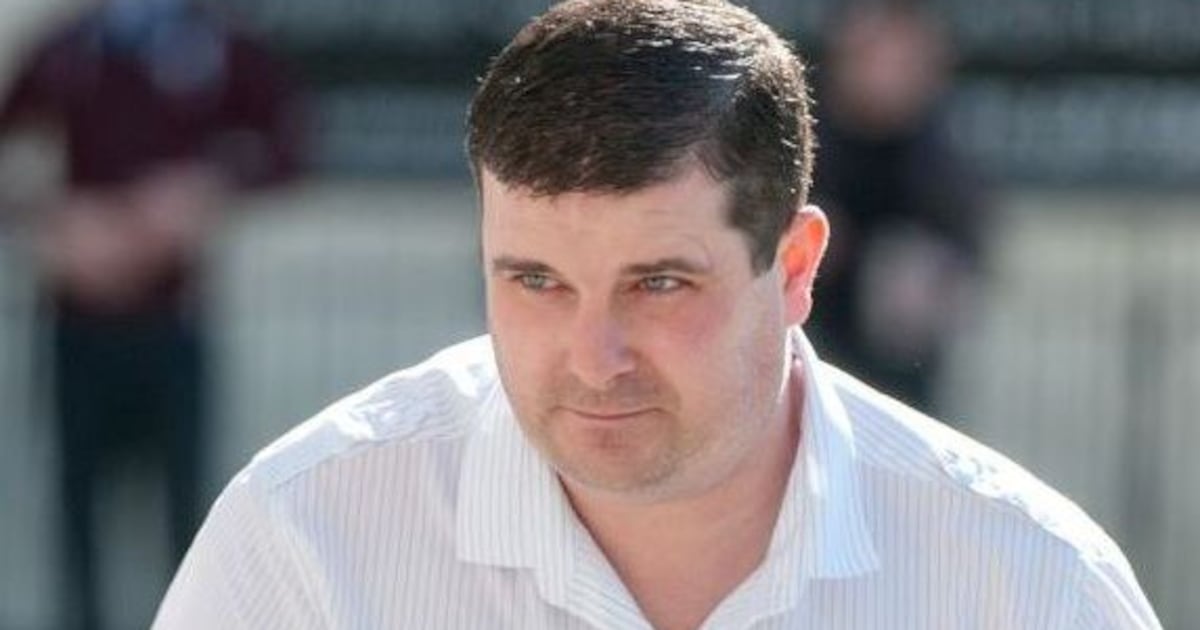
A career criminal who was the ringleader of a gang that kidnapped and tortured Quinn Industrial Holdings (QIH) director Kevin Lunney has appealed to the Supreme Court against the legitimacy of his conviction. Alan Harte (45) was convicted by the non-jury Special Criminal Court in December 2021 of causing serious harm to and falsely imprisoning Lunney in 2019. The three-judge court sentenced him to 30 years in prison.Harte, formerly of Island Quay Apartments, East Wall, Dublin, had what the sentencing judge said was a “ringleader” role in the kidnap and torture of Lunney at a yard in Drumbrade, Ballinagh, Co Cavan, on September 17th, 2019.Harte and others abducted Lunney near his home, forced him into the boot of a car and took him to a container. They stripped him to his boxer shorts, doused him in bleach, beat him and carved the letters QIH into his chest with a Stanley knife. They threatened him and his family and told him to resign as a director of QIH. READ MOREHarte was found to have inflicted most of the serious injuries on Lunney, including the knife wounds to his face and torso. He challenged his conviction at the High Court and Court of Appeal, arguing that the three judges may have returned a majority rather than unanimous verdict. He also raised an issue whereby when a person is convicted by the Special Criminal Court, they are not informed whether the court’s verdict is unanimous or by majority.Harte has made an application to the Supreme Court against the Special Criminal Court, the Director of Public Prosecutions and the Attorney General. His lawyers on Thursday submitted that he was entitled to the same trial in a non-jury court as an accused would receive in a jury court regarding the numbers required for any majority verdict.Michael O’Higgins, counsel for Harte, said a guilty verdict delivered by a jury had to be delivered at a minimum of 10 to two, in contrast to a Special Criminal Court judgment which could be possibly delivered by two to one. It was submitted that Harte’s conviction could be at risk of being unlawful and unequal if compared with the numbers required for a 12-member jury verdict.[ Seán Rooney inquest: Senior officer ‘assumed the worst’ when he heard gunshots on callOpens in new window ]O’Higgins submitted that a case before a jury was therefore more difficult to prove and said the three-judge court had a “lower” threshold for any verdict. He said judges were obliged in law to collectively give reasoning for their judgments, as opposed to a jury, which retains anonymity and is only charged to find a not guilty or guilty verdict. Harte’s side submitted that there was no rational basis for withholding whether the verdict of a three-judge court was unanimous or by majority, and that the unequal treatment of the applicant breached the Constitution.O’Higgins submited that a dissenting judge in a two-to-one guilty verdict delivered by a Special Criminal Court would not be in line with what he described as “the gold standard” of the higher majority sought in jury trials. Counsel also said there was a “lack of transparency”, as the three-judge court did not have to acknowledge in public whether a decision was unanimous or by majority.Remy Farrell, counsel for the State, said it was “a leap” to suggest that jury trials were a “template” for other courts and that “fundamental fairness is not the exclusive province of jury trials”.He said the comparison of jury trials to non-jury trials was a question of applicability before the Supreme Court but submitted the comparison to be “inapposite”. The overriding existing concept of a fair trial, as enshrined in the Constitution, was applied throughout all modes of trial, he said. O’Higgins said the appeal was based on equality, transparency and fair legal procedures.The Supreme Court reserved its judgment.
‘Ringleader’ in attack on Kevin Lunney appeals legitimacy of conviction to Supreme Court
Full Article
Original Source
Read the full article at Irishtimes →KhanList aggregates and links to publicly available news content. We do not host full articles from third-party sources. Always verify important information with original sources.