
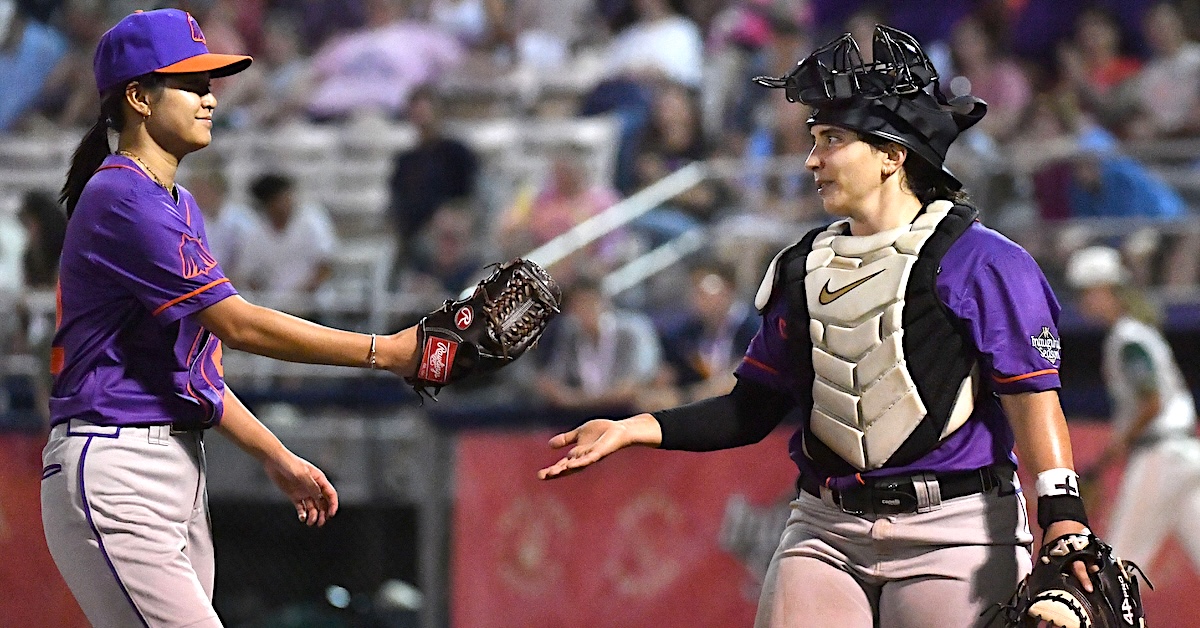
Ron Johnson-Imagn Images The Firebells took on the Hunters in a best-of-three postseason series that began last Wednesday. The WPBL’s regular season had concluded three days prior, with San Francisco holding the league’s best record at 10-5, while Boston finished the year at 4-11. Despite the dramatic difference in winning percentage between the one-seed and the four-seed, the Hunters made the series closer than the sweep suggests. The Firebells won the first game of the series 6-4, then came away with a 9-6 victory in Game 2. Given that the average margin of victory in a WPBL game is over five runs, the Hunters at least forced the Firebells into a save situation to close out both games — a feat they had only managed in two of their 11 regular season losses. But even though the Hunters looked better on the postseason stage, they still didn’t have the firepower to go toe-to-toe with the Firebells’ league-leading offense. Kelsie Whitmore, who finished the regular season tied for the league lead in home runs and was second among qualified hitters in OPS, started Game 1 of the series on the mound for the Firebells. Whitmore’s 24 innings pitched ranked second in the league during the regular season, while her 5.25 ERA and 1.92 WHIP both placed sixth (minimum 15 IP). On Wednesday, Whitmore threw 68 pitches over five innings and allowed six hits, two walks, and three earned runs with two strikeouts. Though her final pitch count was fairly efficient, Boston hitters were patient, working Whitmore for six three-ball counts. During the regular season, she had reached a three-ball count just seven times total. But though Whitmore is at times prone to missing the zone with non-competitive pitches, it’s rarely because she’s lost her feel for the zone completely. It’s common for her to both miss wildly and paint the black multiple times within the same plate appearance. Which means laying off pitches outside the zone is less likely to force Whitmore to either pipe a fastball down the middle or risk yielding a walk. As such, those six three-ball counts led to two walks and only one instance of solid contact (a fly ball single to left from Hunters third baseman Denver Bryant). Nevertheless, Whitmore was pitching through some traffic on the basepaths, and at various points in her outing, she got by with a little help from her friends in the field to prevent the Hunters from putting up a big inning. First, catcher Alexia Jorge clearly had a well thought-out game plan for attacking Boston’s hitters. The Firebells had played the Hunters in three of their last five games to close out the regular season, and given how the standings looked at the time, San Francisco could be fairly confident that it would be facing Boston in the first round. That gave Jorge the opportunity to gather plenty of data on the opposing hitters from her vantage point behind the plate. Teams in the WPBL do have access to Trackman data that they can use to generate heat maps and put together analytical scouting reports, but in a new league with small samples, the visual scouting report based on a catcher’s observations of the swings taken in response to various pitch types, locations, and sequences is an important supplementary resource. Jorge, the pitchers, and the coaching staff surely collaborated on the game plan, but Jorge was the one putting the fingers down (literally, since there’s no PitchCom in the WPBL). To understand how well Jorge and the pitching staff executed the game plan, look no further than Hunters right fielder Molly Paddison, who logged three strikeouts with runners in scoring position. The strategy to Paddison was simple: Spam low fastballs. Some were geared toward getting chases on the outer half, while others aimed to jam her inside. Jorge did mix in the occasional heater at the top of the zone. Basically, just often enough to keep the possibility front of mind. Whitmore confirmed during her postgame media availability that the fastball-heavy diet was all a part of their master plan against Paddison. “Until someone proves they can capitalize on a certain pitch, you’re going to continue to be aggressive with certain things,” she said. Paddison struggled to catch up to fastballs from both Whitmore and Liz Gilder, who got the final two outs for the Firebells. When Paddison was on time, the location made it difficult to get her swing on plane. Paddison’s last eight plate appearances against the Firebells featured a similar approach. Her best results over that span came on pitches below the zone that she was able to golf into the outfield. You Aren't a FanGraphs Member It looks like you aren't yet a FanGraphs Member (or aren't logged in). We aren't mad, just disappointed. We get it. You want to read this article. But before we let you get back to it, we'd like to point out a few of the good reasons why you should become a Member. 1. Ad Free viewing! We won't bug you with this ad, or any other. 2. Unlimited articles! Non-Members only get to read 10 free articles a month. Members never get cut off. 3. Dark mode and Classic mode! 4. Custom player page dashboards! Choose the player cards you want, in the order you want them. 5. One-click data exports! Export our projections and leaderboards for your personal projects. 6. Remove the photos on the home page! (Honestly, this doesn't sound so great to us, but some people wanted it, and we like to give our Members what they want.) 7. Even more Steamer projections! We have handedness, percentile, and context neutral projections available for Members only. 8. Get FanGraphs Walk-Off, a customized year end review! Find out exactly how you used FanGraphs this year, and how that compares to other Members. Don't be a victim of FOMO. 9. A weekly mailbag column, exclusively for Members. 10. Help support FanGraphs and our entire staff! Our Members provide us with critical resources to improve the site and deliver new features! We hope you'll consider a Membership today, for yourself or as a gift! And we realize this has been an awfully long sales pitch, so we've also removed all the other ads in this article. We didn't want to overdo it. Paddison was not in the lineup for Game 2, but Hunters manager Jemile Weeks denied that it was a performance-based decision. “That’s a move you make based on knowing your players, getting familiar with players, understanding where their confidence is,” Weeks told reporters following the series loss. Weeks seems to pride himself on being a player’s manager who doesn’t throw his team under the bus, but I’m not sure implying that a player sat for a game because she was demoralized by an opponent’s strategy is any better than the implication that she was benched for striking out. In addition to Jorge’s contributions behind the plate, second baseman Amanda Gianelloni made a slick play behind Whitmore to end the fourth. Heading into the inning, the Firebells held a modest 2-1 lead. First baseman Alli Schroder led off with a single, Bryant followed with a single of her own (the one following the three-ball count referenced above), and then both runners moved up a base on a wild pitch. Whitmore, however, battled back to get outs on the next two hitters. Paddison worked a full count before striking out on a foul tip that settled into the glove of Jorge, and left fielder Ticara Geldenhuis popped out to Andréanne Leblanc at first. With the Hunters on the cusp of leaving two runners stranded in scoring position, catcher Beth Greenwood lashed a center-cut fastball to the gap in right-center field. Ela Day-Bédard, tasked with covering center field while Whitmore toed the rubber, ranged over and attempted a diving grab, but couldn’t make the play. She wound up doing an inelegant barrel roll as the ball skipped past her, and perhaps as a result, was a late scratch for Game 2 on Friday due to a stiff neck. After Day-Bédard missed, right fielder Skylar Kaplan cut the ball off as Greenwood broke for second, but her throw to the base was a few feet off line. Shortstop Joely Leguizamon was nearly able to twist and slap a tag on Greenwood as she dropped into her slide, but the catcher made a last-second adjustment and avoided the glove as she belly-flopped toward her. As all of that was happening, both Schroder and Bryant crossed the plate, putting the Hunters up 3-2. All of that set the stage for the potential disaster that nearly followed. After Whitmore walked second baseman Suzuka Yamamoto (the third three-ball count of the inning), shortstop Raine Padgham stepped to the plate. She ran the count to 2-2, then Whitmore placed a low fastball just outside the zone, designed to induce either a whiff or weak contact. Padgham obliged and poked a soft grounder to the right side, but the contact was so weak that it nearly became a problem for Gianelloni. The slow roller required her to charge in on the ball, but with Yamamoto on first, she had to briefly pull up (if you watch closely, you can see her stutter-step), to allow Yamamoto to pass, then resume closing in on the ball. Because she was slightly delayed in getting to the ball, she had to field and then snap the ball to first with her momentum still moving forward. Her one-legged throw found Leblanc’s glove with a step to spare, making this one of those plays that looks routine, when it absolutely is not. Whitmore exited the game after striking out Paddison to end the fifth, but Gianelloni’s reel of deceptively easy plays continued. After the Firebells retook the lead, 4-3, in the bottom of the fifth on a series of hits from the middle of the order, Rosi Del Castillo entered to pitch the top of the sixth in relief of Whitmore. Hunters left fielder Ticara Geldenhuis worked a walk to lead off the inning, then stole second. Del Castillo got Greenwood to strike out swinging and retired Yamamoto on a grounder to short, with Geldenhuis advancing to third. Once again, Padgham dug in with two outs and a runner in scoring position. After taking four pitches from Del Castillo, Padgham reached out and poked a low-and-away changeup down the right field line. Since she had the best angle on the ball, Gianelloni raced over to make the play on the outfield grass just behind first. The ball landed in her glove as her momentum sent her tumbling forward into foul territory. She landed on her wrist and the ball came loose. As she rolled onto her back, cradling her wrist, Kaplan recovered and prepared to throw the ball back to the infield, but by that time Geldenhuis had crossed home and Padgham was standing on second. The catch didn’t count, but the ball was ruled foul, since Gianelloni’s arm appeared to cross the left field line as she first made contact with the ball. Geldenhuis was sent back to third and Padgham back to the batter’s box. Gianelloni was checked out by a trainer, but remained in the game. And to be clear, that wasn’t the part that was deceptively easy; that looked like it hurt a whole lot. When play resumed, Jorge and Del Castillo went right back to pitching Padgham on the outer half. This time Padgham popped it up in fair territory and Gianelloni made the routine catch, but given how thoroughly she’d gotten her cage rattled mere moments prior, and that she was traversing the slanted part of the turtleback field, there’s no way it was as easy as she made it look. The Hunters did finally scratch that fourth run across in the seventh, but that was the last of their scoring efforts; by that time, the Firebells had six runs on the board to secure the win. San Francisco’s scoring occurred two runs at a time in the third, fifth, and sixth. Like the Firebells, the Hunters succeeded in avoiding a big inning, but one additional small inning proved to be the difference maker. Part of Boston’s strategy for preventing a big inning involved limiting the damage done by the team’s most potent slugger. Twice, the Hunters chose to walk Whitmore rather than let her bat with a runner on base. The first instance came in the third inning with one out, runners on the corners, and Boston up 1-0. In the first inning, Whitmore offered at the first pitch she saw from Hunters starter Kate Blunt and grounded out to third. But that was with the bases empty, and as Weeks told reporters after the game, “She’s a big-inning bat.” He conceded that Blunt would’ve preferred to pitch to Whitmore, but he made the call. There’s been a bunch of public research over the last several years detailing why intentional walks are rarely worth the risk of putting a runner on base, but there are carve outs for specific players and situations, and the scoring environment of the league in question matters too. In the WPBL, walking a runner to load the bases with one out increases the run expectancy for the batting team from 1.83 to 2.16, but in the real world, where teams can’t score a fraction of a run, the most likely outcome is two runs either way. By that logic, Weeks didn’t necessarily put his team in a worse position, especially since his stated goal as conveyed in the postgame presser was, “To make them work for the runs, versus trying to get them all in one swing.” He didn’t want Whitmore clubbing a three-run homer. Based on her track record in the league thus far, Whitmore’s odds of going deep sat around 17.2%. Presumably, Weeks thought the likelihood that the Firebells would string together a couple of hits to score the same number of runs was somewhere below 17.2%. But, don’t forget, Kaplan and Leblanc were the two batters behind Whitmore. Kaplan hit for a .490 average during the regular season, while Leblanc checked in at .365. Based on those averages, the probability of the pair hitting back-to-back singles (or better) sat at 17.9%. Suggesting again that Weeks was largely just shuffling deck chairs. Where the intentional walk did have a noticeable impact was on the likelihood that the Hunters would finish the inning without surrendering the lead. To escape a one-out bases-loaded jam, Boston needed the next batter to either strike out, ground into a double play, or hit an infield popup. Kaplan did not strike out even one time during the entire regular season. She’s the only qualified hitter with a zero in the strikeout column. (Next on the leaderboard is Leblanc, with one.) Furthermore, Kaplan grounded into only one double play and hit just two infield popups. If Kaplan didn’t hit into a double play but instead recorded an out that didn’t advance the runner, the Hunters still would’ve needed to retire Leblanc, which is the easier of the two tasks, but still not a gimme. All told, the odds of hitting both legs of that parlay were around 3.9%. Whereas the odds of getting Whitmore to either ground into a double play or make an out that didn’t score the runner from third, followed by any type of an out from Kaplan, were roughly 7.1%. Now, if Weeks wanted to argue that neither of those scenarios was likely enough to merit consideration during the decision-making process, then fine, we can move on to the next intentional walk. In the fifth, Whitmore came to the plate with one out and the bases empty. She dunked a single into left field just in front of Geldenhuis, then later came around to score one of the Firebells’ two runs that inning (a double from Jorge drove in Kaplan for the second run). Then in the sixth, Whitmore’s spot in the lineup rolled around with two outs, a runner on first and the Hunters trailing 5-3. This late in the game, the deficit likely would’ve felt insurmountable if Whitmore had tacked on an additional two runs. This time, walking Whitmore increased the Firebells’ run expectancy from 0.59 to 0.88, but again, in practice, they were likely to score a run either way. But with two outs and one runner in scoring position (rather than one out and two runners in scoring position like last time), the goal of allowing fewer than two runs following an intentional walk was more attainable. The probability of a Whitmore dinger still sat at 17.2%, but for Kaplan et. al. to score two runs, they’d either need three consecutive singles/walks or extra-base hits from at least one of those next two hitters. Some back of the napkin math put the probability of all that coming together at around 13.5%, which made this deployment of the intentional base on balls more justifiable, especially given the late-game impact of an extra run on the Hunters’ win probability. Following the walk, Kaplan singled, scoring the runner from second. Leblanc followed with a walk to load the bases, but Jorge flied out to center, preventing that dreaded second run from crossing the plate. Despite four of the Firebells’ six runs from Game 1 scoring during innings where Whitmore was intentionally walked, Weeks stood by the process that led to the decision and carried the strategy into Game 2. Following a Gianelloni leadoff single, Weeks let Game 2 starter Paloma Benach pitch to Whitmore in the first inning. That decision paid off, as Whitmore flied out to center. A rare popup from Kaplan went for the second out of the first, but then a single, a walk, and an infield hit put San Francisco up 1-0. By the second inning, Weeks was already feeling pressure to keep the game from getting out of hand, and by walking Whitmore, who bats right-handed, he set up a left-on-left matchup between Benach and Kaplan. Whitmore had been set to bat with two outs and a runner on second, so aside from giving Benach the platoon advantage, the calculus around the intentional walk was roughly the same as it was in the fifth inning of Game 1, except that the Hunters had more time to come back if things ended up going awry. And boy did things go awry. Kaplan’s third plate appearance following a free pass was the one where she truly made them pay. On the 1-0 pitch from Benach, Kaplan went deep for just the second time all season, driving a high heater over the wall in right-center field. Through two innings, Benach had allowed five runs on six hits and two walks and struck out one. She gave way to Gigi Schiano, who struggled when asked to start during the regular season, but pitched to a 2.37 ERA when working in relief (including longer outings of up to four innings). Unfortunately, Friday night was not her best showing. Schiano went four innings and allowed four runs on two walks and five hits, including solo homers to Jorge and Whitmore. Overall, Game 2 felt far less dramatic than Game 1. The Firebells jumped out to a lead in the top of the first inning and continued to build from there. They scored all nine of their runs within the first four innings, leaving the Hunters to chip away from behind. Across the two games of the series, San Francisco got some sort of offensive contribution from every hitter in the lineup, and seven players tallied multiple hits. That depth and overall quality in the lineup is what makes efforts to strategize against the Firebells feel hopeless. Because intentionally walking Whitmore to get to Kaplan and the rest of San Francisco’s lineup is a far less effective strategy than if she had a league-average hitter behind her slashing .340/.444/.493. Instead there’s Kaplan, with a regular season line of .490/.552/.627, and then the rest of the lineup, which collectively hit .376/.478/.563. On Monday night, on the other side of the bracket, the Heights and the Queens will play a decisive Game 3, with the winner advancing to face the Fireballs in a five-game championship series beginning on Wednesday. But before we completely move on to the championship series, and say goodbye to the 2026 Boston Hunters, it’s worth remembering how the league went about constructing its first four teams. In most professional sports, when a team finishes last, it’s easy to say the players fell short, or the coaching staff didn’t put them in position to succeed, or the front office didn’t invest enough resources. But in this case, the league used one big player pool to construct each of the four rosters with every incentive to make them as evenly matched as possible. So if one team looked completely outclassed by its peers for most of the season, that was not the fault of the players or coaches. That was on the league for failing to properly evaluate the player pool. The WPBL set this team up to fail by not allowing enough time leading up to the season to scout players in person. The league then made matters worse by not holding a full training camp — where all 30 players assigned to each team could’ve showed up and played together — before making the final roster decisions. Instead, the Hunters got a haphazardly constructed roster with a manager who turned out to be such a poor fit that he was dismissed three games into the season. As of now, little is known about what the WPBL plans to do with the existing rosters heading into next season, but hopefully the league will treat the 2026 Hunters as an opportunity for learning and growth.
Ring the Bells: It’s a San Francisco Sweep in the Semifinal Round of the WPBL Postseason
Full Article
Original Source
Read the full article at Blogs →KhanList aggregates and links to publicly available news content. We do not host full articles from third-party sources. Always verify important information with original sources.