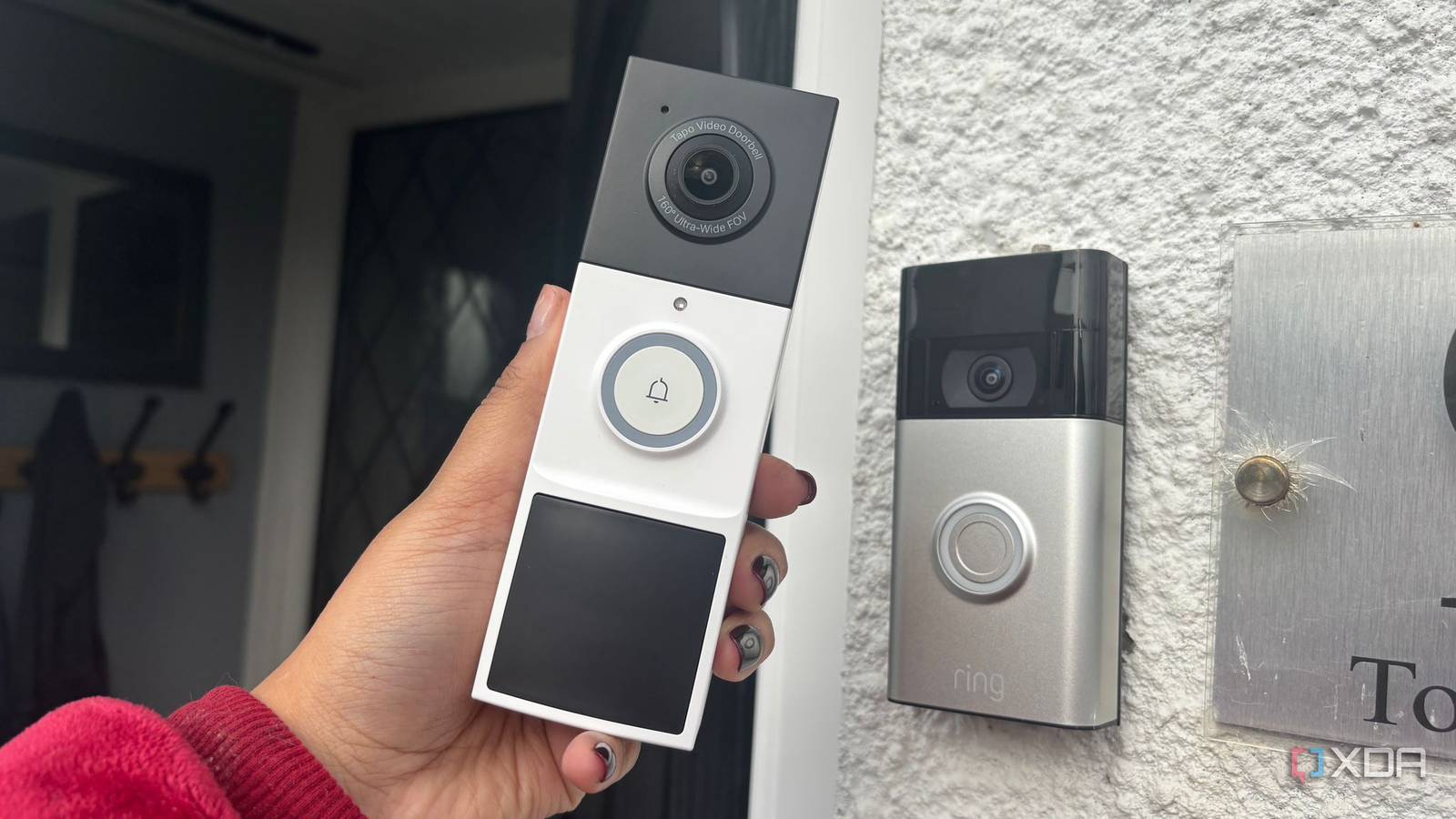
Published Aug 1, 2026, 8:00 AM EDT Jasmine is Software and PC Hardware Author at XDA with years of tech reporting experience ranging from AI chatbots right down to gaming hardware, she's covered just about everything. Whether it's breaking news about the latest AMD NPUs or creating video tutorials on social media platforms, Jasmine has contributed to the world of AI and tech in a variety of ways including interviewing the CEO of Razer, AMD's Director of Product Marketing and the VP of Lenovo. Passionate about gaming and PC technology, she has built countless computers, keyboards and other peripherals - knowing them inside and out. For the longest time, I used a Ring doorbell because it felt like the most popular smart home doorbell option. However, I quickly realized that buying the $100+ device is actually only the admission ticket. To actually use any of the heavily promoted features, like recording video, viewing event history, or receiving personal alerts, you're forced into an ongoing Ring Protect subscription that can cost up to $20 a month. Instead, I decided to pick up a Tapo D210 series smart video doorbell. The one-time hardware purchase gave me access to all of these features without any monthly fees. Ring's subscription wall is a business model choice rather than a technical requirement. Coming in at just $40, which is significantly less than the initial purchase price of a Ring doorbell anyway, Tapo's doorbells give you access to features like AI processing, local storage, and 2K, or sometimes even 4K, resolution. You get access to a range of features which are often paywalled No more monthly fees You get access to a whole load of features with a Tapo doorbell that are typically locked behind paywalls with a Ring doorbell. The most prominent is the on-device AI, enabled by local detection engines hosted on the Tapo doorbell itself. Ring locks its AI feature differentiation, like person, package, vehicle, and pet detection, behind its paid subscription tiers. However, Tapo's on-device NPU/TPU silicon processes computer vision algorithms locally on the door, meaning you still get those instant filter notifications at zero extra cost. You also get the ability to use an onboard microSD card with a Tapo doorbell. It supports up to 512GB, letting you store a whole load of video footage. Local storage eliminates network upload bandwidth saturation and protects footage during internet outages, too. Another benefit is that you have total privacy, as your footage doesn't leave your four walls unless you want it to. This is a stark contrast to Ring's cloud-only video storage. An optional feature that you can turn on is continuous 24/7 recording with a Tapo Doorbell 2. With a battery-powered or even wired Ring Doorbell, they operate strictly on event-triggered motion bursts. However, hardwired Tapo Doorbells can continuously record to local storage 24 hours a day, seven days a week, capturing critical pre-roll context that motion sensors can often miss. A higher pixel density is on offer too As well as a broadened FOV Tapo D210 Video Doorbell Camera is the best investment I've made thanks to the lack of monthly fees. On top of all of the features that you get access to, another benefit of a Tapo doorbell is the actual image physics and aspect ratios that you receive. They make a stark difference to the footage that you're looking at, giving you head-to-toe clarity when compared to a Ring doorbell. A standard 1080p doorbell sensor, compared to Tapo's 3MP/5MP optical sensor, has significantly lower pixel density, and higher pixel density can aid in license plate reading and facial identification. The ultra-wide 180° aspect ratio gives you a much bigger FOV, or field of view, meaning that you can see packages sitting directly on your doorstep threshold, which a traditional horizontal lens can cut off. You can also opt for built-in spotlight integration with a Tapo doorbell, while not all models offer it. The ones that do then enable full-color nighttime recording rather than the washed-out monochrome infrared footage that you might be used to with traditional video doorbells. You're not locked to a specific ecosystem Google Home, Amazon Alexa, and Home Assistant are all supported Tapo D210 Video Doorbell Camera is the best investment I've made thanks to the lack of monthly fees. For those already invested in a specific smart home ecosystem, you'll be glad to know that Tapo integrates seamlessly with both Amazon Alexa and Google Home smart displays for live video feeds and chime alerts, without extra subscription tiers. This means you're not locked into the Amazon ecosystem, unlike with Ring doorbells. You also get the benefit of the doorbell itself coming with its own chime rather than you having to buy it separately, as you do with a Ring doorbell. This chime, separately from Ring, costs an extra $30, making the initial purchase price of your Ring doorbell even more expensive when compared to Tapo's $40 price point. You don't need to pay monthly for a video doorbell Alternatives also come with other perks Of course, Ring popularized the video doorbell, but its business model relies on turning hardware owners into perpetual subscribers, and I don't want to be paying monthly for features which were advertised to me on the box. The Tapo series of doorbells from TP-Link proves that edge processing, local storage, and high-resolution optics can coexist in an affordable subscription-free package. Rather than paying rent on your own front door, you might benefit from switching to a subscription-free video doorbell with a high-end microSD card, allowing you to reclaim your data privacy and enjoy a smarter home with zero recurring payments. Tapo D210 Video Doorbell Camera If you want access to a range of smart doorbell features that are typically locked behind a paywall, then the Tapo D210 Video Doorbell Camera is a great option, coming with local storage, AI detection and recording footage all included.
Ring charges $20 a month for features that come free on a $40 Tapo doorbell
Full Article
Original Source
Read the full article at Xda-developers →KhanList aggregates and links to publicly available news content. We do not host full articles from third-party sources. Always verify important information with original sources.