
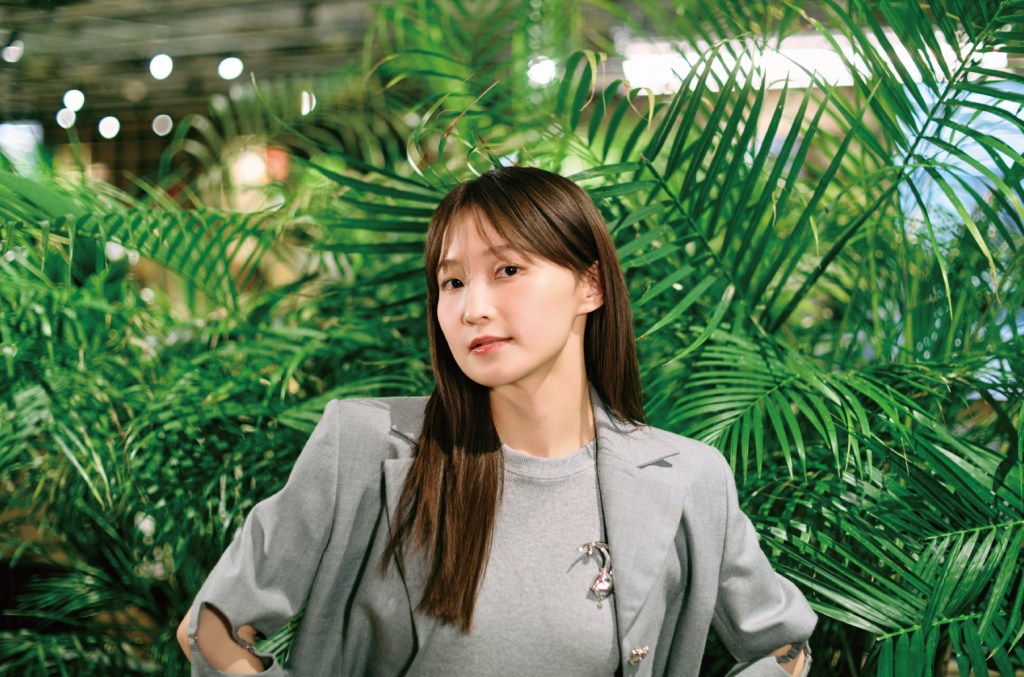
Riho Sayashi spoke with Billboard Japan for the latest installment of its Women in Music interview series. The initiative launched in 2022 to celebrate artists, producers and executives who have made significant contributions to music and entertainment and inspired other women through their work, following the footsteps of Billboard’s annual Women in Music honors. This series featuring female players in the Japanese entertainment industry is one of the highlights of Japan‘s WIM project. Explore See latest videos, charts and news After joining the long-running girl group Morning Musume at 12 and being called the group’s “ace” by her mid-teens, Sayashi walked away from idol stardom at 17 and moved to New York, where no one knew who she was. Following a solo relaunch on her own independent label, she made her major-label debut in 2025. Now the multi-faceted artist continues to broaden her scope of activity, currently co-starring in the TV drama Tsukiatte Agetemo Iikana and performing its ending theme. Billboard Japan chatted with her about where she’s landed after a long and winding path, and what she’s feeling now. You made your major-label debut with avex in 2025, released an EP, went on a nationwide tour, and now co-starring in an currently airing drama series and performing its ending theme. How do you feel about where things stand for you right now? While I’m still going at my own pace, I’ve been blessed with fortunate encounters, ideas and opportunities from so many people around me, and I’m able to do music at a really good pace. With the current drama series, I was also given the chance to take on the challenge of combining acting and music. I’m really happy with where things are. Your major debut came about four years after your relaunch on your own indie label. What made you want to take on the bigger playing field of a major label? When I restarted my music career, I first needed to figure out what direction I wanted to take. That’s why I chose an independent label, where I could move at my own pace, and I built things up step by step, starting from, “Who do I even contact to put on a live show?” As my path started taking shape, I got myself ready for battle, so to speak, with a clear sense of which direction I wanted to take and the kind of messages I want to deliver. I was able to choose to move forward with avex because I’m in that place now. With more people involved, my options and my ideas for what I want to express have multiplied many times over. I truly feel this partnership came together at the right time. As your team grows, is there anything you make a point of never compromising on? When it comes to how I make music, sometimes I’m directly involved in the songwriting and sometimes I’m not. But I always make sure my soul is in a song at the moment it’s born. I start with my own idea of what I want to express and ask others to help me bring that world to life, so a team comes together for each individual song. Making sure that “moment of (a song’s) birth” is sparked by me is something I always value. You joined Morning Musume at 12 and were called the group’s “ace” in your mid-teens. Looking back now, how do you see your younger self, standing amid such high expectations? At first, no matter what I was doing, I savored the joy of standing on the stage I’d dreamed of. Thinking about it now, it’s almost frightening that I was performing on the stage of the Nippon Budokan like that as a junior high schooler. [Laughs] As time went on, I became more conscious of being part of a group with such a long history, and there were more moments when I felt I had to lead the other members in some respects, so I gradually became aware of where I stood. Back then, there were moments when I was under the illusion that I was fighting desperately all on my own. But looking back, I was encouraged so many times by the members beside me, the people around me and the people supporting me, and it was thanks to them that I got to stand on those big stages. I’ve come to feel that much more deeply only after making it all the way through. What led you to decide to leave the group at 17? At that point, I wasn’t really thinking about my career. I couldn’t imagine building an entertainment career on my own at all, but when I pictured my life from my twenties on, I thought, “I need to become more familiar with the feeling of seizing things on my own.” Until then, every day was about being given a mission and going all out toward it. I needed to move away from that — unless I lived in a way where I was the one taking the first step, I couldn’t imagine my life beyond that point. I started to feel a growing unease that maybe that wouldn’t be possible unless I changed my environment. It wasn’t so much “I want to go solo” as it was something more fundamental on a human level, more like, “I want to rebuild myself,” “I need to figure out a new way to live.” Letting go of all that must have taken a lot of courage. It wasn’t so much a decision as a sense of pressure that I needed to grow… that feeling of urgency was stronger. It might be more accurate to say I had no choice but to act. Now that I’m calmer, I don’t know if I could make the same call, but considering the time I’ve spent since then, I feel like it was the right thing to do. After leaving the group, you studied dance and English in New York. What was it like to put yourself somewhere no one knew you as a top idol? When I was in Japan, I felt like I was constantly being watched through something like a security camera. Even though no one meant it that way, to me it felt like that in a subconscious way. But while I was studying abroad, I felt so free because no one knew who I was. It gave me hope that I could think about my life again from as close to a clean slate as possible. I’d remember things like, “Oh, I used to love classroom learning.” Until then, part of me had been bound by the idea of “This is what Riho Sayashi would do,” but in New York, I felt I could truly follow my heart and reach for whatever interested or excited me. That period felt like a depleted tank slowly being replenished. In 2021, you founded your own label, Savo-r, and relaunched your solo career. What resolve did you need to make the choice to create a place for yourself? I was actually planning on getting a job in the U.S. But during a stretch when I was back in Japan for a bit because my visa process was dragging on, a lot of fortunate encounters came together. I felt positive about trusting those encounters and ended up starting my own label. Singing on my own through an indie label had something in common with what I felt when I left the group, about taking responsibility for what I do. And if I was going to step back onto the stage, “dancing, and singing,” the things that first drew me to entertainment, were essential. Being able to take some time in the U.S. made that mindset clear. There are times I worry, “Maybe I’m not the kind of person who can handle staying in the spotlight,” but the people around me have affirmed my desire to take on the challenge. So many of their words have pushed me forward. Every idol’s career after they leave a group is different. Is there anything you value as you walk your own path? The reason I’m able to move through things more lightly than before is that I can work while having the room and leeway to properly live my life. I think that balance is maintained because I’m surrounded by people who understand it, and it’s something I want to always prioritize. Also, of course I want to show things that people can look forward to and enjoy, but I’m always conscious of making sure I put what I want to express into them — of keeping what I express from straying from my own principles. Not trying to make myself into an overly polished image. Even when there are expectations, holding to the line of not meeting any expectations except the ones I can meet. To put it simply, not pushing myself too hard, I guess. [Laughs] During the period when I was charging ahead at whatever was in front of me, I’d sometimes find myself thinking, “What will be left of me without my job?” I think that’s something to always be wary of. If I don’t keep reflecting as I go, I’ll wear myself out emotionally before I know it, so now I think it’s important to make time to pause and come back to myself. This is one of the theme of this series, but how do you think being a woman has affected your work and life? Over the course of my career, there were moments when I strongly felt other people’s expectations of wanting us to stay youthful. At times, that felt excessive and like a burden. Times may be changing, but from what I can see online, I feel the range in which you can get a “passing mark” is still limited by age and appearance. But because I realized on my own that I don’t need to carry that burden, the way I think about how I work and express myself now has changed too. Is there anything you’d like to tell the next generation of women? Whether they fail or succeed, I want them to experiment freely and try things out on their own terms. That said, when it comes to things that are harmful to their health, I feel the adults around them should properly guide them and think about how to prevent it as much as possible. I’d like not only the next generation of women but also the people around them and their environment to be much, much more conscious of building a solid foundation for physical and mental health. In this series, we ask everyone, “Do you feel empowered by music?” As someone who sings, dances and writes songs, what kind of power does music hold for you? I think the amazing thing about music is that even when it’s in another language, you can catch the power the artist put into it and draw strength from it. When I listen to music, my cells come alive and it gives me energy for the day. I’ve always been the type who draws power from the sound itself more than from the lyrics. In everyday life, we tend to think about things only within our own little world, but what’s wonderful about music is that it lets you feel a huge, invisible kind of circle. When something I made because I thought it was cool is loved by others in the same way, I also feel that sense of kinship, or a circle. If you could give advice to your 12-year-old self, in your first year in the business, what would it be? I’d want to tell her, “It’s OK to be more carefree about it.” [Laughs] In my own 12-year-old way, I had pride and wanted to be smart about things and do things well, and that helped me a lot in many ways. But in the end, the moments when I was just giving it everything I had on stage were the most fun, so I think I could have let myself feel things more freely. —This interview by Rio Hirai first appeared on Billboard Japan
Riho Sayashi on the Strength of ‘Not Pushing Too Hard,’ Learned After Walking Away from Idol Stardom at 17: Billboard Japan Women in Music Interview
Full Article
Original Source
Read the full article at Billboard →KhanList aggregates and links to publicly available news content. We do not host full articles from third-party sources. Always verify important information with original sources.