
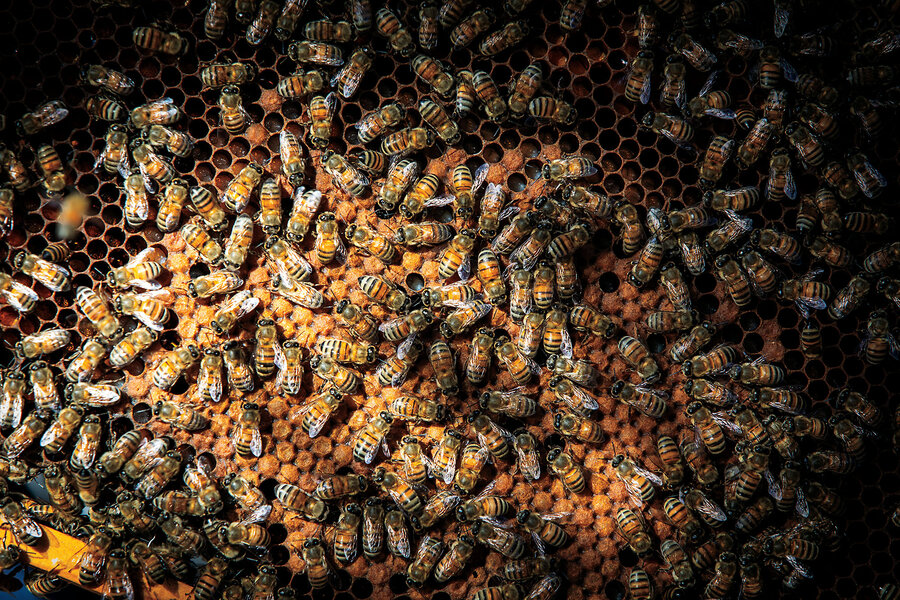
By Curtis C. Morgan, Contributor A honeybee swarm is how the species propagates itself. In spring, once a hive has recovered from winter and built up its strength – more bees, more honey, more queens – about half the colony departs with the old queen before any of the new bees can hatch. They rise up by the tens of thousands and land wherever the old queen leads them: a tree limb, a shrub, the side of a house. Scout bees fan out looking for a more permanent home while the swarm waits, humming, in a mass roughly the size of a football.To an alarmed homeowner, this is a nightmare. To a beekeeper in need of more bees, it is manna from heaven.I had left my name with police and fire departments, the county agricultural extension office, and pest control companies – anyone likely to receive a panicked call about bees. One afternoon that call came, from South Oak Cliff, just south of downtown Dallas, near the Dallas Zoo. The swarm was 20 miles away. I love the thrill of the chase. I got in my 1986 Honda hatchback, and off I went. ***The swarm was on a shrub, which was perfect – low, accessible, hiveable. And it was enormous. I have collected perhaps a hundred swarms in my life and have never seen one like this. It was three times the normal size, possibly the result of two or three swarms combining, which rarely happens. I had brought only one hive box with old honeycomb inside, smelling of home. Before or since, one box was always enough. I put it under the shrub and gave the branch a good sharp whack, and the bees dropped in. Most of them.“Smells like home to me,” they thought, and began setting up housekeeping. The sensible procedure at this point is to leave the hive until dark, when the remaining bees have settled and the stragglers have found their way in. But that meant making a 40-mile round trip and finding my way back through an unfamiliar part of town at night. I opened the back of the hatchback; put the hive and its 30,000 or so occupants inside, overflow and all; and started the motor.***Normally, bees feel the vibration of a moving vehicle and hold on tight. They hunker down. This swarm didn’t get the memo, and a good many bees had no room in the box to settle in. As I pulled onto a busy Dallas street, the bees began flying around the inside of my car.This sounds alarming, but it wasn’t. A swarm has gorged itself with honey before departing the hive, has no brood to defend, and is about as aggressive as any other insect with no reason to sting. I was in no danger. I was, however, surrounded by approximately 30,000 bees in a Honda hatchback on a Dallas city street, and this created an entirely unexpected problem.Other drivers noticed. I had become a rolling distraction, and I was never more distracting than when I was stopped at a red traffic light. At the first such stop, the car alongside me did a double take. Then, the one behind me took notice. Passengers pointed. Drivers craned. People gawked at a man calmly sitting in a cloud of bees.It got worse at every light. By the third intersection, I had developed a strategy: right turn on red. The moment a light turned red, I would ease right and keep moving, removing myself from the center of everyone’s attention and the reach of their pointing fingers. Twenty miles of Dallas traffic, bees orbiting my head, right turns at every opportunity. It was my own waggle dance, the figure eight a bee performs to tell the hive which way to go.***I made it home. I hit the remote, slipped the hatchback into the garage, and closed the door behind me. I turned off the lights – bees orient to light sources, and darkness keeps them calm. I would wait until nightfall to move the hive into my backyard.Within minutes, there was a sharp rapping at my front door. It was one of Dallas’ finest. “What’s this about wild bees?” the officer asked. I doubt he had ever taken a call like this one before or ever would again.A neighbor, having spotted my dash for the garage, had taken the trouble to call the law. I had been nicked. For what offense, I am still not entirely certain – hunting bees out of season, I imagine.I explained my situation. The officer, bemused at being summoned, was sympathetic. In Dallas, as it happens, beekeepers had long ago arranged for a city ordinance permitting any resident to keep an unlimited number of hives on their own property. I was not only innocent but also thoroughly within my rights.The officer left. The neighbor, presumably, backed away from the blinds. I have always wondered what they thought the officer was going to do about it. Deepen your worldviewwith Monitor Highlights.Politics with respectGet political stories with respectful analysis.There‘s a world of new ideas in everyBooks newsletter.There‘s more to life, enrich yours withCulture & Learning weekly.Follow humanity‘s discoveries withScience & Nature stories in your inbox.Gain a spiritual perspectivefrom the stories in your inbox.Want to understand the deeper impact of critical events? Learn the Monitor‘s insight.Already a subscriber? Log in to hide ads. In the dark garage, the bees were already at their housekeeping. After dark, I carried the hive to a sheltered spot in the backyard. Overnight, 30,000 new employees and I had gone into the honey business together.My neighbor saw a menace. I saw manna. By morning, the hive was humming, and the queen was likely laying her first eggs, as if the whole thing had been her idea. In a way, it was. The species had propagated itself once again, with a little help from a beekeeper, a 1986 Honda, and a great many right turns on red. ALREADY A SUBSCRIBER? LoginReal news can be honest, hopeful, credible, constructive.The Christian Science Monitor was founded in 1908 to lift the standard of journalism and uplift humanity. We aim to “speak the truth in love.” Our goal is not to tell you what to think, but to give you the essential knowledge and understanding to come to your own intelligent conclusions. Join us in this mission by subscribing.
Right turn on red
Full Article
Original Source
Read the full article at Csmonitor →KhanList aggregates and links to publicly available news content. We do not host full articles from third-party sources. Always verify important information with original sources.