
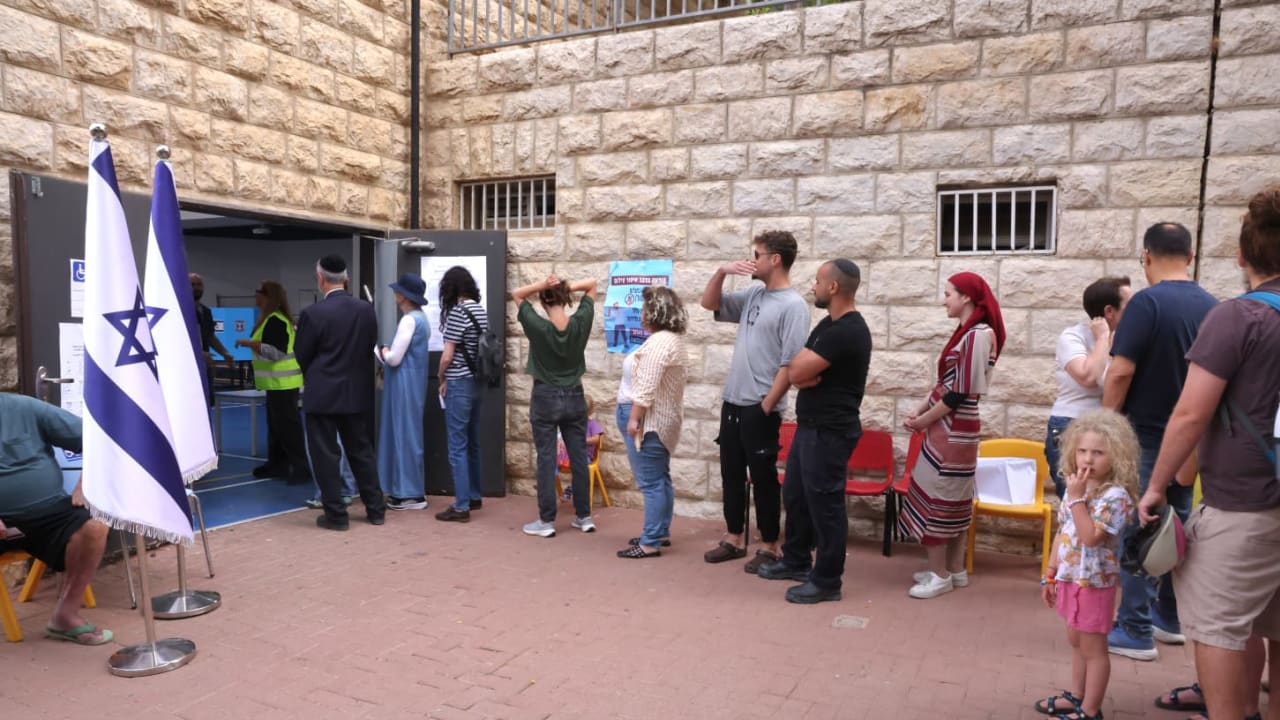
OCTOBER 27, 2026 12:55Security, religion, and loyalty remain the core values Jerusalem residents shared as they prepared to vote in the 26th Knesset elections, with opinions sharply split over whether Prime Minister Benjamin Netanyahu should remain prime minister. The Jerusalem Post recently conducted street interviews at Shuk Mahane Yehuda and on Ben Yehuda Street in the city, where residents were asked who they plan to vote for in the elections and their reasons behind the choice.These individuals dictate the fate of the political dynamic of the country for the next four years. All voters interviewed leaned right, but were split over which party should lead. The interviewees were randomized and remained completely anonymous, with their gender being the only characteristic recorded.In a tight race, with the opposition widening its lead, Yashar party head Gadi Eisenkot remains ahead of Netanyahu. About 60% of Israelis favor a unity government, though votes shifting between right-wing parties could decide whether the bloc reaches 61 seats.Many people in Jerusalem said they feel strongly loyal to Netanyahu. Two voters said they would vote to re-elect him, saying, “He is a great ally to America, America is a great ally to him,” and that “his policies are the right ones to follow.”An Israeli casts a vote during general elections in Jerusalem on October 27, 2026. (credit: Marc Israel Sellem/The Jerusalem Post)Many citizens, however, remained unsure about who to vote for and said they are relying on their families to influence their decisions.A woman in Nachlaot, who said she wants a government that “supports Torah learning” and "lower prices," admitted that “we love Netanyahu, but I don't understand too much politics, so I'm not sure, I have to ask my husband what exactly we are doing”With 120 seats in the Knesset, and 61 needed to govern, the gap between Israel's coalition and opposition blocs has widened to six seats ahead of Tuesday's Knesset election, despite the two largest parties being separated by just two seats, according to a Maariv poll by Lazar Research published Friday. Several people said they resent Netanyahu and the current government and are voting for his rivals, with one man saying, “probably something not in the current government. I'm not sure I can explain, to be honest. I don't like part of their attitude.”Another female supporter of former prime minister Naftali Bennett said that “the list of people that are with him are going to do good for the country and want to make good rules in Israel.”“He really cares about the country and not about populism or making money for himself,” she added.Current voter turnout expected to surpass that of 2022 electionThe Maariv poll also found that the proportion of Israelis who are certain they will vote in Tuesday's Knesset election continued to rise, reaching 81%. The figure suggests a potential increase in voter turnout compared with the 2022 election, when turnout stood at 71%.In 2022, Likud won about 23% of the vote, Yesh Atid about 17.79%, and the Religious Zionist Party 10.84%, according to the official Knesset website.Voters backing a different right-wing party believe that their religious values feel aligned with those of certain parties such as Shas and RZP, both of which are “good for the religious people, the Haredi people,” according to the people of Jerusalem.Two individuals said they will vote for Finance Minister Bezalel Smotrich for a multitude of reasons:“I think I want to vote Smotrich because I'm part of the party... and I believe in the same values, and I think it's the best way for Israel, for the next [few] years,” said one interviewee.“One of them [the reasons] is bitachon (security). It's a bit funny, but he has that I believe in it. Also, I come from the Religious Zionist community, so he gives me things that I believe in and helps me with what I need,” said another.Many people prioritize safety and security, and the street interview data reports one man in Mahane Yehuda voting for National Security Minister Itamar Ben-Gvir for these exact reasons. Additionally, many people say their rabbis advise them not to share who they plan to vote for. 'Just not Bibi'This week’s Maariv poll shows that, nationally, support for the coalition appears to be slipping, and the coalition bloc has weakened by three seats compared with the previous week's poll. In the last days before the vote, akin to the previous poll, 60% of Israelis would prefer the formation of a unity government if the Knesset election produces no clear result. Some voters interviewed in Jerusalem reflected that shift. “I just know I don’t want Bibi,” said a woman in Mahane Yehuda who is leaning toward Bennett, referring to Netanyahu by his nickname.Most, however, said they would back parties in the current coalition, and their answers focused on a right-wing government rather than a unity one. “For sure we want right wing,” said a woman in Nachlaot.Follow us on Google
Right-leaning voters in Jerusalem share core values for future gov't but split over who should lead
Full Article
Original Source
Read the full article at Jpost →KhanList aggregates and links to publicly available news content. We do not host full articles from third-party sources. Always verify important information with original sources.