
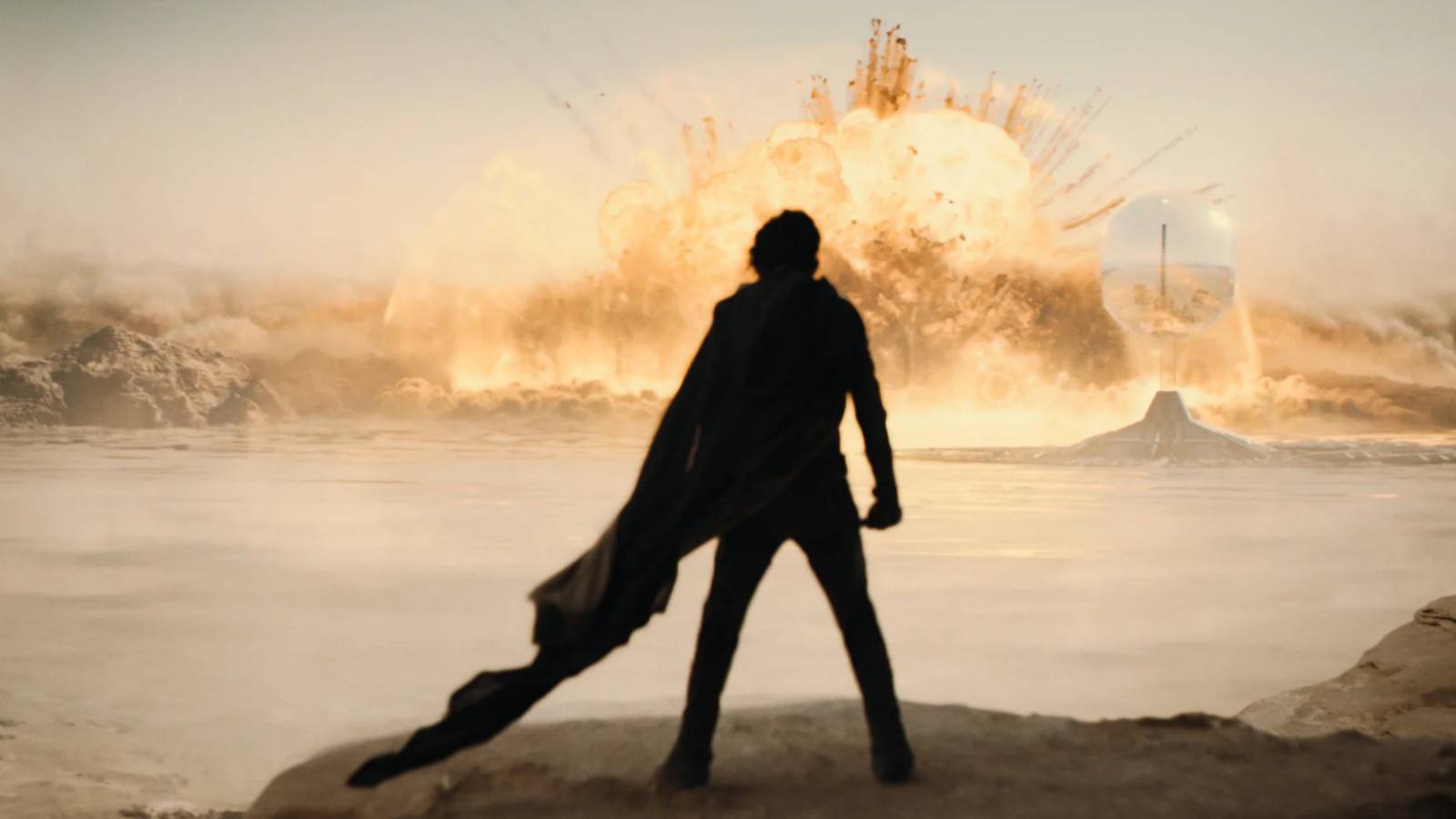
Published Nov 9, 2026, 10:59 AM EST Frank Herbert wasn't happy with Scott's spin on his book Image: Warner Bros Denis Villeneuve’s Dune: Part 3 releases on Dec. 16, completing what has so far been a phenomenal adaptation of Frank Herbert’s seminal space opera. While David Lynch’s surreal 1984 Dune has its defenders, Villeneuve’s version has been far more commercially and critically successful. He’s made some significant deviations from the source material, but overall has proved faithful to its characters and themes while assembling an all-star cast that shines in both dramatic action sequences and smaller scenes of tense intrigue. Villeneuve has already directed what feels like the definitive take on the author’s 1965 masterpiece in Dune: Part 1 and 2 (Dune: Part 3 is based on Herbert’s second book, Dune: Messiah). But in another world, Villeneuve’s adaptation would be compared to the works of one of the greatest sci-fi directors. Before Lynch began working on Dune in 1981, Ridley Scott had been working on an adaptation. Here’s everything we know about that version of Dune, and why it didn’t work out. 1 Scott wasn’t the first director to fail at adapting Dune Image: Sony Pictures Classics/courtesy Everett Collection The success of Herbert’s book quickly attracted Hollywood attention, and producer Arthur P. Jacobs optioned the rights in 1972. He died a year later, and French producer Jean-Paul Gibon led a new attempt in 1974, tapping avant-garde filmmaker Alejandro Jodorowsky to direct. While Jodorowsky’s focus on mysticism and surreal imagery in films like The Holy Mountain and El Topo fit with some aspects of Dune, the production was a disaster. Jodorowsky was going to cast his own 12-year-old son as Paul Atreides and offered to pay the artist Salvador Dalí $100,000 an hour to portray the Padishah Emperor. That project collapsed due to budget constraints and became the subject of Frank Pavich’s 2013 documentary Jodorowsky's Dune. 2 Dune could have reunited Scott and H.R. Giger Image: Sony Pictures Classics/courtesy Everett Collection Scott made his directorial debut in 1977 with the Napoleonic drama The Duelists, which won a Best Debut Film award at the Cannes Film Festival. The release of Star Wars in 1977 inspired Scott to change his focus to sci-fi, and he signed on to direct Alien based on a script from Dan O’Bannon. The writer introduced Scott to the work of Swiss artist H.R. Giger, and Scott recruited him to work on the film’s environment and horrifying creatures. Giger had previously created some designs for sets involving House Harkonnen for Jodorowsky’s Dune, and also created some horrifying concept art for Scott. His vision of the Harkonnen castle included lots of skulls, while the heavily segmented and phallic sandworm looked like it could have been a Xenomorph’s cousin. 3 Frank Herbert and Ridley Scott clashed over the script Image: Warner Bros. Scott was recruited to work on Dune by legendary Italian-American film producer Dino De Laurentiis, who acquired the film rights in 1976 after Jodorowsky’s version was scrapped. The producer hired Herbert to write his own adaptation, which he split into two films like Villeneuve. Herbert was unsurprisingly very faithful to his novel, but the script was long and light on action. Scott only wanted to keep about seven scenes from Herbert’s script and tried to get a new one from Harlan Ellison, who had won acclaim for his 1967 Star Trek episode "The City on the Edge of Forever." Ellison turned the job down, so Scott hired novelist Rudolph Wurlitzer to co-write a new screenplay. Herbert was unimpressed with the results, especially a choice in an early version to add an incestuous relationship between Paul and his mother, Jessica. Herbert also felt the script oversimplified his book. It cut House Atreides war master Gurney Halleck and basically combined his character with the swordmaster Duncan Idaho. The same thing happened with Jamis’ wife Harah and Chani, who winds up marrying Paul after he kills Jamis in a duel. 4 A very different vision for Arrakeen Chiabella James/Warner Bros. Pictures Scott’s version of Arrakeen, the palace on Arrakis, would have been more like a medieval fortress surrounded by a squalid city filled with people begging for water. Scott and Wurlitzer had Paul and Duncan chase Harkonnen agents into the shady surroundings and then get into a barroom brawl involving the Fremen leader Stilgar. For some reason, the script also included multiple people with three breasts, an idea that would eventually come to the big screen in Paul Verhoeven’s 1990 film Total Recall. 5 Tragedy and budget restrictions made Scott abandon the project Image: Warner Bros. Bringing the majesty of Dune to life is extremely expensive. (Villeneuve’s first film cost $165 million.) De Laurentiis and Universal Pictures estimated that Scott’s version would cost $50 million, which would amount to almost $300 million today when adjusted for inflation. The producer thought that could work, but wanted it to be shot at a studio in Mexico City to save on costs. Scott wasn’t impressed with the facilities. The director also wasn’t ready to commit to a production expected to take two and a half years after his older brother Frank died of skin cancer in 1980 at the age of 44. He left the project and De Laurentiis hired David Lynch to write the script and direct the film in 1981. Lynch’s adaptation cost about $41 million and only grossed $30.9 million. Scott shifted focus to adapting another film based on a book by one of the greatest sci-fi authors of all time: Philip K. Dick. Blade Runner, Scott’s adaptation of Dick’s 1968 novel Do Androids Dream of Electric Sheep is widely regarded as one of the best sci-fi movies of all time. It helped establish the cyberpunk genre, and inspired Villeneuve’s 2017 sequel Blade Runner 2049 and the upcoming series Blade Runner 2099. Scott undoubtedly made the right decision by walking away from a project he wasn’t certain about to create a masterpiece. Villeneuve then built on that work, and followed it up by making the best version of Dune fans could hope for.
Ridley Scott’s Failed Dune Movie Paved the Way For His Sci-Fi Masterpiece
Full Article
Original Source
Read the full article at Polygon →KhanList aggregates and links to publicly available news content. We do not host full articles from third-party sources. Always verify important information with original sources.