
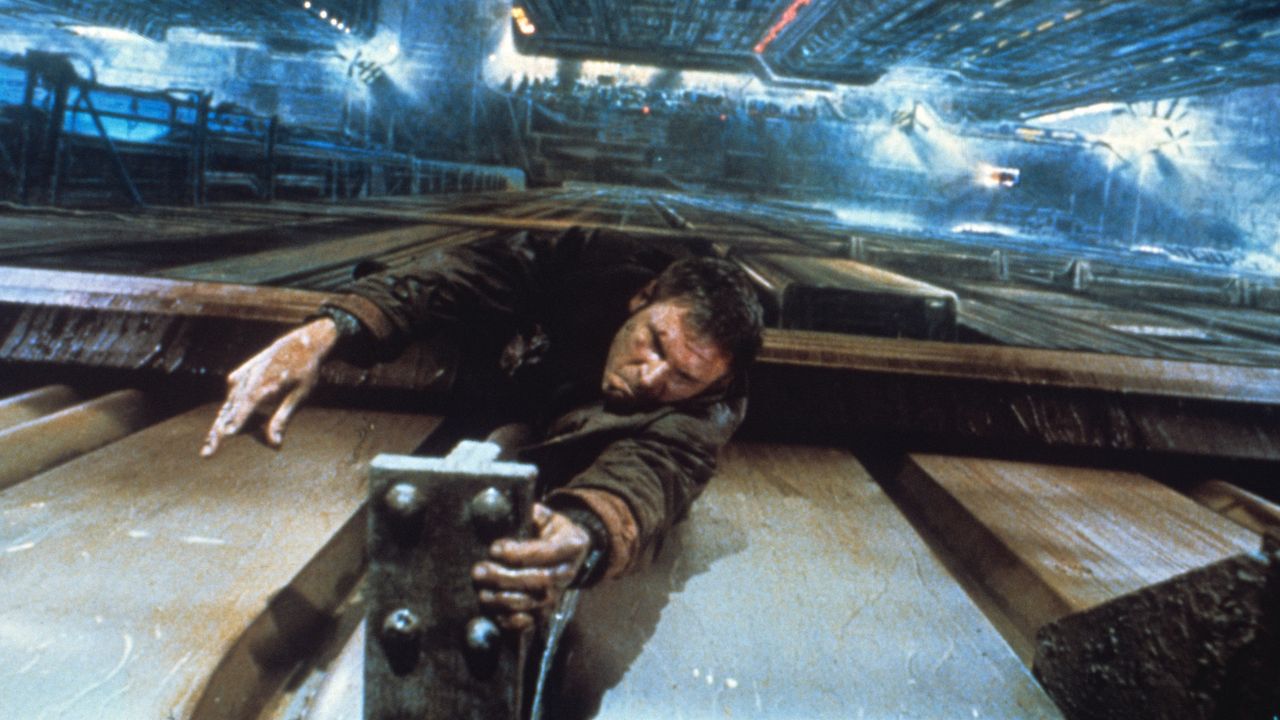
He gave us Alien, Gladiator and Blade Runner. He's almost 90. And he'll probably have another film in the can by the time you finish reading this list.Warner Bros./Everett CollectionInside Ridley Scott, there are two directorial wolves: The stylistically distinct auteur with towering influence over contemporary cinema, and the semi-anonymous studio journeyman who's put out a movie a year well into his 80s and possibly his 90s. These days the pendulum of film-snob appreciation may have swung toward a third Scott, Tony—in terms of pure style, he’s my preferred Scott, even if his era-defining megahit, Top Gun, probably deserves to be downed by a xenomorph. But there’s no denying that Tony’s older brother Ridley Scott has made a handful of the most game-changing and beloved films ever, in genres as disparate as dystopian sci-fi, road movie, and large-scale historical action.In some ways, Ridley’s newest film (for now, that is; this rundown is destined to become outdated as quickly as a “complete” Soderbergh list) dips into all three of those; The Dog Stars is a post-apocalyptic thriller that’s also something of an episodic road picture. It’s also been called dull and workmanlike, which is what marks it as a true Ridley Scott movie—not because all of his movies share those qualities, of course, but because there always exists a possibility when settling in for one of his films that you’ll get something directed by the journeyman who, especially in the 21st century, seems to value finishing the job as much as the finished product.Yet Scott never seems quite as process-obsessed as a Soderbergh or Fincher, whose respective work ethics often feel like the true subject of many of their movies; Scott's films, for one thing, are less intellectualized than Soderbergh’s (for better or worse). While certain themes do recur—characters adrift in a godless world; the terrifying majesty of the unknowable; the psychology of men who lead others into massive and history-altering battles—these movies often feel subservient to some other source, whether it’s a book, the screenplay, or the stars at hand. This lends his work a welcome unpredictability and a fascinating inconsistency. Most of his movies are watchable, by virtue of a technical command of cinematography, art direction, costuming, and (in most cases) visual effects; none will lack memorable mise en scène, and certainly not the way that a Netflix movie often does. (No coincidence that his only streaming-funded movie received a lavish theatrical release first, and seemed to be on streaming largely as a means to securing an even-longer director’s cut.)Some of them have inflated reputations; others feel terribly overlooked even with the obligatory critical reclamations. There may not be a single director who better embodies the push-pull between highfalutin’ auteurism and the turn-of-the-century demands of anonymized studio filmmaking. May Sir Ridley continue that pushing and pulling for another decade. In the meantime, here are his feature films, ranked by whims as inscrutable as Scott’s own.30. 1492: Conquest of ParadiseParamount Pictures/Everett CollectionI know this was a passion project of Scott’s, and as such, I really should have given it a second shot before composing this list. But I couldn’t. In all of its painterly, slow-motion, 156-minute, Adrian Biddle-shot, Vangelis-scored glory, it is a shockingly difficult sit. It is, to be honest, nearly unwatchable. Ultimately important as an eternal asterisk on Scott's filmography; is he actually good at historical epics, or do we just like Russell Crowe?28-29. Legend (1985) and Exodus: Gods and Kings (2014)20th Century Fox/Everett CollectionSpeaking of Russell Crowe: He was Scott’s go-to movie star for much of the 2000s, and as much experience as Scott has with some of the biggest names of the day, Legend and Exodus find some unlikely common ground in making uncommonly weak use of Tom Cruise (in the former) and Christian Bale (in the latter). Neither project is devoid of pleasure—RIP, Tim Curry, you looked amazing in that go-for-broke devil makeup—but for all their movie-star presence, Cruise and Bale can only do so much in movies that are among Scott’s most inert; Legend, a lush, unicorn-centric fantasy, at least has old-fashioned big-studio craft helping it along, while the more involving but less gorgeous Biblical epic Exodus is a product of the practical-meets-CG slurry that Gladiator hath wrought—not to mention some dicey decisions about which actors should be playing which races.27. A Good Year (2006)20th Century Fox/Everett CollectionSpeaking of Russell Crowe, part two: Hiring the onetime Maximus to play up his (possibly nonexistent?) Cary Grant side as a slick businessman who learns to slow down and enjoy the French countryside is not the most astute reading of his strengths. Crowe just doesn’t have that wiseass rom-com banter down pat, though he makes a valiantly misguided effort—partially undone by Scott’s lack of facility for light comedy. He's simply more interested in atmosphere, which tends to be secondary in a truly funny movie. A Good Year was an early sign that Scott’s post-2000 interest in Howard Hawks-style genre-hopping wouldn’t always be enough to get by in those genres.25-26. Black Rain (1989) and White Squall (1996)Paramount Pictures/Everett CollectionWith titles that sound opposite at first but actually sort of mean the same thing, Black Rain and White Squall aren’t companion pieces in any meaningful way except their production-value handsomeness. One follows a middle-aged Michael Douglas as a cop who escorts a suspect back to Japan, only to get embroiled in a yakuza conflict; the other is a sort of group-rate coming-of-age story about teenagers taking a school year at sea in 1961. Sounds like a solid neo-noir and adventure story, respectively, both taking full advantage of the pre-CG lavishness of mainstream studio movies of their day. Scott has used plenty of computer effects as they’ve become more widely available, but he can also shoot the hell out of the real locations both of these movies show off. But both are undone by his semi-regular pacing issues, as they both distend fairly uninspired and unsurprising stories past the two-hour mark.24. Someone to Watch Over Me (1987)Columbia Pictures/Everett CollectionThe steam-lined streets, rich black shadows, and mixture of richly designed sets and strong location work should make for a particularly strong connection between this ’80s romantic/erotic thriller and the earlier noirs that often inspired this subgenre. And when a meatball cop (Tom Berenger) is stalking through well-appointed, mirror-heavy apartment hallways while protecting an imperiled murder witness (Mimi Rogers), Scott’s lush music-video-noir style is in full view. The problem is, Scott doesn’t have much in the way of humor, eroticism, or even garden-variety sleaze, which turns the eventual cop-witness sexual dalliance into a drab, lifeless marital drama with poor Lorraine Bracco playing the beleaguered wife while Rogers and Berenger strike damp-dishtowel-level sparks as the forbidden couple. The shadows and fog have considerably more chemistry; the movie really does look great.22-23. Black Hawk Down (2001) and G.I. Jane (1997)Everett CollectionWith this tie, am I uplifting a much-maligned Demi Moore vehicle turned infamous awards-show punchline? Or am I downgrading the somewhat inexplicably well-liked Black Hawk Down? Why not both? It’s true that Moore was unfairly knocked for daring to play a tough woman of action in a military setting, while a platoon’s worth of Young Hollywood guys circa 2001 are rendered utterly anonymous by the attempt to recreate battlefield chaos in Black Hawk Down, given a pass as gritty realness. It’s also true that G.I. Jane is a fairly ridiculous melodrama that doesn’t really reward Moore’s commitment to it, and that Black Hawk Down takes an interestingly egalitarian and ensemble-based approach to a military emergency, one that avoids foregrounding the line of lone hero we’re accustomed to seeing in Hollywood military portraits (not unlike, hey, G.I. Jane). Let’s just call it a draw and say that both movies are well-crafted to a point without really justifying their lack of insight into the military world.21. Robin Hood (2010)Universal/Everett CollectionScott and Crowe bookended a decade of collaborations with this ten-years-later pseudo-companion to Gladiator. The unexpected twist here is not the grim, workmanlike take on the Robin Hood origin story (though there is that! With an additional loss of novelty given that most Robin Hood movies are, in fact, Robin Hood origin stories!) but the fact that Crowe in particular seems over it—specifically, over the expectations that Gladiator created surrounding his movie-star potential. Over the next decade, he would make a break for more character-actor parts, which often suit him beautifully. As for Scott, obligatory craftsmanship notwithstanding, his film in retrospect feels trapped on middle ground, nowhere near as entertaining as something like The Adventures of Robin Hood but not as bracingly iconoclastic as the recent The Death of Robin Hood.20. All the Money in the World (2017)Claudio Iannone/Everett CollectionNow best-known, to the degree that it’s recalled at all, as the movie where Scott performed a heroic, borderline insane turnaround on recasting Kevin Spacey following sexual assault allegations that materialized two months before the film’s intended early-December premiere. Nearly two-dozen scenes were hastily reshot with Christopher Plummer in the real-life role of the ultrawealthy J. Paul Getty, who refused to pay his kidnapped grandson’s ransom in the 1970s, and the movie made its new end-of-the-year release date by the grace of Scott’s efficiency. This proved fortuitous (or possibly a self-fulfilling prophecy) when the Christmas-season deadline allowed Plummer to score a Best Supporting Actor Oscar nomination. It’s hard to imagine the same thing happening with the movie as, say, a February release, without the amazing feat still in mind—not because Plummer isn’t good in the movie, but because it would be a particularly easy one to forget. In the moment, it’s a reasonably compelling true-crime/rich-jerk saga, shot in Scott’s default later-career palette of sleek but dim grays, and also one of those movies that suffers from Mark Wahlberg playing the lead. (He’s a security guy tasked with negotiating the grandson’s return.) Scott’s former go-to guy had aged out of this type of part by 2017, but by gum, a miscast Crowe might have been the missing ingredient here. Something sure is.19. Body of Lies (2008)Warner Bros./Everett CollectionOf course 2000s-era Ridley Scott had to dip into the most 2000s-era subgenre of all: the Middle East-set thriller grappling with America’s post-9/11 role in the region. Scott’s slickness and ability to attract top-tier stars (Leonardo DiCaprio co-stars with a relaxed Crowe) vault this over the likes of Rendition, Home of the Brave, The Lucky Ones, and Green Zone, but this is one Ridley movie where it’s hard to avoid the assumption that Tony would have made the more arresting (or at least, in this period, glitchier and greener) version.18. The Martian (2015)20th Century Fox/Everett CollectionAn outlier in Scott’s catalog as an uncomplicated feel-good crowd-pleaser—and also the corniest thing he’s ever made. What makes it feel of a piece with his other work is less its technical assuredness (it’s there, albeit not all that memorably) than the lack of suspense it’s able to generate in the can-do story of an astronaut (Matt Damon) stranded on Mars, and the team that bands together to help him survive. For a guy who made his name on perhaps the greatest outer-space suspense film of all time, Scott often doesn’t seem that interested in traditional moment-to-moment tension or the cheap hand-wringing tricks that can accompany it. However, with this material lacking in atmosphere both literally and figuratively, maybe The Martian could have used some of that cheapness to interrupt its dad-joke screenplay. Honestly, despite its popular success and general reputation as a movie that hardly anyone dislikes (sorry!), it only ranks this high based on its sheer affability. As far as red-planet stories from uneven directors currently in their eighties, I’d rather rewatch Mission to Mars.16-17. Kingdom of Heaven (2005) and Napoleon (2024)Sony Pictures/Everett CollectionThough he’s not quite a tinkerer on the level of Michael Mann, there are a fair number of Ridley Scott director’s cuts out there, most famously Blade Runner’s, which helped popularize the notion of the “director’s cut” in general before receiving its own no-actually-this-one “final cut” made under Scott’s direct supervision, rather than just based on his notes. In the realm of his historical epics, Kingdom of Heaven fans swear by Scott’s preferred version, nearly a full hour longer; Napoleon’s similarly supersized director’s cut received less buzz despite having a built-in plan to release a longer version on streaming. Let’s split the difference and say that Scott has both an eye and an ambition for three-and-a-half-hour examinations of history that involve stunning, nightmarish battle sequences and some indelible human moments—Joaquin Phoenix’s Napoleonic petulance scores a few huge laughs; Edward Norton does bravura work from behind a mask as the leprous king in Kingdom of Heaven—delivered with such unwieldiness that the actual movies are easier to argue for than to actually sit down and watch.15. Hannibal (2001)MGM/Everett CollectionSomewhat less affable: Scott’s rococo, off-putting, off-model sequel to The Silence of the Lambs, retaining Anthony Hopkins as the charismatic serial killer and cannibal Hannibal Lecter, but swapping out Jodie Foster for Julianne Moore (and a well-regarded Thomas Harris novel for its more divisive sequel). Scott had no hope nor intention of imitating Jonathan Demme’s Oscar-winning decade-earlier original, but the way he gives the movie’s law-enforcement sequences a slick-but-squirrelly overlay of fashionable 2000s shutter-speed adjustment never quite meshes with the grotesque sensuality of Hannibal in his free-range glory. Somehow the movie feels both explicit and elusive, though it’s certainly never dull. Scott lucked out when none other than Brett Ratner made another Hannibal movie just a year and a half later with Red Dragon, which utilizes a once-in-a-lifetime cast (Hopkins plus Edward Norton, Ralph Fiennes, Philip Seymour Hoffman, Emily Watson, Mary-Louise Parker, and Harvey Keitel) and a hopefully-once-in-a-lifetime hack to make every other Lecter movie, including this one, look better by comparison.14. The Dog Stars (2026)20th Century Studios/Everett CollectionFar gentler than you might expect a Ridley Scott-directed post-apocalypse movie to be, but I guess the key there is “post.” While this adaptation of the 2012 novel retains some nasty violence and heartbreaking losses (there’s a certain pet-related website more sensitive reviewers might want to consult beforehand), much of it is about two young people (Jacob Elordi and Margaret Qualley) finding a way to survive and connect in a beautiful yet ruined world. Many of Scott’s other movies take place mid-ruination, which in some ways is the more dramatic and exciting place to be. But the familiarity of this material in its broad outlines gives way to an almost comfort-watch sensibility, matching the tones of Erik Messerschmidt’s cinematography: At first it looks glumly desaturated, but the cool greens and blues are actually quite beautiful. In a project featuring an armed-to-the-teeth Josh Brolin, a dour vision of Earth’s disease-ravaged future, and roving proto-Mad Max gangs, Scott has made a reflective old-man movie.12-13. Gladiator (2000) and Gladiator II (2024)Paramount/Everett CollectionHas a director ever experienced a stronger second wind, more than two decades into their big-studio career, than Ridley Scott directing Gladiator all the way to the Oscars? He actually lost to Soderbergh, but the movie itself prevailed. Its popular and awards success (combined with a couple more big hits in 2001) essentially wrote Scott’s ticket for the 25 years that followed, to the point where getting him back for Gladiator II was apparently seen as essential, rather as an obstacle to politely step around. The sequel is less memorable than the original, perhaps—time will tell, but there aren’t many legacy sequels that seem well-positioned to keep up with their originals beyond maybe Top Gun: Maverick, which happens to sequelize a Tony Scott joint without its departed mastermind—but it’s similarly powered by a mix of movie-star bravado (Denzel Washington!) and Scott’s mischievous showmanship (an arena flooded and filled with sharks!). The original is arguably the more stolid affair, Joaquin Phoenix’s enjoyably “vexed” hamminess notwithstanding, and I’ll generally take Russell Crowe in thicker, more character-actor guises over his brooding Maximus. Still, it’s difficult to deny his power, and the movie’s, as a demonstration of old-fashioned Hollywood force.11. The Counselor (2013)20th Century Fox/Everett CollectionTo the great puzzlement of a concerned concierge, my wife and I took a cab out of a resort in the Bahamas to see this movie (on 35mm—not because it was a fancy rep house, but because it was a new release and the Bahamian mall hadn’t switched over to digital yet). For ages, that experience lingered more strongly in my memory than the movie itself, plus or minus the scene where Cameron Diaz makes enthusiastic love to a Ferrari windshield. Revisiting it recently in its extended-cut form, The Counselor revealed its true form as a kind of grim anti-thriller answer to the digressive playfulness of Quentin Tarantino. The story, provided by no less than Cormac McCarthy, is spare. An unnamed lawyer (Michael Fassbender) invests in a drug deal; when the girlfriend (Diaz) of the dealer (Javier Bardem) interferes, the deal’s failure is mistakenly blamed on the lawyer, more or less due to an accident of fate.The mechanics should really take about 40 minutes to work out, so it’s probably understandable that Scott delivered a version running just under two hours to Fox. Afforded another 20 minutes, though, the McCarthy dialogue stretches out to give the movie a more languorous, hypnotizing rhythm, full of nasty anecdotes and fatalistic musings, directed with sleek restraint by Scott. It’s rough stuff, and both less blackly funny and less affecting than the Coens’ McCarthy adaptation No Country for Old Men (whose success likely inspired this movie’s relative leeway to bomb spectacularly at the box office). But it makes a great companion piece to the late-capitalism punchiness of Killing Them Softly, another crime picture co-starring Brad Pitt that came out a year earlier. Of the movies where Scott fails to make a proper noir out of the provided ingredients, this is probably the best.9-10. The Last Duel (2021) and House of Gucci (2021)MGM/Everett CollectionThis is probably unfair to The Last Duel, which is by all measures a smarter, more multifaceted, and less ridiculous movie than its unlikely release-year companion and fellow Adam Driver-starrer House of Gucci. But both movies are, in their ways, old-fashioned melodramas. The Last Duel takes a shaded approach, thanks to the rare Matt Damon/Ben Affleck reunion script with a rarer collaboration from ace writer Nicole Holofcener, examining the circumstances leading to a medieval duel from three perspectives, represented by the terrific central performances from Damon, Driver, and Jodi Comer. (Don’t worry: Affleck also appears.) House of Gucci offers a hammier variation, with Lady Gaga turning all console knobs all the way to the right playing the woman who barges into the Gucci family dynasty. She’s flanked by Al Pacino (in his only Ridley movie!), Jared Leto (in his most apt performance, playing a lumpy, untalented irritant convinced that he’s an artiste), Jeremy Irons, and a comparably restrained Driver; the whole thing feels a bit like the fun flipside to All the Money in the World, where the rich can be as fully ridiculous as they are selfish and cruel. Both of Scott’s 2021 movies both harken back to slick, adult-driven studio pictures of the ‘80s and ‘90s while, at the same not much resembling anything Scott was actually making during that period.8. American Gangster (2007)Universal/Everett CollectionWorkmanlike even for a procedural, and especially for something that purports to pit one superstar (Denzel Washington, playing real-life kingpin Frank Lucas) against another (Russell Crowe again, playing real-life Jersey cop Richie Roberts), American Gangster finds Scott working deep in a crime-movie milieu that seems vaguely well-suited to his whole deal, but actually doesn’t have that much to do with his pet subjects. There’s no vastness of nature, not much grappling with God or fates, and little majestic menace outside of Washington himself, playing a character who despite his Denzel bearing gets busted in part for wearing an ostentatious coat. But if that lack of mythic pull (or just Scorsese-style humor-laced velocity) has meant that American Gangster doesn’t quite stand with the all-star likes of Heat or The Departed, it’s quietly one of his most fully-realized films. Well, maybe not that quietly, considering its cast includes not just those two marquee names but also Josh Brolin, Chiwetel Ejiofor, Idris Elba, John Hawkes, Ruby Dee, John Ortiz, Kevin Corrigan, and RZA.7. The Duellists (1977)Everett CollectionScott is actually a bit older than most of the ‘70s film brats that preceded him into Hollywood, but he got started in feature films a bit later after working in commercials for a decade or so. This means his first feature arrived when Spielberg and Lucas were on the third, Scorsese was on to his sixth, De Palma was cruising into double digits, and Hollywood in general was about to head in a more commercially-minded direction with the advent of Lucas’s aforementioned third feature. Star Wars opened in theaters just a few days after The Duellists premiered at Cannes, and that blockbuster’s influence can be felt on Scott’s very next film—which means The Duellists in some ways plays like a what-if for his style, moreso than the unformed version of it seen in some of his peers’ early films. Indeed, the lingering ‘70s sensibility appended to Scott’s painterly-detail style makes this time-skipping story of a duel-obsessed Bonapartist (Harvey Keitel) badgering a fellow countryman (Keith Carradine) a little looser and more strangely poetic than many of his subsequent films. It also pre-visions Scott’s future work about both Napoleonic France and the practice of dueling, with a far more compact 100-minute runtime.5-6. Prometheus (2012) and Alien: Covenant (2017)20th Century Fox/Everett CollectionIt took Ridley Scott 25 years of directing features before he was moved to revisit material. In doing so, he wrested Alien back from a Predator-fighting sideshow with a hotly anticipated prequel. He then proceeded to deliver a sci-fi movie about largely stubborn and/or unlikable humans desperate for money, immortality, or spiritual fulfillment; a malevolent (yet, in its way, unnervingly human) artificial intelligence played by master of chilliness Michael Fassbender; and, ultimately, a creator that may wish us specifically ill will. (The pre-xenomorph creatures? Part of that last bit.) Audiences were somewhat less than delighted with Prometheus; the kinds of people who get mad about Star Wars prequels and sequels were positively apoplectic, at least at the time. Scott then responded by fusing the continuing adventures of David the synthetic with what may be the overall nastiest and most anti-human Alien movie yet. Personally, I feel like by the time Alien: Covenant is throwing in a full-on shower-slasher scene for xenomorph fodder, Scott’s give-them-what-they-think-they-want spitefulness has gone a little far. But as a Prometheus sequel more than an Alien prequel, Covenant is bold and gnarly stuff; they make lovely companions, connected by a dynamite Fassbender performance (or two). Scott has recently made noise about completing his prequel trilogy; if this is how he franchises, we need the man in this space now more than ever.4. Thelma & Louise (1991)MGM/Everett CollectionAround the release of The Dog Stars, there was some internet debate about how attributable some of Scott’s marquee films are to his own sensibility versus those of various screenwriters, source materials, and movie stars he works with. There’s certainly a case to be made that Thelma & Louise is dominated by its dual Oscar-nominated performances from Geena Davis and Susan Sarandom as two best friends on the run from the law, with great assistance from screenwriter Callie Khouri, who places her story in conversation with the likes of Bonnie and Clyde or Badlands (though these gals are far more clearheaded than those earlier-period outlaws). But Scott does a brilliant job of situating the story in the American west, his vistas finally breathing some real oxygen in a way that those he composed directly before and after this one do not. Davis, Sarandon, and Khouri deserve enormous praise, but it’s hard to direct an American classic by accident or coincidence.3. Blade Runner (1982)Warner Bros./Everett CollectionIt rates this highly because it is incalculably influential, a singular visual experience in American cinema, and an all-around brilliant slice of future noir. I’d also dare to rate Blade Runner beneath just a couple of other Ridley Scott movies because as a movie to actually sit down and watch, not farm for stunning shots and all-time production design, it also grows dangerously close to leaden in certain passages, even in the various non-theatrical cuts that jettison that lugubrious studio-mandated narration. In contrast to several noir-ish Scott movies that veer in other, less interesting directions, this one follows the rich noir tradition of the vibes outshining the murky plotting and pacing of its central intrigue. The vibes, though, and the production design, and the Harrison Ford performance, and the Rutger Hauger performance, and the re-inserted unicorn shot, and the tears in the rain…I mean, this movie doesn’t need every ounce of my adulation.2. Matchstick Men (2003)Warner Bros./Everett CollectionBeneath the sleek Los Angeles surfaces of this con-artist dramedy lies the panicked soul of a man adrift, played by Nicolas Cage in one of his finest calibrations of his theatrical risk-taking with his more subtle instincts. Matchstick Men feels more like something that might have sprung from the deception-loving likes of Steven Soderbergh or a quirkier genre-hopper like later-period David Gordon Green. I know it’s not “better” than Blade Runner in any of the ways we’re supposed to prefer it, but there’s something so surprising and delightful about Scott engineering a three-track story about a middle-aged man’s mental health, a big con orchestrated with a squirrely partner (Sam Rockwell), and a wayward father reconnecting with the daughter (Alison Lohman) he never knew he had. It has no obvious connection to the subject matter or thematic currents that recur across several other Scott films, and yet it doesn’t feel quite like a for-hire job, either. Like Cage’s character, it feels as if Scott is recalibrating his own strengths and weaknesses for the occasion. I just think that’s neat.1. Alien (1979)20th Century Fox/Everett CollectionGiven the current status of Star Wars as a forever franchise, it can feel a little odd to hear Ridley Scott cite it as a favorite of his, as he has repeatedly over the years. His sci-fi is so much more downbeat, so much less swashbuckling than even the darkest of those movies. But Alien makes it make sense; as little thematic and stylistic resemblance it bears to the George Lucas movie that helped inspire it, you can see Scott charting a different path from Lucas’s innovations: the future that looks used, the heavy use of artificial intelligence, the superb creature-craft. As much as almost all the movies in the subsequent franchise are good in some way or another, and as much as all of Scott’s movies are interesting even when they’re also kind of boring, Alien is a flat-out perfect movie. It evokes bone-deep fears—of space, of silence, of the Other; and, of course, of horrible, horrible deaths—and depicts still-relevant systemic conditions without laying any of it on too thick and working as fascinating science fiction, visceral horror, and simple human drama. If you ever find yourself watching a subpar Scott movie and wondering why this guy is a big deal, just remember: He directed Alien.Sign up for Manual to receive useful advice on style, health, and more, six days a week.Jesse Hassenger is a contributing writer for GQ covering movies, television, and popular culture. His other work as a critic currently appears at Paste Magazine, where he is the associate film editor, as well as the A.V. Club, Decider, The Daily Beast, The Guardian, and Vulture, among others. Past publications ... Read More
Ridley Scott Movies, Definitively Ranked
Full Article
Original Source
Read the full article at Gq →KhanList aggregates and links to publicly available news content. We do not host full articles from third-party sources. Always verify important information with original sources.