
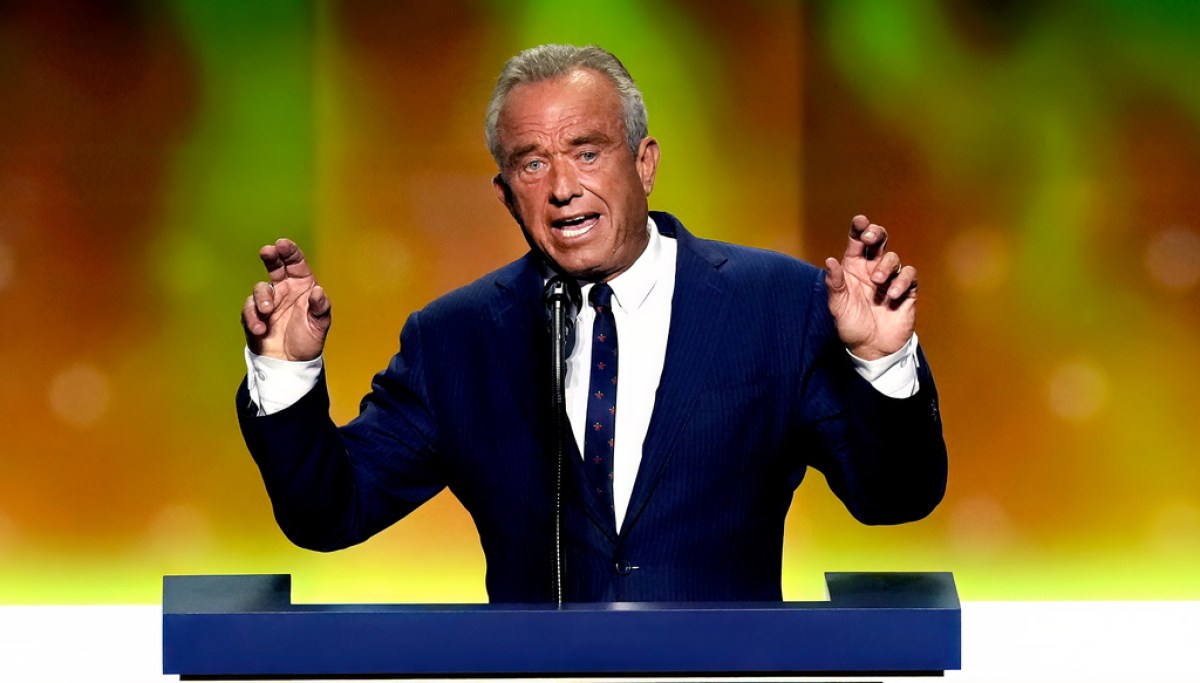
For a patient waiting weeks for a specialist, the debate over artificial intelligence comes down to a practical question: Is useful guidance available in the meantime?That perspective was largely missing from organized medicine’s response when HHS Secretary Robert F. Kennedy Jr. suggested AI could offer a better-informed second opinion than any physician.In a Sept. 30 joint statement, the American Medical Association and five other physician organizations acknowledged AI’s potential while warning that claims of inherent superiority diminish physician expertise and risk undermining patient trust. The AMA was right to challenge sweeping claims. Its broader policies address validation and oversight, but this response gave insufficient attention to patients who lack timely care. What should they do when the expertise being defended is unavailable?As a retired orthopedic surgeon, I value clinical judgment and responsibility. I have also warned about AI’s dangers, including the devaluation of people displaced by automation. Yet I see AI as a possibly invaluable physician-helper, with validated uses, clear limits, and a practical “kill switch.”AI can serve as a sounding board, helping physicians consider alternative explanations, identify missing information, and question initial assumptions. But “physician-helper” should be a starting point, not a permanent ceiling. AI may ultimately perform much of physicians’ cognitive work. The extent of that transition should depend on demonstrated performance, patient outcomes, and clear accountability.Kennedy’s challenge can open a useful dialogue without making every assertion correct. His report that Sam Altman called failure to consult AI “malpractice” does not establish a clinical requirement.A 2025 study on injury compared ChatGPT-4 with four orthopedic surgeons answering 20 questions across five common emergency-department scenarios. Independent reviewers rated AI’s responses higher for completeness, helpfulness, specificity, and overall quality, without a significant difference in overall accuracy. This small study assessed written recommendations, not patient outcomes.In comments reported by MedPage Today, former American College of Physicians President Jason Goldman went beyond the joint statement, dismissing AI as a second opinion and emphasizing its potential for error.Physicians also work with incomplete information and mistaken assumptions. The possibility of error warrants safeguards; it does not establish comparative performance. Nor does concern about undermining trust settle the question. Trust grows when patients can examine recommendations and question the reasoning behind them.Goldman also rejected Kennedy’s characterization of “medical tyranny,” noting that patients can decline physicians’ advice. But that freedom does not eliminate institutional restrictions on care, and AI advice alone would not remove them either.For rural communities and resource-limited settings worldwide, the relevant comparison may be AI-assisted care versus delayed care — or no specialist input at all. AI could support local clinicians facing decisions without specialist assistance. Evaluation should measure whether it improves assessment, referral, and timely treatment while avoiding false reassurance or delayed transfer.For patients awaiting care, AI may also help organize symptoms and prepare questions, without being mistaken for a validated substitute for an independent physician consultation.Kennedy’s example of a lengthy medical record and a brief appointment also deserves engagement. A patient’s records may be scattered across hospitals, clinics, and specialists whose electronic systems have limited interoperability — the ability to exchange and use information. Overcoming barriers to sharing and reconciling records should itself be a goal of AI development, with institutions responsible for enabling secure exchange. With authorized access, source traceability, and verification, AI could help translate data formats, assemble a clinical timeline, and flag conflicting entries, reducing time spent reconstructing records. With patient consent, AI could also document the encounter for physician review, freeing the physician to spend more quality time with the patient during history-taking and physical examination.Meaningful oversight requires someone with the skill to question an answer, the time to investigate, and the authority to intervene. A kill switch requires a tested fallback so care can continue safely when automation stops. Staffing, training, and payment must support that responsibility. Patients need a route to human evaluation and clarity about who controls recommendations, uses their information, and answers for failures. AI should expand access to expertise, not become the only option offered to patients with the fewest resources.Access also depends on affordability. In an earlier Washington Examiner commentary, I asked: Where did the money go? With reliable financial and claims data, independently audited AI analysis could trace spending, identify duplication, and assess administrative value. Verified savings should lower patient costs and expand rural and specialist care. Efficiency would mean little to those left behind if its benefits accrued only to corporate balance sheets.ROBIN HOOD IN REVERSE: HOW BIG HOSPITALS USE POVERTY SUBSIDIES TO PROFIT IN WEALTHY SUBURBSThe government should help fund independent testing of the clinical AI it promotes. Organized medicine should contribute expertise and research networks, while developers remain responsible for product validation. Studies should compare physician-only, AI-only, and combined approaches for defined tasks, measuring outcomes, consequential errors, and timely access. Shared funding must preserve independent analysis and publication of unfavorable findings.Kennedy need not be right in every claim for organized medicine to take a closer look in the mirror. The AMA should ask where the profession’s practices can improve and help develop and test tools that bring expertise within reach. Kennedy, in turn, should provide concrete support for that work, including research funding, transparent evaluation, and safeguards that preserve physicians’ authority to exercise clinical judgment and intervene when necessary. Patients waiting for care deserve protection from unproven technology and a serious effort to determine where it can help them.Morgan P. Lorio is a retired orthopedic spine surgeon, healthcare policy author, hospital chaplain, and former president of the International Society for the Advancement of Spine Surgery.
RFK Jr. touched a nerve: An AI second opinion isn’t dangerous — a six-week wait to see a doctor is
Full Article
Original Source
Read the full article at Washingtonexaminer →KhanList aggregates and links to publicly available news content. We do not host full articles from third-party sources. Always verify important information with original sources.