
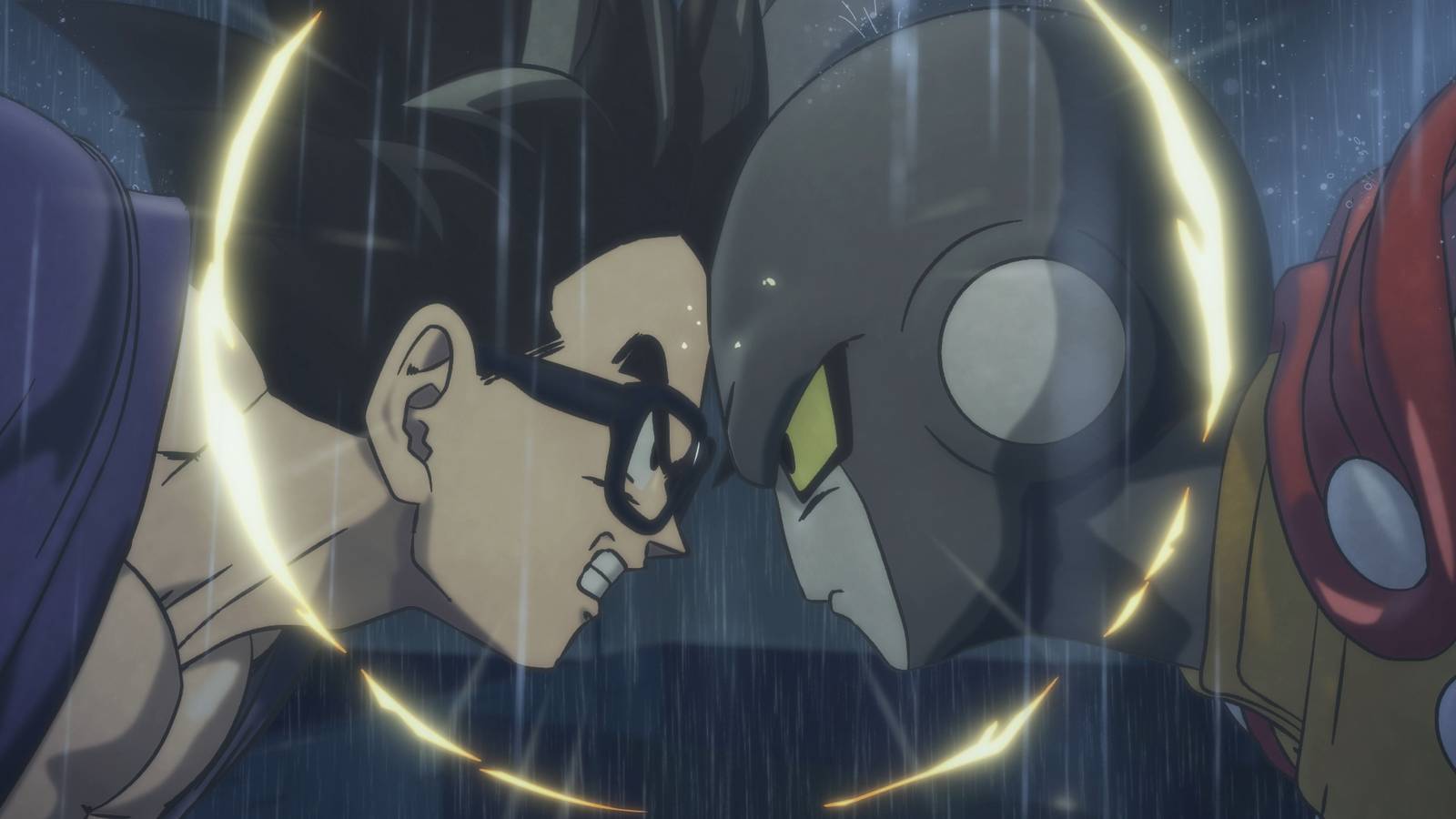
Published Aug 14, 2026, 11:00 AM EDT Memory Ngulube joined Screen Rant in April 2024 as part of the Movies and TV team. Since then, she has written for the Perennials and Streaming team, covering a wide range of topics from new releases to old movies and TV shows. Memory is currently a Classic TV writer. Before joining Screen Rant, Memory was a freelance copywriter who specialized in email marketing and social media management. While she enjoyed her job, her true passion was always movies and TV. When she isn’t writing for Screen Rant, Memory can be found reading, baking (which is one of her passions), or watching her favorite K-drama. In 2022, a Dragon Ball movie revitalized the franchise and felt like a refreshing change of pace, but it hits differently on a rewatch. Dragon Ball's overall impact on anime cannot be overstated. With its long training arcs, powerful villains, and heroes constantly pushing beyond their limits, Dragon Ball has influenced what we now appreciate about the genre. What began as a manga in 1984 easily ballooned into one of the biggest franchises in anime. Dragon Ball has spent years putting Goku and Vegeta at the center of virtually every major conflict, but Dragon Ball Super: Super Hero changed that by shifting the spotlight to Gohan and Piccolo, two characters who hadn’t gotten the development they deserved. At the time of the film's release, it was easy to get caught up in the excitement. Seeing Piccolo receive a major power-up and watching Gohan finally rediscover his fighting spirit was a truly joyous moment. Two things happen when revisiting Super Hero: its strengths can be appreciated fully while its weaknesses are harder to ignore. The franchise’s other modern movies, like Battle of Gods, Resurrection ‘F’, and Broly, can at times fare much better when put under a microscope. Piccolo, Pan, and Gohan’s arcs were exciting, but Super Hero relied too much on fan service and gimmicks as opposed to going all in on the kind of story it wanted to tell. Why Initial Reaction To Dragon Ball Super: Super Hero Was Positive A franchise that has run for as long as Dragon Ball Z is difficult to keep fresh, yet Super Hero does just that without abandoning what fans love about it. When the film was released, it had a 100% rating on Rotten Tomatoes, with some critics hailing it as the best Dragon Ball film. Currently, Super Hero sits at 95% on the aggregator site. For years, Goku and Vegeta have dominated the franchise, with Piccolo being relegated to the background. However, the Namekian took center stage in Super Hero, with the movie focusing on his relationship with Gohan and Pan as well as his investigation of the Red Ribbon Army. Piccolo's Orange Piccolo transformation was another selling point for the film. Rather than simply having another Saiyan assume a new form, Super Hero finally gave one of Dragon Ball's original heroes a significant upgrade. Before Super Hero debuted, there was some skepticism about its animation style, as it was going to be the first major Dragon Ball movie to rely heavily on 3D CGI, since the franchise had traditionally been associated with hand-drawn animation. Super Hero’s animation style ended up working well for the movie, as it was not only visually stunning, but it also made its action sequences more consistent. Dragon Ball Super: Super Hero Rotten Tomatoes Score Critics' Score 95% Audience Score 95% Above all else, Dragon Ball Super: Super Hero is a movie for the fans. For anyone who's followed the franchise for decades, the film features several Easter eggs, callbacks, and familiar characters. Super Hero is funny and action-packed, impeccably balancing both of these winning qualities. On Rewatch, Dragon Ball Super: Super Hero Is The Weakest Of The Modern Movies Every Dragon Ball film has its strengths and weaknesses. For some entries in the franchise, a first watch can be engrossing and entertaining, but a rewatch can take away some of their luster, particularly Super Hero's. However, that’s not to say that Super Hero is terrible compared to the other films. After all, there’s a reason it was heaped with so much praise by critics and audiences. Battle of Gods introduced a new villain who even Goku couldn’t defeat, making it a refreshing take on the Saiyan story. Broly isn’t perfect, but its strengths go beyond animation with how it reimagines the antagonist. Dragon Ball Z: Resurrection 'F' is the easiest of these four movies to criticize. The film’s plot is straightforward: Frieza comes back, trains, becomes stronger, and wants revenge on Goku. It doesn't have the thematic ambition of Battle of Gods, and its plot can feel like an excuse to get Goku and Vegeta into another battle, but on rewatch, that simplicity can actually work in its favor. Some glaring issues with Super Hero make it fall short compared to Resurrection 'F', Battle of Gods, and Broly. Super Hero had a lot of promise, but its third act doesn’t do it justice. Piccolo’s story ultimately didn’t get the resolution it deserves, with Gohan getting most of the attention in the film’s final scenes. Granted, Dragon Ball is known for recycling its villains and best arcs, but this was a movie that was supposed to be different, as hinted at by its fresh animation. While Super Hero’s animation was praised for enhancing the story, it’s also one of its weaknesses. The movie's CGI animation is impressive, but it fundamentally changes Dragon Ball's visual identity. Battle of Gods, Resurrection 'F' and Broly retain the hand-drawn anime aesthetic that audiences associate with the franchise. Super Hero instead embraces 3D models. That isn't inherently bad, and some sequences look fantastic. But on repeated viewings, the style can make the movie feel slightly less timeless than other installments in the universe. Dragon Ball Super Already Has A Better Story Than Super Hero Dragon Ball’s biggest problem is its villains. In the anime, several episodes are spent on the same antagonist, who is always someone capable of destroying worlds. Dragon Ball Super is better than Super Hero in this regard because of Moro, who appears in the manga’s Galactic Patrol Prisoner saga. Cell is one of the most beloved Dragon Ball bad guys, but bringing him back became Super Hero’s drawback in that while he was visually imposing, he lacked depth. The manga's Moro, on the other hand, is different. As an ancient planet-eating sorcerer who has survived for thousands of years, Moro’s abilities aren't simply based on having a higher power level. He can absorb life energy from planets, drain fighters of their energy, and use magic, giving Goku and Vegeta problems that can't simply be solved by transforming into a stronger Super Saiyan. Super Hero tells a contained story, and thus it feels smaller. Super, on the other hand, expands the mythology of Dragon Ball beyond simply introducing another incredibly powerful fighter. The Moro saga explores several storylines, including the introduction of Merus, the role of the Kais, and the history of the universe. Dragon Ball Super: Super Hero is an entertaining movie that gives Piccolo and Gohan much-needed time in the spotlight, but the Moro saga proves that there’s more to the franchise than the constant fight between good and evil. Release Date June 11, 2022 Runtime 100 minutes Director Tetsuro Kodama Cast Masako Nozawa Son Gokû / Son Gohan / Son Goten / Gotenks (voice) Toshio Furukawa Piccolo (voice) Dragon Ball Super: Super Hero is the first 3D-animated movie in the Dragon Ball franchise. It takes a break from Goku and Vegeta's story to focus on Gohan and Piccolo, who gain new transformations as they face an upgraded version of the Red Ribbon army led by Dr. Gero's grandson, Dr. Hedo. Although it doesn't bring up many connections to the main anime or previous movies, Dragon Ball Super: Super Hero is set after the events of Dragon Ball Super: Broly.
Rewatching Dragon Ball's Newest Movie After 4 Years, I Had A Very Different Reaction
Full Article
Original Source
Read the full article at Screenrant →KhanList aggregates and links to publicly available news content. We do not host full articles from third-party sources. Always verify important information with original sources.