
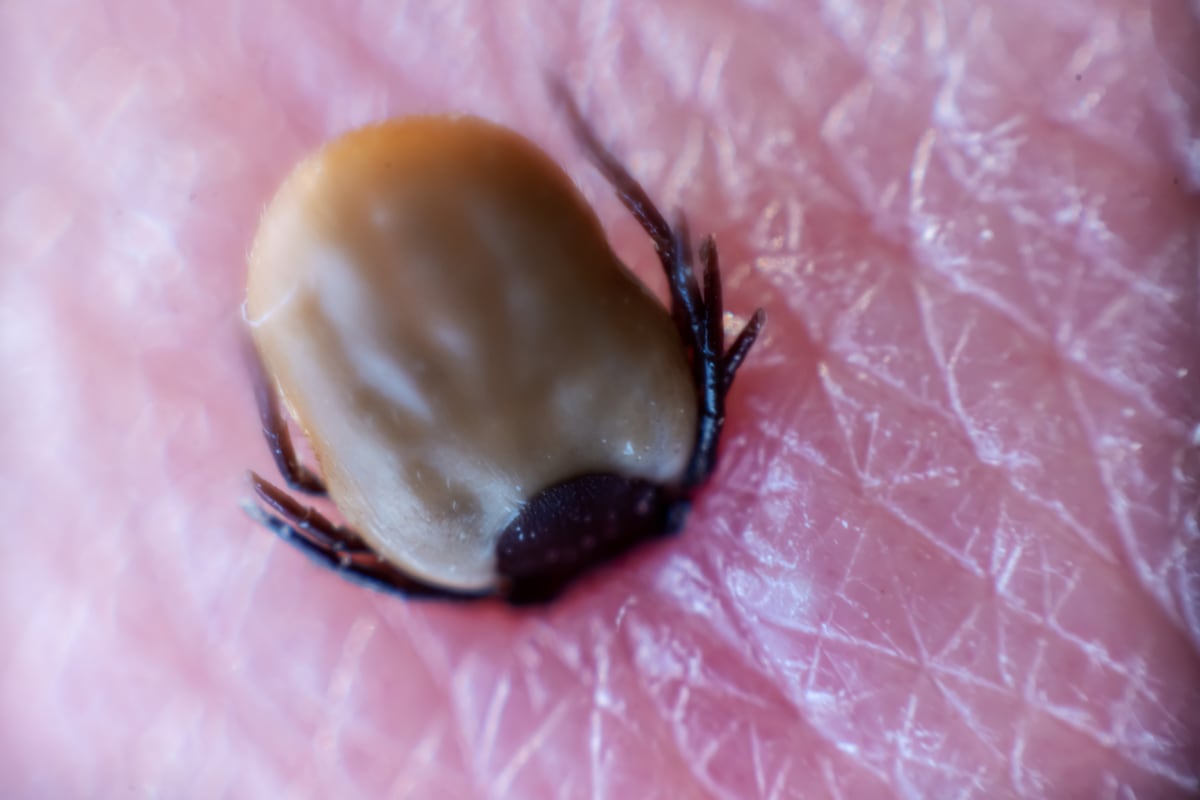
A vaccine with an unusual mechanism could become the first major preventive tool against Lyme disease if Europe decides to approve this new medical strategy, which is still under study. Lyme disease, or borreliosis, is the main vector-borne infection affecting humans in Europe — transmitted by insects and arachnids, in this case ticks of the genus Ixodes — yet it remains largely unknown. Its true impact on the population, although significant, is nearly impossible to determine because of the lack of systematic records, underreporting of cases and the complexity of diagnosis, which in advanced stages is marked by nonspecific symptoms that are often mistaken for other ailments.The European Medicines Agency (EMA) is now reviewing approval of a revolutionary vaccine that, beyond its potential to reduce infection impact, is “based on a fascinating mechanism,” in the words of the agency’s head of Public Health Threats, Marco Cavaleri. “The antibodies that are generated penetrate the tick’s gut when it feeds on a person’s blood and neutralize the bacteria before it can be transmitted,” he explained at a vaccine seminar held at the agency’s headquarters in Amsterdam on October 28, which EL PAÍS and other European media attended.The marketing authorization application for the vaccine — developed by Pfizer and Valneva and currently called VLA15 — took its first key step on August 13 when it received EMA validation to begin scientific evaluation. The process until the agency’s Committee for Human Medicinal Products (CHMP) reaches a final decision “has an average duration of 12 months,” according to a spokesperson.When a tick bites a person and begins to draw blood, the antibodies produced by the vaccine bind to the surface proteins (OspA) of Borrelia bacteria, preventing them from migrating to the salivary glands and entering the bloodstream. Trapped in the arachnid’s digestive system, the pathogens eventually die.The application submitted to the European agency is based on results from the phase 3 VALOR clinical trial, which enrolled more than 9,400 people aged over five in endemic areas of the United States, Canada and Europe. The vaccine showed efficacy above 70% — up to 74.8% with booster doses — in reducing confirmed cases of borreliosis. Trial results were presented in October at the IDWeek conference in Washington, D.C., and are scheduled for publication in a peer-reviewed scientific journal.“It’s an intramuscular vaccine and can be somewhat uncomfortable because it requires multiple doses, but available data show it is effective and safe. The schedule is an initial dose, another at two months, a third between five and nine months after the first, and a fourth one year later. Protection of 70% or higher is notable, although obviously it is not a vaccine for the entire population, but for those most exposed to ticks because of outdoor activities,” explains José Antonio Oteo, director of CRETAV (Center for Rickettsioses and Arthropod -Borne Diseases), a unit of the Center for Biomedical Research of La Rioja, Spain and who did not participate in the drug’s development. A Pfizer spokesperson says the company is working with the EMA during the evaluation process and adds that at this time it cannot make further comments on the procedure.Confusing symptomsLyme disease is characterized in its early stages by a skin lesion called erythema migrans, a rash that causes no pain or itch and expands outward from the bite. Diagnosed at this stage, antibiotic treatment is very effective. “If the infection progresses without treatment, it can lead to a disseminated phase characterized by neurological involvement (neuroborreliosis). This often involves a fever, headache and facial paralysis, although the spectrum is broad. Isolated facial paralysis is not uncommon. It can also cause cardiac abnormalities and, years later, prolonged arthritis,” Oteo explains.Diagnosis is most complex in these advanced stages, when the erythema has resolved without being detected. Once the bacteria disseminate, symptoms cease to be specific and are easily confused with other conditions. “Direct microbiological tests such as culture and PCR lose sensitivity due to the lower concentration of bacteria in affected tissues, so diagnosis usually requires contextual clinical evaluation and antibody detection. These antibodies, however, do not distinguish between an active infection and one that has already been cleared,” the expert says.Rosa Estévez, of the ISCIII’s National Center for Epidemiology in Spain, agrees that “Lyme disease is a complex infection that poses many diagnostic, treatment and, of course, surveillance challenges because it progresses in stages, but not all patients develop every stage.” This means that, despite being “considered an emerging pathology in Europe,” its “highly variable and prolonged symptomatology limits epidemiological study and surveillance of the disease.” Lyme disease has been surrounded in recent years by a degree of controversy. The nonspecific nature of infection symptoms has led to “many people who suffer general malaise, fatigue, aches or other manifestations that can have multiple causes receiving an incorrect diagnosis and unnecessary treatments,” Oteo notes.To prevent infections, the expert recalls standard recommendations: wear clothing that covers the limbs when in natural environments and carefully check afterward for attached ticks. “With borreliosis this last point is especially important because the arachnid needs to be feeding for a minimum of 24 or even 48 hours to transmit the infection, which gives a sufficient time margin to prevent it.” The inspection should be thorough because Ixodes ticks are usually small and can “be mistaken for a mole,” Oteo warns.If finally approved, the new vaccine could help address the challenges posed by climate change, EMA officials said in Amsterdam. “Global warming is promoting the geographic expansion of ticks and also of mosquito vectors of viruses such as chikungunya, dengue and West Nile virus. Faced with this reality, it is urgent to intensify the development of specific immunization tools,” Cavaleri said.The meeting also addressed issues such as vaccine hesitancy that prevent much of Europe from reaching coverage levels recommended by authorities, and reviewed scientific advances made in recent years. One of the most notable is messenger RNA (mRNA) technology, which enabled development in less than a year of the vaccines most used in the last pandemic and has now taken a new step beyond infectious diseases with personalized vaccines against cancer types such as melanoma.Sign up for our weekly newsletter to get more English-language news coverage from EL PAÍS USA Edition
Revolution against Lyme disease: a new vaccine kills bacteria in ticks’ gut
Full Article
Original Source
Read the full article at English →KhanList aggregates and links to publicly available news content. We do not host full articles from third-party sources. Always verify important information with original sources.