
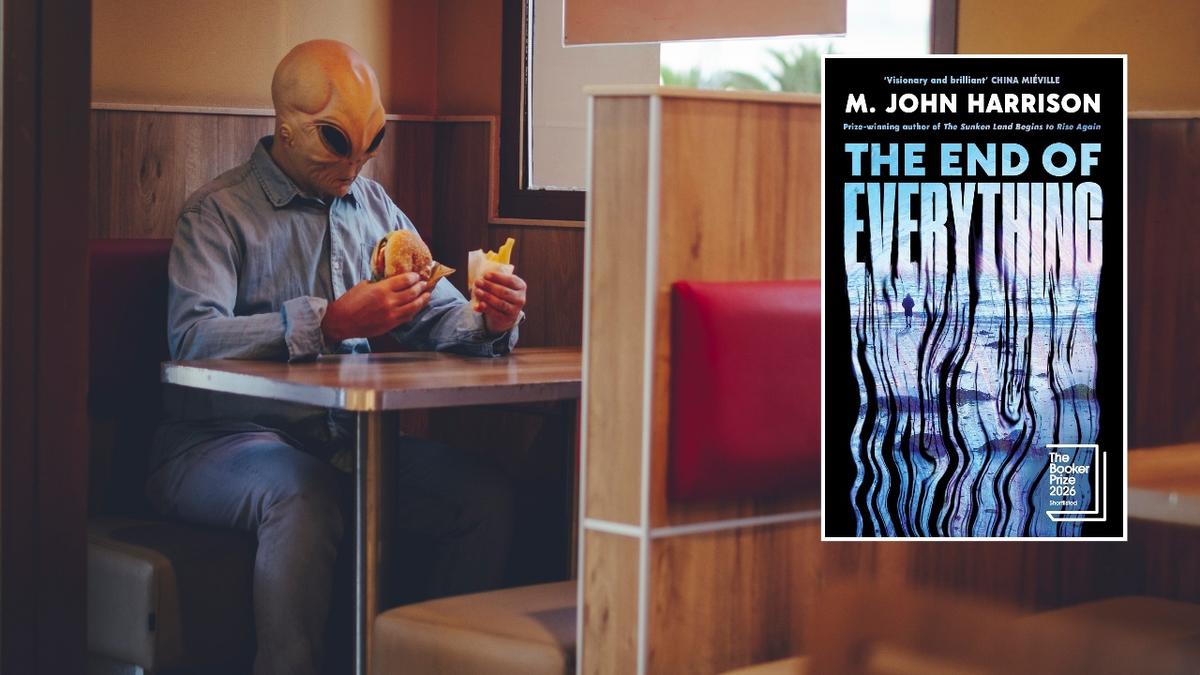
Can you explain what’s happening? This has become an increasingly valuable question to answer. To understand what’s happening is to piece the increasingly chaotic present together and, in the cracked picture that forms, identify the future we’re constantly moving into. It’s an exercise in identifying which truths matter most at a time when truth is often the thing being contested, from social media platforms to debates in Parliament. And even when something becomes clear to you, and you cling desperately to it lest it fade away, the world itself moves on and you find yourself marooned on an island surrounded by more claims and counterclaims.Forget the information overload. We’re in the confusion overload — and confusion lacks the capacity to clarify. There are so many truths that piecing them together into a coherent whole has become fraught. Meanings were like bricks you could build houses of good sense with, but now the bricks are eroding and the house has become so holey, so leaky, that there’s increasingly less difference between what it’s standing for and what it’s standing against. And the best you can do when your walls crumble is to go with the flow, and stick your hand out from time to time if you’re feeling whimsical, taking your chances with whatever curiosity you can pluck from the torrent.That’s actually Phillip Tennent in The End of Everything, the British fantasy-fiction doyen M. John Harrison’s latest novel that’s made its way into the 2026 Booker Prize shortlist. Phillip’s world has slipped from barely making sense to almost literally falling apart following a bizarre event. Author M. John Harrison Harrison is treading the same path here that he’s been on since his ‘Viriconium’ series (1971-1984), but by now — he’s 81 and will become the oldest Booker laureate if he wins — he’s also joined by László Krasznahorkai and Jeff VanderMeer, among many others. Which shouldn’t be surprising: it’s a sincerely pleasant irony that the world’s increasingly overt descent into incomprehension and solipsism has also presented to each generation’s best writers the chance to become the prophets we’re looking for.Disasters get exploitedIn The Melancholy of Resistance (1989), Krasznahorkai ends his sobering tale with one comfort: that when we die, the stubbornly secular physics of the universe will still go on. Yes, the universe is falling apart, too, but it’s still only physics at work. But even if physics is still what it is, metaphysics has changed, VanderMeer suggests. The people in his novel Annihilation (2014) couldn’t understand Area X, yet there it was, with its own absurd yet systematic way of working. And the people still did well to not ignore that.But the point of The End of Everything is that there’s no one final truth. It’s just evermore relativism — moral, physical, whatever. The aliens aren’t really invading. They’re just there, so are the people, and they seem to have no use for each other. Harrison shuts the door on the aliens’ history by making it pointless even as he throws the door open to how much humans still don’t know, and may never. What then? Repeatedly, thus, The End deflects its gaze inwards, through the touching, if also frustrating, inner lives of Phillip, his aunt Marnie, the dreadfully pragmatic Hampson, and the still-not-pitiable Gauf brothers. In fact, the only thing Harrison and Krasznahorkai agree on is that disasters get exploited by the people who were already doing well.Committing to the banalHarrison’s chapters are short and the narrative is discontinuous. You’re carried along because you’re part of the torrent. It’s as much as one can manage for a world history that’s settled into uninterruptible decline plus the attendant salvaging. Four chapters retell the same accident with small differences. The End works because of its steadfast commitment to the banal. Even its one attempt to break free and paint a beautiful image is shattered by Marnie being Marnie. When the aliens appear over London, they sound like harmonium music and smell like fireworks and ice cream.In VanderMeer’s Annihilation, a scientist is undone by what she knows and half-wants to be. In Krasznahorkai’s The Melancholy, Valuska is an innocent fellow who loves the stars and the town destroys him. But in The End, Harrison insists that trying to understand is neither noble nor tragic. You just do what you can. And maybe stick your hand out once in a while. The End of Everything M. John HarrisonSerpent’s Tail₹599mukunth.v@thehindu.co.in Published - October 02, 2026 05:56 pm IST
Review | ‘The End of Everything’ by M. John Harrison: the aliens are here
Full Article
Original Source
Read the full article at Thehindu →KhanList aggregates and links to publicly available news content. We do not host full articles from third-party sources. Always verify important information with original sources.