
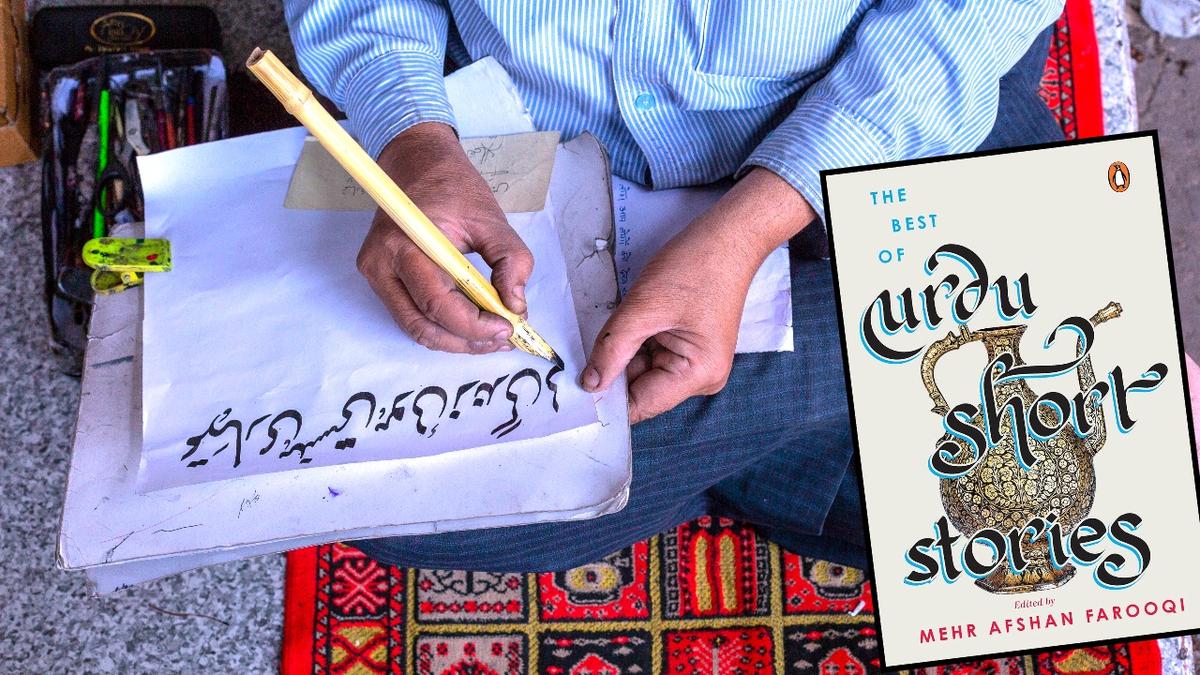
We are living in an age of fiction anthologies, most of them arranged around language, region, or theme. Urdu short story collections too have regularly appeared on publishers’ lists, often with titles beginning with words like “great”, “selected”, or “best”. What has always felt slightly disappointing to me is that many such collections tend to focus on writers such as Manto, Ismat Chughtai, Premchand, Intizar Husain and a few others who are already well known outside the Urdu literary circle.Of course, I also believe that without these stalwarts of Urdu fiction, no anthology can be complete. But there was a clear need to introduce non-Urdu readers to other important voices of the canon, to writers who may not be widely known outside the Urdu world but are capable of bringing new insight, freshness, and range to the tradition. A new anthology, edited by Mehr Afshan Farooqi, professor of Urdu and South Asian literature at the University of Virginia, U.S., largely fulfils that need. In her introduction to The Best of Urdu Short Stories, Farooqi provides a thoughtful and crisp account of the history and evolution of Urdu fiction. The Urdu short story began to take shape in the early 20th century and, within a relatively short span, captured the imagination of readers. Farooqi begins with Premchand, one of the towering figures of Urdu fiction, a nationalist writer whose work reflected Gandhian social thought and the realist tradition associated with writers such as Tolstoy. His stories focused on the lives of the poor, peasants, and working classes, often carrying a strong message of social justice, cohesion, and amity. The introduction also touches upon the Progressive Writers’ Movement and Modernism, two major currents that shaped Urdu fiction. Writer and scholar Mehr Afshan Farooqi | Photo Credit: Courtesy University of Virginia Correcting an imbalanceThe collection naturally includes famous names such as Manto, Chughtai, Rajinder Singh Bedi, and Intizar Husain, but it also brings in less familiar voices. It features stories such as ‘Is Hammam Men’ by Ghulam Abbas, beautifully translated by Farooqi herself, ‘Phislan’ by Muhammad Hasan Askari, ‘Ummat-e-Marhoom’ by Hajra Masroor, and an experimental story titled ‘Lahore Ka Ek Waqia’ by the great writer and scholar Shamsur Rahman Faruqi. This story explores memory, history, dreams and imagination in a manner that makes it difficult for the reader to separate the real from the surreal and the imagined. Among the contemporary pieces, ‘Akhiri Dawat’/ ‘The Last Supper’ by Khalid Jawed is a striking story about a family patriarch organising a grand feast, which becomes a metaphor for the decline of traditional family values and changing lifestyles. In ‘Qaim Din’, Ali Akbar Natiq, the Pakistani poet and fiction writer, powerfully depicts the struggles of a poor village caught in poverty, injustice, and a social order sustained by power and exploitation. Another notable inclusion is a fascinating story, ‘Adil ka Safar’, by the French writer Julien Columeau. It is set in Pakistan and follows its protagonist, a troubled young man named Adil, on an intriguing journey. The first story in the collection is the much-loved Premchand’s ‘Eidgah’, a poignant tale of a boy who sacrifices his desire for toys and sweets to buy a pair of chimta, or fire tongs, for his grandmother so that she does not burn her fingers while making rotis. The translation is decent, but when compared with some other well-known English versions, say Khuswant Singh’s, it seems to miss a few nuances. Perhaps the translator could have taken some liberty to invent or explore new phrases in English instead of strictly following the literal route. Overall, this is a fine collection with quality translations, especially the pieces translated by the editor herself, and it successfully balances the big names with lesser-known voices. However, we still need more variety in Urdu fiction anthologies. It is time publishers brought out different kinds of collections, including horror stories, fantasy, romance, and even pulp fiction, so that readers can experience the full range and flavour of Urdu storytelling. The Best of Urdu Short Stories Ed. Mehr Afshan FarooqiPenguin₹699The reviewer is the author of ‘Patna Blues’ and ‘A Man from Motihari’.
Review | ‘The Best of Urdu Short Stories’ spotlights lesser-known voices
Full Article
Original Source
Read the full article at Thehindu →KhanList aggregates and links to publicly available news content. We do not host full articles from third-party sources. Always verify important information with original sources.