
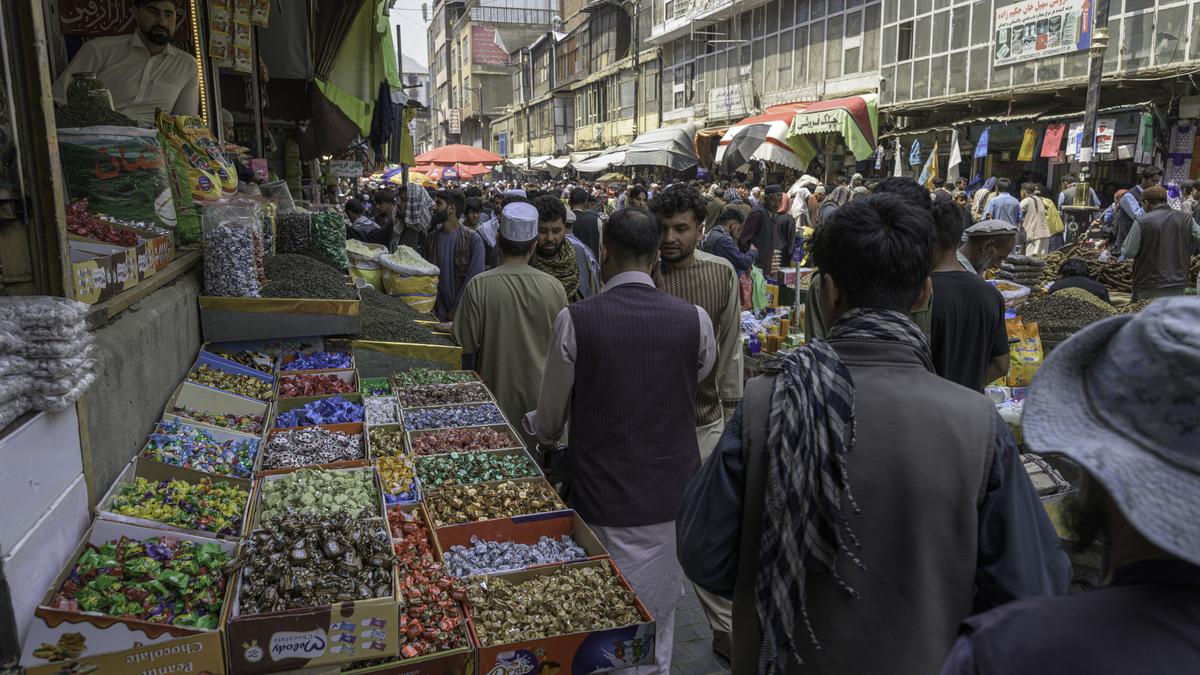
A crowded market street in Kabul. | Photo Credit: Getty Images Lyse Doucet checked into Inter-Continental Kabul for the first time after she landed in the city on Christmas day in 1988. As a BBC journalist who was there to report on the withdrawal of Soviet troops from the country, she had no idea how long she would be there. She ended up staying close to a year, and was a guest there many times in the years that followed. In The Finest Hotel in Kabul: A People’s History of Afghanistan, which won the Women’s Prize for Non-Fiction, Doucet returns to the Inter-Continental, popularly known as the Inter-Con, and uses the story of the hotel and its staff to narrate the history of a war-torn, yet resilient nation.Golden yearsThe hotel opened in Kabul in 1969 when Zahir Shah was still the king. It was a sophisticated hotel in a city known as ‘the Paris of the East’ and was a symbol of the country’s attempts to modernise itself and move with the times. During its heyday, Inter-Con was an emblem of luxury, of a lifestyle that most people of the country could not even dream of. With its fashion shows, music concerts, lavish parties, and finest food and drinks, it was far removed from the everyday realities of the nation.However, the golden years of the hotel were short-lived. Only a few years into Inter-Con’s existence, Afghanistan was pushed into a state of political uncertainty beginning with a coup against Zahir Shah. What followed was a period of political instability, as leaders came and went — or were killed — like people moving through revolving doors. Lyse Doucet. | Photo Credit: Getty Images Doucet covers the history of the hotel and its staff, who continued running the place through tough times. The challenges they faced included the hotel’s disassociation from the global Inter-Continental chain, lack of funds, working under the Taliban management, and attacks on the hotel, which resulted in the loss of many lives. In its determination to survive through the tough times, the hotel, in Doucet’s telling, becomes symbolic of the Afghan people’s resilience.The narrative frameThe use of the hotel and its staff as a device to narrate the history of a country’s people works well for the most part. Because the people through whom readers experience the hotel are ordinary people — from Sadeq, the sharp-dressing young man who dreams of studying in the U.S., to Hazrat, who joined the hotel in its early years — the hotel never becomes an elitist lens, even as it caters to the elite. And like the people of Afghanistan, the staff, too, go about doing their everyday jobs — cleaning the rooms, preparing the food — regardless of regime changes, even as they constantly adjust to the orders and beliefs of those in power.Doucet makes use of narrative non-fiction to bring to life the hotel’s world and its people. This is at its strongest in the opening sections. For instance, her descriptions of the view from one of the hotel’s three restaurants, Bamiyan Brasserie, which was the hotspot for casual dining, transports the reader there.However, there are moments when this narrative frame feels shaky. The rapid changes of regime can make for a dizzying read, a feeling amplified by Doucet’s compression of nearly 50 years of history into the narrative. The reader is often left navigating a maze of events unfolding at breakneck speed, retaining only a hazy sense of what happened by the end of the book.This effect is compounded by the vignette-like sections focusing on the staff. To provide a rounded view of events, Doucet often hops from one staff member to another and back again. While this approach allows us to witness history through various eyes, it also prevents us from getting to know the characters intimately. Besides, Doucet’s narrative non-fiction tends to draw attention to itself, especially in the latter sections, which feel almost novelistic in its portrayal of the people’s lives.The Finest Hotel in Kabul is an accessible entry point into the history of Afghanistan from the 1970s onwards. For the generations that have considered Afghanistan almost synonymous with the Taliban, Doucet’s writing opens a window into a country long before they came to power. Her knowledge of the subject and her genuine affection for the people she writes about create a lasting impact.Perhaps Inter-Con will regain its glory; perhaps it won’t. Whatever the future holds for the hotel, Doucet’s book ensures that, for her readers, Inter-Con will always remain the finest hotel in Kabul. The Finest Hotel in Kabul: A People’s History of Afghanistan Lyse DoucetHutchinson Heinemann₹999The reviewer is an independent writer and translator based in Pune. Published - August 28, 2026 02:17 pm IST
Review of Lyse Doucet’s The Finest Hotel in Kabul
Full Article
Original Source
Read the full article at Thehindu →KhanList aggregates and links to publicly available news content. We do not host full articles from third-party sources. Always verify important information with original sources.