
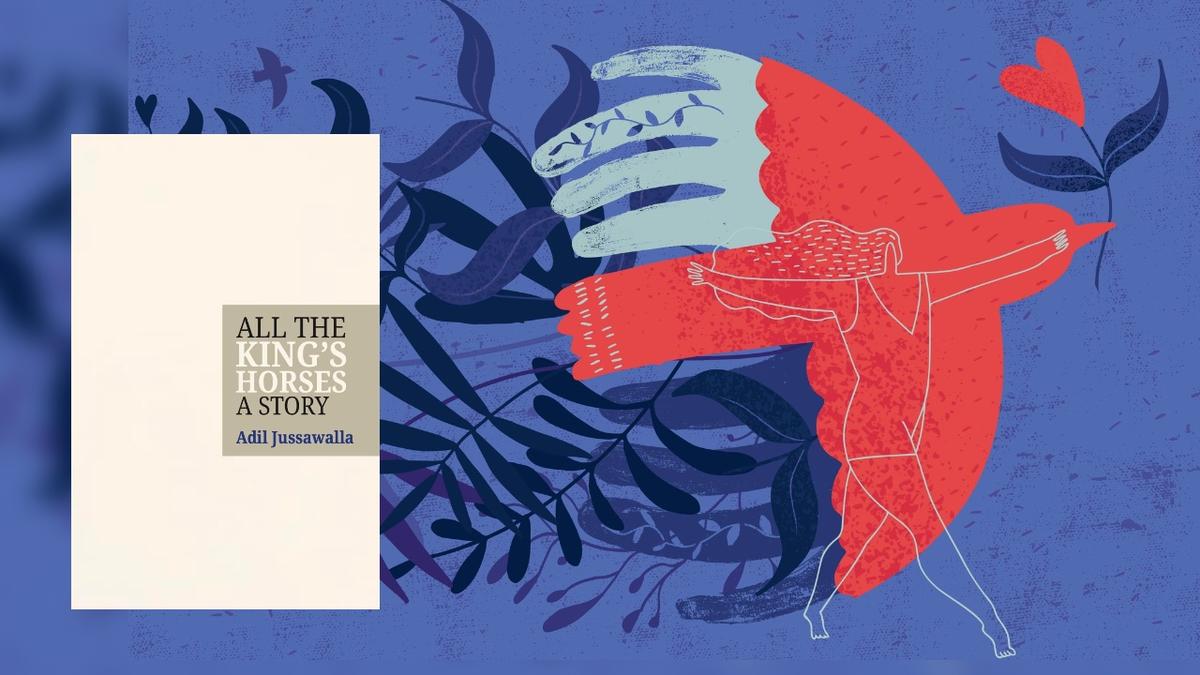
I am reading Adil Jussawalla’s All the King’s Horses: A Story a few months after his 86th birthday. The last book I read by Jussawalla was Soliloquies (2025), a verse drama he wrote at 18. The sense of two — duologue, dialogic, a divided self — is the DNA of this new book, the reason it must have reminded me of Soliloquies: two creative selves, two Jussawallas, the oldest books and the youngest.Jussawalla remakes a children’s rhyme into his title and epigraph: All the king’s horses and all the king’s men/ Helped put what broke together again. The original nursery rhyme, All the king’s horses and all the king’s men/ Couldn’t put Humpty together again, is the fragmented modern, what T.S. Eliot characterised as the “dissociation of sensibility”. A hundred years after Eliot’s essay ‘The Metaphysical Poets’, Jussawalla is putting what “broke together again”.It is possible that the structure of All the King’s Horses has pushed my thoughts into this syntax of bookends — the poems are arranged in sections titled ‘Memos of a Wife to a Husband’ and ‘Memos of a Husband to a Wife’, with an ‘In Between’. I find myself thinking of Anglo-Saxon literature, ‘The Wife’s Lament’ and ‘The Husband’s Message’. Jussawalla’s word for ‘lament’ and ‘message’ is ‘memo’. The temper of the Anglo-Saxon poems derives from viraha, a forced separation from the beloved. Take these lines from ‘The Wife’s Lament’:Friends live on earthlying in bed with their belovedswhile I in the time before dawn alone walkunder oak tree.These are from Jussawalla’s poem ‘There Is A Gap’ in ‘Memos of a Wife to a Husband’:I vow not to see you, bleed insteadthis amber from a bitter tree, youcaught in each gumdrop like a fly.The wife’s separation from the husband; the tree, an oak from a millennia ago, a ‘bitter tree’ in this 21st century. The Anglo-Saxon poem ends with: Too often he remembers a house full of joy; Jussawalla’s with music: Remember the sound of our first doorbell… Stockhausen, Berg, Janis Joplin… The music you wanted was here. Poet and writer Adil Jussawalla | Photo Credit: M. Subhash Ancestry of emotions‘The Husband’s Message’, read as a companion poem, has its parallel in the Indian poet’s ‘Memos of a Husband to a Wife’. The Anglo-Saxon poem opens with waking: Now I wish to tell/ apart from you —/ the kindred of trees/ I wake from seeds/ Within me. Jussawalla’s opens with sleep, as if in response: Sleeping against you, wary of times… Plant life sprouts in both the openings: the seeds and trees in the anonymous poem, “a time of green meadows” (‘Selves’) in Jussawalla’s.The Humpty Dumpty epigraph and the Anglo-Saxon elegies are just two among several things that Jussawalla is remaking. Remaking is reclaiming. The word ‘left’ recurs through the collection, as if it were a kind of timekeeping: I’m here/ but by then you’d left. You have not left — a four-line poem ends like this, four monosyllabic words, as if unable to recover from the shock of leaving. The ‘you’ is the dedicatee in the book — Veronik, Jussawalla’s wife — these poems for her a balancing of the equation between life and death. This remaking — rearranging — is a kind of staving off, a gentle deferral of what has come to be.The Indian poet’s alignment with the oldest poems in the English language, with elegies about married love from more than a millennia ago, is a groping for an ancestry of emotions that keeps us human, that are repeated without our active participation: Whoever cares to repeat this/ as a children’s story now,/ say it began with smiles,/ then rupture (‘Shark’).In this slim book of poems that Jussawalla’s health prevented from becoming a ‘long story’, we meet yesterday’s hive of hands and distillations of earlier days and the awareness, from Solaris, that the time for cruel miracles was not past. The past is a fruit being cut open.There is a gap, though sweet and tender juiceriots around the knife, the sharp ends of the circledon’t meet round the fruit.(— ‘There Is A Gap’)Two images have stayed with me — the ends of the circle not being able to meet around the fruit; and the two of us, unable to speak, still lovers. They are as old as love and poetry and death; and their fruit. All the King’s Horses: A Story Adil JussawallaPoetrywala₹200The reviewer is a poet, author, and literary critic.
Review | In ‘All the King’s Horses’, poet Adil Jussawalla makes repair a form of remembrance
Full Article
Original Source
Read the full article at Thehindu →KhanList aggregates and links to publicly available news content. We do not host full articles from third-party sources. Always verify important information with original sources.