
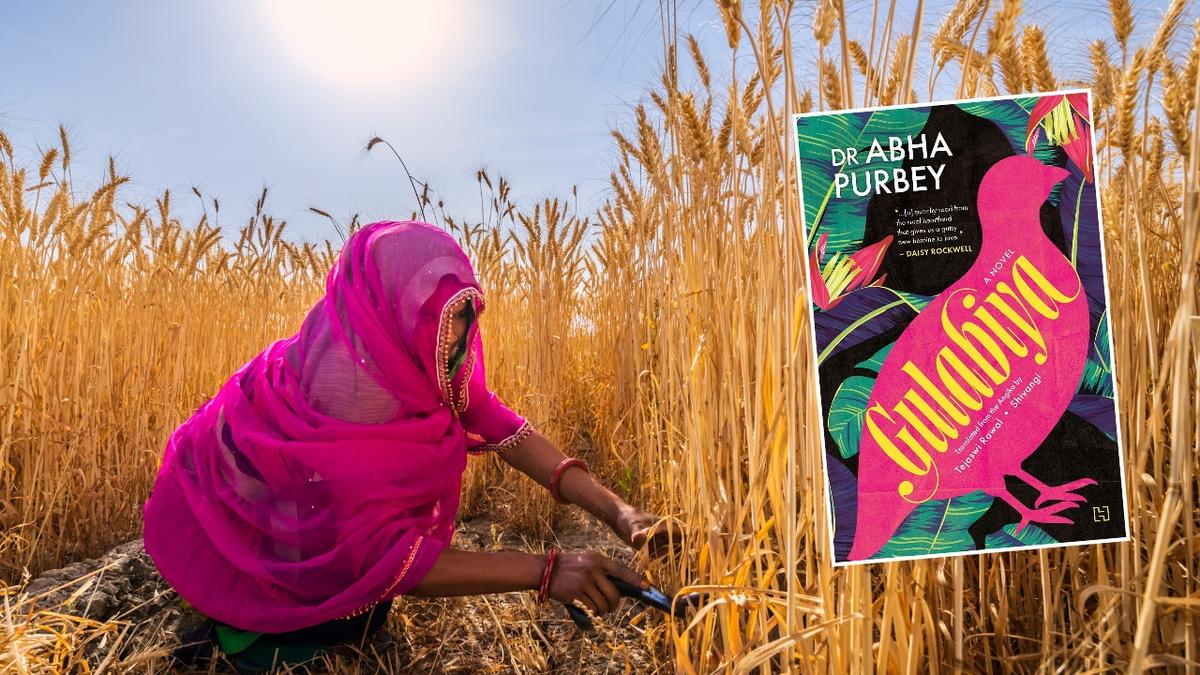
The story revolves around the dreams and aspirations of farm workers Balesar and Gulabiya, who are deeply in love with each other. | Photo Credit: Getty Images/ iStock The politics of language is a complex one. It is about dominance and erasure, and that is why many of us probably don’t know that a language called Angika exists. A language that was first identified in the early 1900s by British linguist and civil servant George Grierson, but as a dialect of Maithili. The struggle for recognition still persists.Scholar and writer Abha Purbey first published her novel Gulabiya in Angika in serialised form. It was subsequently published as a book in 2008, with a second edition appearing several years later in response to demand from readers. Close to two decades later, Gulabiya is out in English, translated by Tejaswi Rawal and Shivangi. It is the first full-length translation of a work from Angika.The story revolves around the dreams and aspirations of farm workers Balesar and Gulabiya, who are deeply in love with each other. The book opens with Gulabiya working in the field under the scorching sun, lost in her thoughts and awaiting Balesar’s arrival. He, on the other hand, has been appointed manager by Seth Patel Singh, the landowner. In his new role, he is expected to deal harshly with his erstwhile fellow labourers, but soon the pressure begins to weigh heavily on him. Despite the long hours and immense pressure, Balesar has greater ambitions. He dreams of growing high-quality bananas on his own land so that he can have a better life with Gulabiya. But, as is often the case, society has little tolerance for outliers, for those who seek to break the boundaries of caste and class. Balesar is forced to borrow ₹20,000 from a moneylender when the bank denies his loan request, exposing yet again the cracks in the system. He is soon drawn into a whirlwind of deceit when the moneylender, in collusion with Singh, devises a plan to derail Balesar’s efforts towards economic mobility and building a stable life with Gulabiya. Their fate is, in part, determined by those invested in preserving the existing social order. (Clockwise from left) Author Abha Purbey and translators Shivangi and Tejaswi Rawal. Confronting an everyday realityFor a country that relentlessly boasts of its diversity, we are seemingly ignorant of our own cultures. The race towards uniformity has been steadily erasing the different hues of our languages, food habits, festivals and traditions. Linguist G.N. Devy once said that India is becoming a “graveyard of languages”, and our apathy, especially on the part of the government, has only aided this process.I first came across a translation from Angika in an anthology of literature from Bihar. I believe translation can be a powerful tool for changing our attitudes and, ultimately, demanding better policies. Shivangi and Rawal’s collective effort in bringing out the first full-length Angika translation is nothing short of a beginning — a small but significant step towards the change we all want to see.Balesar and Gulabiya’s story is one of those that would ordinarily be buried on the seventh page of a newspaper, crushed between advertisements and yet another political update. We have been made to believe that such stories are merely routine occurrences and that they do not warrant our attention — that some lives are somehow expendable.In Gulabiya, Purbey forces us to confront the reality of countless such lives and invites us to live alongside Gulabiya and Balesar, if only briefly, to understand their plight. Shivangi’s journey to finding this book, followed by her decision to bring in Rawal as a co-translator, has resulted in a tightly woven novelette. Their collaborative effort ensures that the book reads as an original work rather than a mere transliteration of the Angika text. The Translator’s Note further deepens the reader’s understanding of the politics of language and the complexities involved in bringing a regional work to a wider audience. Gulabiya Abha Purbey, trs Tejaswi Rawal and ShivangiHachette India₹399The reviewer is an independent writer, journalist and translator based in Allahabad. Published - September 25, 2026 07:26 pm IST
Review | ‘Gulabiya’ by Abha Purbey: love, caste and the politics of language
Full Article
Original Source
Read the full article at Thehindu →KhanList aggregates and links to publicly available news content. We do not host full articles from third-party sources. Always verify important information with original sources.