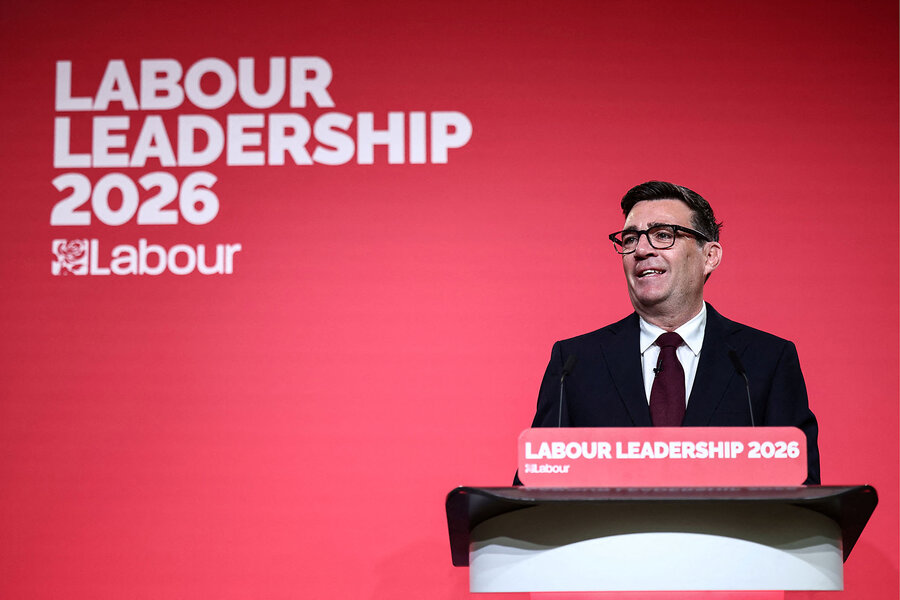
They were the big losers from Brexit – and they weren’t even allowed to vote.A full decade after Britain’s shock decision to leave the European Union, young Brits are clamoring for rapprochement. First and foremost, they want to be allowed to live and work in Europe – just as their parents could.“I’m not picky about where,” says Marley Toghill, an ecologist in his early 20s from Bristol, who knows that a professional stint outside of Britain would deepen his professional expertise. “But you have to get a visa, and only the huge companies arrange that and it’s obviously very competitive.” Why We Wrote This Ten years on, many voters in the U.K. are having second thoughts about Brexit – especially young people. Andy Burnham, the next prime minister, is considering a possible reset with the European Union. But it’s not at the top of his agenda. The bad news for Mr. Toghill and the rest of his generation is that a return to the EU is a long way off, despite the public’s disillusionment with Brexit. Courtesy of Marley Toghill Marley Toghill is an ecologist from southwest England who says he would love to live and work in Europe. The good news is that the U.K. and EU are starting to repair their broken relationship, slowly and cautiously. Already, Britain has joined Horizon Europe, a science research program, as well as the Erasmus+ student exchange, which could benefit tens of thousands of people annually. Officials on both sides are also working toward closer integration on a range of issues, including trade, energy, security, and crucially, freedom of movement.A gentle waltzThe Brexit divorce was acrimonious, taking more than three agonizing years to work through. So it might come as a surprise to learn that Britain and the EU are even talking about dancing together again.For now, it’s just a gentle waltz. Britain’s Andy Burnham has much to tackle when he becomes prime minister July 20, and he will want to choreograph his own diplomatic dance. Mr. Burnham is broadly pro-European, but will have some tricky footwork ahead.Yet Mr. Burnham knows that the country he will lead is leaning Europhile once more. The moribund $4 trillion U.K. economy is estimated to be as much as $250 billion smaller as a result of Brexit. Rapprochement could ultimately provide a much-needed boost to workers, exporters, and the Treasury.The U.K. electorate has also changed considerably in the last 10 years, adding millions of new, broadly pro-European young voters.“The vast majority of Britons now want Britain to have a closer relationship with Europe, particularly since Trump came to office,” says Mark Leonard, director of the European Council on Foreign Relations, citing research conducted by his think tank.“The polls show a big majority in favor of looking to Europe, not America,” Mr. Leonard says. Charlie and Emilia Robinson are siblings from southwest London, both of whom would love the opportunity to live and work in Europe after they graduate from college. Siblings Charlie and Emilia Robinson wish they had more opportunities across the channel. Some 35 years ago, their mother Victoria was free to disappear off to Paris as a young woman to teach English for a year. No visas, no work permit, pas de problème.“It was such a unique selling point of the EU. It’s such a shame that we don’t have it any more,” complains Ms. Robinson, who studies German and French and says she would love to be able to work overseas after graduation.Meanwhile, Mr. Robinson, who studies Spanish wanted to spend a year abroad teaching at a school in Madrid. Securing the necessary visa took several months and nearly $1,000 in fees.“For me, it seems like Brexit has been a total loss of all advantages with absolutely nothing back in return,” he says.Londoner Beau Boka-Batesa also paid dearly to work in Europe. The French speaker was offered a job at a business school in Paris, but was told to arrange her own visa, an ordeal that ended up costing her $8,100.“I was 13 at the time of the Brexit vote. But even then I knew it was going to impact me,” she says. “It’s a real nightmare.” Courtesy of Beau Boka-Batesa Beau Boka-Batesa, who ended up paying thousands of dollars for a course to get a French visa, was too young to vote in the Brexit referendum in 2016. But she says the impact of Britain leaving the EU has been "a real nightmare" for her generation. A slow resetA new deal on the table to grant thousands of working visas would clearly be popular with Britain’s Generation Z, many of whom have deserted Mr. Burnham’s Labour Party for the Greens in recent years.But a “reset” summit – as it’s called here – to finalize new deals with the EU has been postponed twice, most recently to allow Mr. Burnham to get his feet under the table. Many hope the reset might happen this fall, although it is far from guaranteed.That is partly because U.K.-EU dealings are complicated.Integration into EU-wide programs offers tempting economic rewards, particularly for a weak British economy no longer rich enough to dispense the public largesse that Britons were once used to. It also involves trade-offs: pooling sovereignty, opening U.K. borders to immigration, and agreeing to European standards, rules, and regulations.So far, the Labour government has taken a go-slow approach. With so much to address on the domestic front, European relations may be less of a priority for the prime minister.Mr. Burnham “has said he wants to rejoin the EU in his lifetime, but that’s sufficiently vague,” notes Jannike Wachowiak of the think tank UK in a Changing Europe. “In the next three years we will see a continuation of the incremental approach.”Yet by 2029, the likely year of the next general election, Labour risks finding itself out of step with British voters, more and more of whom want the economic, social, and cultural benefits of EU membership.In some ways, Britain has become less European since Brexit. EU immigrants have been replaced with workers from farther abroad. And European languages are falling out of favor in schools.“There is less Europe in our lives than there used to be,” says Al Pinkerton, a member of Parliament with the opposition, pro-European Liberal Democrats. “Our horizons have been shortened.”
Reverse Brexit? Political winds in Britain are blowing toward Europe.
Full Article
Original Source
Read the full article at Csmonitor →KhanList aggregates and links to publicly available news content. We do not host full articles from third-party sources. Always verify important information with original sources.