
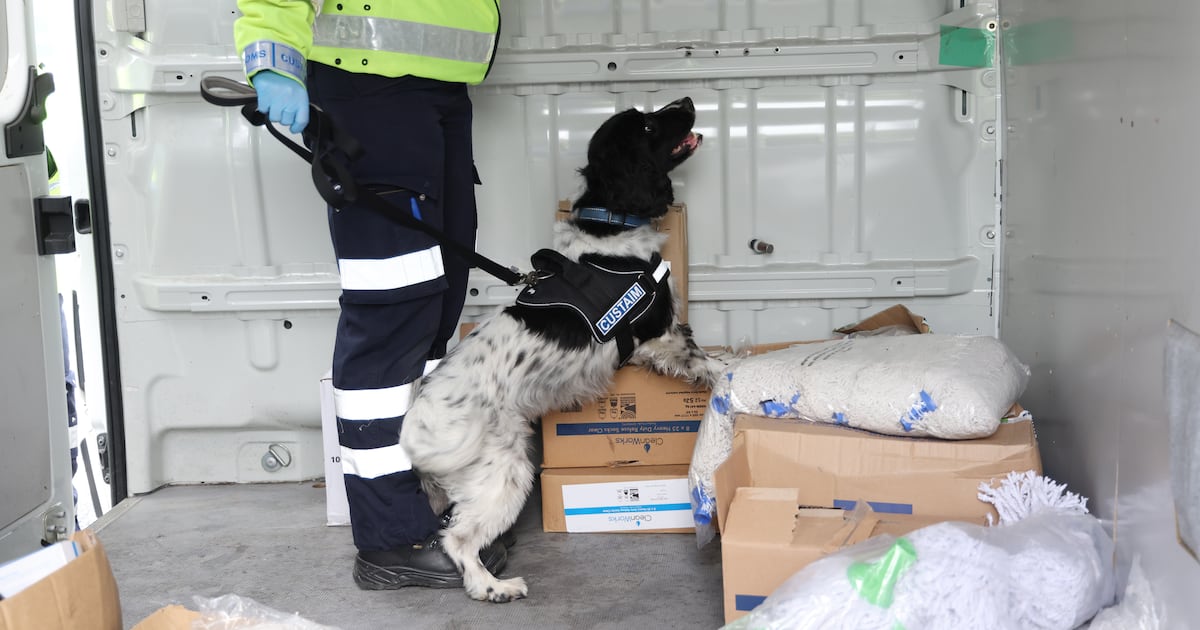
The Revenue Commissioners are keeping details of their team of sniffer dogs top secret over concerns organised crime gangs might profile the canines and use the information for smuggling.Revenue said 24 detector dogs were currently in service, with six retirements since the beginning of 2025 and five new arrivals.Costs to keep the canines in tip-top shape, including vet bills, food, kennelling and training, came to more than €446,000 since the beginning of last year. Nearly €180,000 was spent on specialised training for the sniffer dogs. At least €43,000 of the overall expenditure was paid to the appropriately named company Wagtail Limited. A further €42,000 was paid for kennel installation and around €86,000 for boarding kennels, according to records released under Freedom of Information.READ MOREVeterinary bills and related services came to roughly €53,000 while food and equipment supply cost just over €80,000.The total cost for 2025 came to €226,000 with a further €220,000 spent this year, up until mid-July.Revenue said costs had increased this year as several new dogs were being trained up to join the detection service, while some bills from 2025 were paid in 2026.However, the cost was dwarfed by the value of the contraband the canine unit helped sniff out, including €108.8 million worth of tobacco and drugs as well as €918,000 in cash during 2025.In the first eight months of this year, they helped find €82.1 million of tobacco and drugs and €812,000 in cash.Revenue said their work had led to successful convictions and disruption to the activities of criminal gangs.However, it said a comprehensive database identifying all detector dogs by breed, age, and scent specialism could not be released.“Taken together, this information would provide a detailed operational profile of Revenue’s detector dog capability, including particular strengths and areas of coverage,” a spokesperson said.“From a Customs enforcement and public-safety perspective, such information is considered operationally sensitive and could potentially be used by organised criminal groups to identify perceived vulnerabilities or coverage gaps and adapt their smuggling methods accordingly.”Revenue said it did periodically put the spotlight on individual detector dogs, but this was only done to highlight “retrospective examples of individual successes.”[ ‘They’ll use AI for new drugs’: Ireland’s arms race with organised crimeOpens in new window ]
Revenue keeps sniffer dog details secret over concerns organised crime could exploit them
Full Article
Original Source
Read the full article at Irishtimes →KhanList aggregates and links to publicly available news content. We do not host full articles from third-party sources. Always verify important information with original sources.