
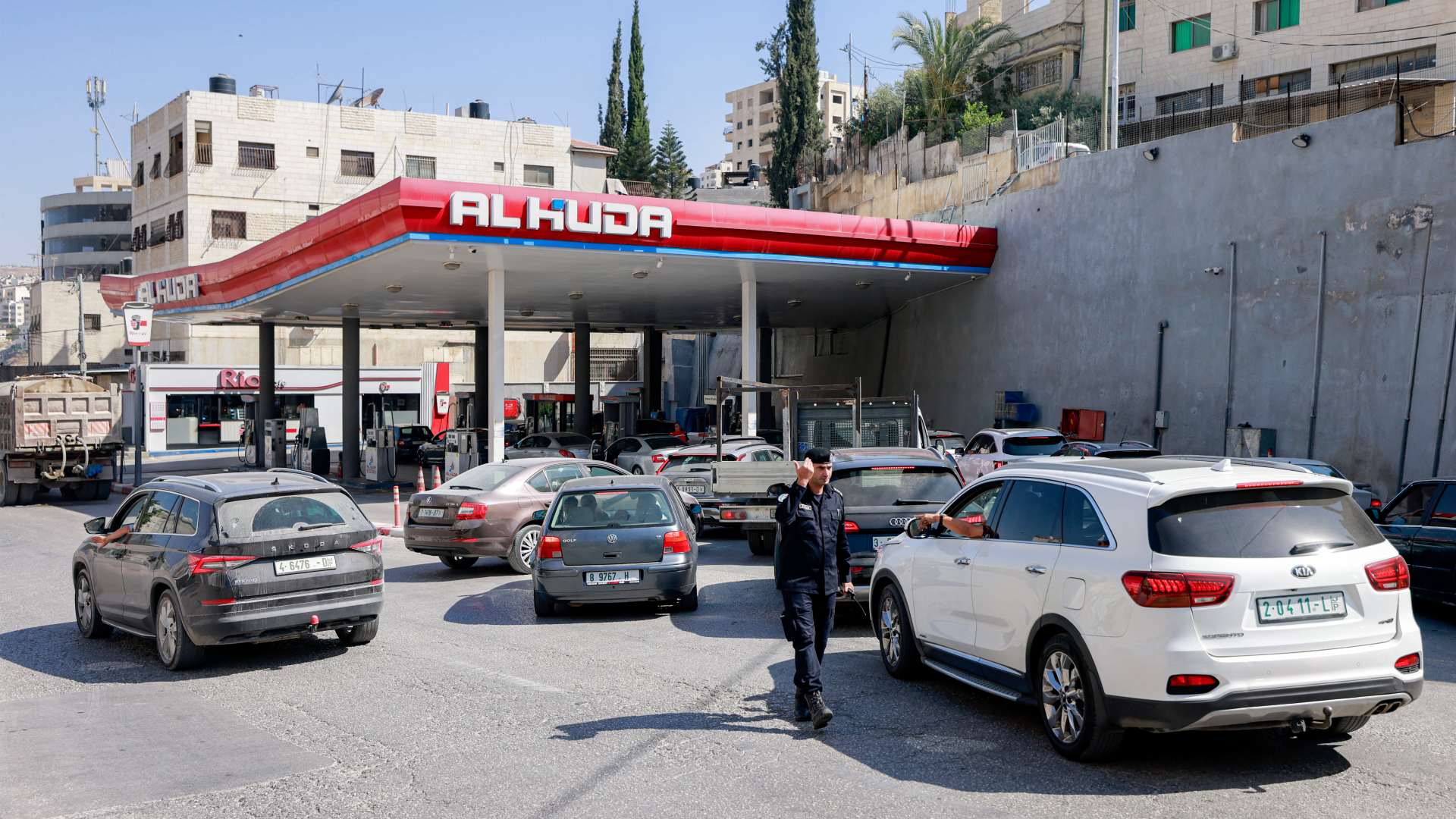
A petrol station chain owned by one of the West Bank’s wealthiest businessmen is facing accusations of alleged fuel smuggling, financial misconduct and tax evasion totalling more than 1bn shekels ($325m), according to a leaked report seen by Middle East Eye. The investigation, which has unfolded against a backdrop of worsening fuel shortages in the occupied Palestinian territory, has led to the arrest and weeks-long detention of Tarek al-Natsheh, the chairman of Al-Huda Group, as well as raids by security forces on his company’s offices and the confiscation of computers and financial records. Lawyers for Natsheh, who is accused in the report of profiting from smuggling activities, say he denies wrongdoing and stands ready to pay any taxes he may legally owe. They say the company and Natsheh are cooperating with legal proceedings, but have criticised his detention, commenting that “personal freedom should not be used as a means of pressure to accept figures whose accuracy has not been established”. MEE sent a detailed list of questions and a request for comment to Malek al-Awri, legal adviser for the defence team, ahead of publication of this article. Awri referred MEE to a previous statement he had given to the Palestinian Watan newspaper last month. New MEE newsletter: Jerusalem Dispatch Sign up to get the latest insights and analysis on Israel-Palestine, alongside Turkey Unpacked and other MEE newsletters MEE has also asked the Palestinian Authority’s Ministry of Finance, which commissioned the report, for comment. Tanker seized Al-Huda Group controls a number of businesses in the West Bank, including Al-Huda Fuel Group, which operates a network of 28 petrol stations across the territory. On 10 July, one of its fuel tankers was seized in Jericho on suspicion of transporting smuggled petrol, prompting PA Finance Minister Estephan Anton Salameh to appoint an audit committee to investigate the company’s operations. In a report seen by MEE, which is understood to date from early September, the committee called for Al-Huda to pay 1,003,189,811 shekels ($322.5m) to the public treasury, which it said was owed as a result of alleged financial misconduct, tax evasion and smuggling dating back to 2020. This consisted of 712,736,591 shekels owed in VAT, unpaid fuel duty and other taxes based on the company’s own records and accounting figures, and 290,453,220 shekels covering a further amount the committee estimated it owed for shipments in which it had been unable to establish how much fuel was smuggled. The committee said this figure did not include interest or fines that might be imposed as a result of its findings. It also called for further investigation and access to the bank accounts of a number of individuals and companies linked to Al-Huda. An extract of the report showing a number of recommendations including payments totalling more than one billion shekels (Screengrab) Fuel supplies in the West Bank are tightly controlled by Israel and the PA. Under an agreement in place since 1994, the PA-run General Petroleum Authority (GPA) is the only body permitted to import petrol into the territory. Almost all of it is purchased from Israeli fuel companies - at Israeli prices - and transported through Israeli-controlled checkpoints. Private companies such as Al-Huda then buy petrol from the GPA. Nonetheless, up to a third of petrol sold in the West Bank is estimated to be smuggled fuel. According to the 35-page report, the files seized from Al-Huda included a number of GPA delivery notes that did not match the GPA’s own records. The driver of the fuel tanker seized on 10 July, whose name was the same as a driver named in the documents, had admitted involvement in previous deliveries of smuggled petrol earlier in 2026, the report said. The driver told investigators these deliveries had been arranged under the direct command of Mazen al-Natsheh, Tarek al-Natsheh’s brother, who serves as the general manager of Al-Huda Fuel Group. Mazen al-Natsheh was detained for questioning in August and initially denied any involvement in, or knowledge of, fuel smuggling. But he later admitted he had organised some deliveries to a petrol station in Jericho because of the seriousness of fuel shortages in the West Bank, according to the report. These deliveries had been arranged through a Palestinian with Israeli identification documents, Mazen al-Natsheh is reported to have told investigators. Tarek al-Natsheh is currently in detention in Ramallah. He handed himself in on 9 September, weeks after prosecutors issued a warrant for his arrest in July. At a court hearing on 22 October, his detention was extended for 45 days, according to local news reports. Tarek al-Natsheh faces accusations of sharing in profits from alleged smuggling operations at Abu Khalil petrol station in Anata in the central West Bank. Tarek al-Natsheh, pictured in a photo posted on Facebook in January 2026 (Facebook) According to a statement made to prosecutors by the owner of the petrol station, Natsheh was a partner in a scheme which started shortly after the start of the war in Gaza and involved smuggling 30,000 to 40,000 litres of petrol a month. The report also cited what it described as a “close and extensive financial relationship” between Tarek al-Natsheh and Al-Huda Fuel Group and others involved in alleged fuel smuggling. Lawyers for Tarek al-Natsheh and Al-Huda have repeatedly stressed in public statements that they deny wrongdoing and are cooperating with the financial investigation and stand ready to pay any money that they may legally owe. 'Legal and accounting principles' When contacted, Malek al-Awri, legal advisor for the defence team, referred MEE to statements made to Watan in early October. Watan reported, citing “informed sources”, that the investigation into the company was complete and had estimated the amount it owed at more than 1bn shekels. Awri said the figure did not constitute an official financial claim or a settled debt and said the case remained under investigation. He said that the defence team had not received the official report or any details of the legal or accounting grounds on which the figure was based. He said its alleged conclusions remained subject to “examination, debate, challenge, and judicial oversight”, Watan reported. Awri said figures and data on which the investigation was based were still under review and scrutiny and that the defence team had “substantial legal, technical, and accounting-based arguments and objections regarding them”. “Awri affirmed that the defence team’s position is clear: they seek to establish the financial truth - documented and based on sound, fair legal and accounting principles - that ensures the recovery of any funds rightfully owed to the public treasury, while simultaneously protecting the rights of the company and the individuals involved,” Watan reported. Commenting on Natsheh’s detention, Awri said that “personal liberty should not be used as leverage to compel the acceptance of figures whose accuracy has yet to be determined”. He said that assets already seized from the company were “sufficient to cover any claims ultimately proven valid through proper judicial proceedings”. 'Personal liberty should not be used as leverage to compel the acceptance of figures whose accuracy has yet to be determined' - Malek al-Awri, legal advisor for Tarek al-Natsheh and Al-Huda Group Awri reiterated the defence team’s respect for the public prosecution, the judiciary, and the finance ministry, and said it was committed to “cooperating with the established legal procedures aimed at uncovering the truth and protecting public funds”, Watan reported. Palestinian security forces, along with customs officers, raided Al-Huda petrol stations at the end of July, confiscating fuel reserves and seizing documents and financial records. On 5 August, the company’s headquarters in Ramallah was raided, with investigators seizing accounting records and equipment, including Tarek Al-Natsheh’s laptop computer. The investigation into Al-Huda has taken place at a time of acute fuel shortages in the West Bank, prompted by factors including tighter Israeli economic restrictions and a deteriorating security situation. The crisis has left Palestinians queuing for hours at petrol stations, and cars stranded on the streets, with Majdi Hasan, the head of the GPA, blaming shortages on panic buying caused by “the lack of stability in the region” in an interview with Voice of Palestine Radio. Hani al-Masri, a Palestinian political analyst and the director general of Masarat, the Palestinian Centre for Policy Research and Strategic Studies, told MEE that fuel smuggling was nothing new and was necessary for Palestinian daily life because Israel exported far less fuel into the West Bank than was needed. “There’s a daily shortage, so there’s bound to be smuggling,” said Masri. “It seems that there is a dispute regarding who benefits from it and how to organise it.” Masri said it remained unclear why Natsheh had been detained, and that there were many unanswered questions about the case. “Clearly there are stories that still aren’t known,” he added. Some reports have sought to link the PA’s crackdown on fuel smuggling to its own dire financial straits, prompted largely by Israeli Finance Minister Bezalel Smotrich’s withholding of funds, including customs and excise revenues, it collects on behalf of the PA under the terms of the Oslo Accords. In October, Palestinian Authority President Mahmoud Abbas signed a decree for the creation of a new PA-controlled “national petroleum company” to control the import, transport, storage and sale of fuel in the West Bank. Speaking to An-Najah Broadcasting Channel in early October, Jawad Obeidat, another lawyer on Natsheh’s defence team, rejected speculation about political interference in the case. “The public prosecution, with all due respect, is performing its role with full transparency and without any outside interference,” he said.
Revealed: West Bank petrol station chain faces $325m claim in PA fuel-smuggling probe
Full Article
Original Source
Read the full article at Middleeasteye →KhanList aggregates and links to publicly available news content. We do not host full articles from third-party sources. Always verify important information with original sources.