The common property rite of passage for graduates and career-focused first jobbers has changed over the past decade. Many careers used to start in London, and an early house-share would be followed by a first flat purchase, then a move to somewhere bigger.However, the heavy burden of housing costs in the capital is making would-be first-time buyers stop and evaluate whether – even with London weighting on some wages – it is possible to get on the ladder there.Some surveys have indicated that the average deposit being put down on a first home in Greater London has reached about £130,000 even as rents continue to rise. So it is little wonder that people are looking beyond London.“For the past decade we have seen a subtle shift in housing and migration patterns, with graduates increasingly weighing up housing costs alongside career prospects, and some choosing to remain in university towns or move to regional cities where housing costs are lower,” says Frances McDonald, the director of research at the estate agents Savills.This shift is decades in the making, with demand outpacing the availability of homes in the capital. “London’s population was 9 million after the second world war but fell below 7 million by the 1970s. It has filled up since then and housebuilding has not kept pace, meaning it has become progressively more difficult for people to move to and then stay in the capital,” says Maurice Lange, a senior analyst at the Centre for Cities thinktank.Lange and McDonald are quick to emphasise London’s dominance, describing this pattern as a slight “weakening” of the pull of London rather than a reversal.The strength of a local economy (measured by growing GDP and population size) and the presence of a particular employment sector, along with lifestyle and housing cost and availability, all play a part in decision-making for young people, Lange says.Research by Savills, shared exclusively with Guardian Money, reveals the best cities for young workers who want to rent, save for a deposit and get on the housing ladder.These are the top 10 cities where you can tap into a dynamic jobs market and enjoy vibrant neighbourhoods. These cities scored well on property affordability, the ratio between rent on apartments and income, and the ratio between the sales price of an apartment and income, as well as showing population growth as people actively relocate there. Our number one is the city with the best flat price to income ratio.Stoke-on-TrentAverage flat price: £88,448 Average one-bedroom flat monthly rent: £664Average annual earnings: £35,079 Average flat price to income ratio: 2.5Stoke-on-Trent is half an hour’s drive to green spaces and into the Peak District. Photograph: Thomas Faull/Getty ImagesIn terms of property prices, Stoke is the cheapest of the 10 starter cities listed by Savills. When students finish at the University of Staffordshire or Keele University, they often rent close by, according to the eXp estate agent Joe Shenton, before getting on the ladder in outer areas such as Trentham. To the south-west of the city, this neighbourhood is home to Trentham Estate, 293 hectares (725 acres) of historic parkland, ancient woodland and gardens, as well as an outdoor shopping village. Here, a three-bedroom semi can start at £250,000 for first-time buyers who skip the flat stage.“Stoke-on-Trent is well situated and well connected (to the A500, A50 and M6). The fastest train to London is less than an hour and a half, and it is 35 minutes into Manchester, and yet it’s half an hour’s drive to green spaces and into the Peak District,” Shenton says. He recommends nearby towns such as Newcastle-under-Lyme for a night out, or Leek for coffee shops. The town of Kidsgrove, too, is popular as it makes for a quick commute into the major jobs markets of Cheshire and has an outlet shopping centre nearby.An attractive local haunt is the Red Bull pub with a beer garden overlooking the Trent & Mersey Canal. Big businesses in and around Stoke include JCB and Emma Bridgewater. The latter is a pottery company that has been manufacturing in Stoke for 40 years and is part of the city’s important ceramics industry. It has close links with the University of Staffordshire, offers graduate placements and has recently launched a ceramics craft apprenticeships scheme at its Hanley factory.HullAverage flat price: £91,815 Average one-bedroom flat monthly rent: £670 Workplace annual earnings: £34,497 Average flat price to income ratio: 2.7Hull offers young buyers jobs, affordable homes and great quality of life, experts say. Photograph: John Morrison/AlamyAccording to Matthew Limb of Limb Estate Agents, Hull offers a great opportunity for first-time buyers to get on the property ladder earlier than in other cities. Young tenants stick to the central areas such as Victoria Dock, Humber Street and the Marina, while first-time buyers often shift to the well-established neighbourhoods of the Dukeries and Kingswood and Hessle on the outskirts for amenities and more green space. Limb has also seen significant growth in Brough, a commuter town 15 minutes on the train from Hull city centre.Big employers include the medical tech firm Smith+Nephew, the offshore wind company Siemens Gamesa, the University of Hull with a teaching hospital and NHS trust, and one of the UK’s leading ports. Limb says: “For many young buyers, it’s the combination of affordability, employment opportunities, connectivity and quality of life. Lifestyle is an important factor, whether it’s independent cafes, restaurants and the cultural scene around Humber Street and the Marina, or waterside living at Victoria Dock, walks at Humber Bridge Country Park or easy access to the Yorkshire Wolds.”DerbyAverage flat price: £111,529 Average one-bedroom flat monthly rent: £770Average annual earnings: £38,532 Average flat price to income ratio: 2.9There are plans to build more homes in Derby. Photograph: Maurice Savage/AlamyDerby was part of the celebrations marking 200 years of the modern railway last year. It is where the Midland Railway opened in 1844, and it is still the home of train design and engineering. A brand-new fleet of trains for London’s Elizabeth line started rolling off the Alstom production line in Derby last month. Rolls-Royce is another major employer, having been based there since 1908.Taj Gill of the estate agent network eXp says Derby is the industrial hub of the East Midlands. “Not only is Derby well positioned in the country (it is now only an hour and a half to London by train) but it is more affordable than neighbouring Nottingham. Over the last decade we have seen people relocate from the south and the north, and students stay to get on the ladder here,” Gill says.Students tend to live in the city centre and Chester Green, home to Derby’s first microbrewery pub, Little Chester Ale House. This is where they rent, and they buy flats, too. Young families head to Allestree. Derby city centre is compact, with independent bars and shops along Sadler Gate close to the Derby Museum and Art Gallery and the cathedral. Two regeneration projects in the city centre have been given the green light, one to build 1,000 homes, while plans have been formally submitted to expand Derby theatre.Milton KeynesAverage flat price: £177,694 Average one-bedroom flat monthly rent: £1,280Average annual earnings: £40,919 Average flat price to income ratio: 4.3There is more to Milton Keynes than roundabouts. Photograph: Chunyip Wong/Getty Images/iStockphotoNext year Milton Keynes, Britain’s biggest purpose-built new town, turns 60. Derided for decades as a soulless suburb of seemingly infinite roundabouts (130 in reality), for Centre for Cities’ Lange, Milton Keynes is the urban growth story of the millennium. It is well located for those who work in London, Oxford and Cambridge while paying lower housing costs.Only last month, the first passengers arrived at Cambridge South railway station, which is designed to bring commuters into the biotech campus and to support an east-west railway line that will eventually connect London, Cambridge, Milton Keynes, Bedford and Oxford.Milton Keynes has its own sizeable jobs market, too, with several big companies based there, such as Red Bull Racing, Mercedes-Benz, Domino’s, Santander and the Open University. Young professionals often rent in central Milton Keynes, where one-bedroom apartments can go about £1,195 pcm next to the station or around the large green space of Campbell Park (here, a two-bedroom apartment in a new block will rent for about £1,150 pcm). The central shopping area and station are walkable from here, as is Willen Lake in the other direction and the Grand Union Canal. There are rowing, angling, sailing and canoeing clubs at Caldecotte Lake, and indoor skiing at the Xscape centre.LiverpoolAverage flat price: £160,286Average one-bedroom flat monthly rent: £841Average annual earnings: £36,371Average flat price to income ratio: 4.4Liverpool is cheaper than Manchester for first-time buyers. Photograph: Christopher Furlong/Getty ImagesLiverpool, a Unesco City of Music, is cheaper than neighbouring Manchester for first-time buyers, where it can cost about £130,000 more on average to buy a flat. Some of the most expensive penthouses and apartments can be found around the commercial district – home to the big banks and the big four accountancy firms, with a growing fintech element, too.According to the Liverpool Business Improvement District, 76% of students from across four universities stay on in the city because of these and other businesses. This is the centre of culture for Liverpool, too. Castle Street is heaving with bars and restaurants and round the corner from the Cavern Club. The Science Park and the Philharmonic Hall are within walking distance.Studio apartments will cost about £800 pcm in this central zone, but head slightly north to Vauxhall for two-bedroom apartments at the same price. Walton, just to the north of Anfield, with parkland, is an emerging hotspot for first-time buyers, says Whitegates estate agents, while high-earning young professionals are increasingly attracted to the redeveloped waterfront.The Titanic hotel and the transformation of the world’s largest brick warehouse, Tobacco Warehouse, into apartments are part of the redevelopment of Stanley Dock. “A third of buyers purchasing homes in the first phase of Tobacco Warehouse were first-time buyers,” says Nick Goldsworthy of the estate agents Logic.PlymouthAverage flat price: £152,286 Average one-bedroom flat monthly rent: £805Average annual earnings: £33,930 Average flat price to income ratio: 4.5Plymouth is ideal for buyers who enjoy the outdoors, while new funding promises more jobs in defence and aerospace. Photograph: Roy Perring/AlamyAlthough Plymouth has the slowest population growth of the 10 cities named by Savills, it is undergoing great change. The government’s defence investment plan should provide funding and jobs in the historic naval city. Babcock, the international defence, aerospace and nuclear engineer, is the major employer in Plymouth, with apprenticeships and graduate schemes, and is behind the modernisation of the Devonport Royal Dockyard. This 263-hectare (650-acre) naval base has been in operation since 1691, covers four miles of waterfront and is the largest naval base in western Europe. It is home to the UK’s huge amphibious ships and generates 10% of Plymouth’s income.Babcock has redeveloped the old Dingles department store in the heart of town for its office-based workers as part of the upgrade of Armada Way. Other parts of Plymouth that have recently been improved include the Grade I-listed military buildings of Royal William Yard, which have been transformed into a new neighbourhood of shops, restaurants and homes overlooking Plymouth Sound.The Box museum of art and history was named the Art Fund museum of 2026, and the art deco Tinside Lido – an impressive saltwater pool – has been spruced up. This is a city for those who love being out on the water or outdoors, with the countryside of Devon and Cornwall on the doorstep. Young professionals gravitate to Peverell, St Jude’s and the Barbican, while some first-time buyers even commute via ferry from the beautiful Cornish villages of Cawsand and Kingsand.SouthamptonAverage flat price: £170,211 Average one-bedroom flat monthly rent: £914Average annual earnings: £36,462 Average flat price to income ratio: 4.7Southampton has a sailing and yacht-selling scene. Photograph: High Level/ShutterstockSouthampton – one of the UK’s greenest cities with 50 parks – offers plenty of sporting events and concerts. There’s also a whole sailing and yacht-selling scene, and the Southampton International Boat Show.Many a Hundred cricket match is played at Hampshire’s home ground, the Rose Bowl, and the Saints football team bobs up and down between the Premier League and the Championship. The O2 Guildhall hosts gigs by internationally famous acts.The University of Southampton and Southampton Solent University are big employers, along with the NHS and the maritime and logistics businesses around the port. The Hampshire and Isle of Wight Air Ambulance has just moved to a new £3.6m facility at Southampton airport.The south coast city ranks highly for affordability in the Savills study but also in an annual report from the consultancy firm PwC, which measures “good growth” in UK cities based on job prospects, housing costs, salaries and work-life balance. Young professionals tend to head to Ocean Village at the mouth of the River Itchen next to the marina to rent, while first-time buyers find more space and affordable options in Shirley around the vast Southampton Park. For keen cyclists and horse riders, the New Forest is on the doorstep.CardiffAverage flat price: £174,944 Average one-bedroom flat monthly rent: £1,030 Workplace annual earnings: £36,405 Average flat price to income ratio: 4.8Cardiff Bay is now an events hub and home to the Wales Millennium Centre for arts and music. Photograph: Wales/Alamy“It isn’t easy getting on the ladder anywhere, but I think we see more first-time buyers here than many other cities,” Claire Turner of Savills says. “Graduates stay or move from Swansea and the other Welsh universities to rent and then buy before using the equity to perhaps move on. We have commuters, too: working in Bristol but buying on this side of the channel, where they get more for their money.”Cardiff Bay (formerly known as Tiger Bay) was a no-go area of derelict docklands until the regeneration project started 30 years ago. The 202-hectare (500-acre) area is now an events hub and home to the Wales Millennium Centre for arts and music, Mermaid Quay (full of bars and restaurants), the Welsh parliament and a wetlands nature reserve. Next is the Atlantic Wharf development behind Cardiff Bay, where a 15,000-capacity arena is being built surrounded by hotels and restaurants. Next year, stage three of the Tour de France 2027 Grand Départ comes to the city, where cycling is a way of life.There are plenty of career opportunities here, with the insurer Admiral and Starling Bank among the big names that have bases here, a focus on the digital sector and tech, and a strong international culture and sporting scene.Canton is said by many to be the most popular area for young workers to rent and go out. It is possible to rent a two-bedroom apartment here for less than £1,000 pcm.GlasgowAverage flat price: £195,800 Average one-bedroom flat monthly rent: £1,006Average annual earnings: £38,874 Average flat price to income ratio: 5Population growth is on the up in Glasgow. Photograph: yvonnestewarthenderson/Getty Images/iStockphotoGlasgow received a major boost in 1990 when it was named as the European Capital of Culture – the first in the UK. The honours continue to roll in. In 2008 it was named Unesco City of Music, and in 2019 a European Commission report listed it as the UK’s top cultural and creative centre.The city has financial and professional services jobs and a strong leisure scene. Although not as affordable as Dundee or Aberdeen, it is cheaper than Edinburgh, where the average flat price is £291,634 and the average monthly rent is £1,186. Unlike Aberdeen and Dundee, where the population growth has slowed, it is on the up in Glasgow – the sign of a growing economy, according to the Centre for Cities.Lisa Pitchers of the estate agent Rettie says a high proportion of graduates stay in Glasgow as tenants and then first-time buyers. Popular neighbourhoods include Dennistoun, where you can rent a one-bedroom flat for £750 per calendar month (pcm) and buy a one-bedroom flat in a converted building from £185,000. “We’ve found that since a few of the US financial companies have issued return-to-office mandates, there is an increasing number of first-time buyers purchasing in the city rather than heading out to the suburbs. They want to be within reach of work and amenities,” Pitchers says.NorwichAverage flat price: £159,671 Average one-bedroom flat monthly rent: £890Average annual earnings: £32,019 Average flat price to income ratio: 5Norwich is popular with science and arts workers. Photograph: eye35.pix/AlamyNorwich is rapidly becoming a key “starter city”, says Hannie Theobald of the estate agent Jackson-Stops. Graduates and young workers from different sectors stick around because of its focus on science and the arts. Norwich Research Park spans 100,000 sq ft with 50 businesses and is partnered with the University of East Anglia. Its purpose is scientific research around agricultural food, nutrition and the environment. “The city’s research park is a major driver of employment – it’s one of the largest of its kind in Europe – and is a motivator in many graduates opting to stay put and kickstart their career here in what is an affordable and fun city,” Theobald says.Renters and first-time buyers head to the north side of Norwich, the more affordable part of town. Roads such as Constitution Hill and St Clements Hill have small, terrace cottages with prices that start from about £350,000 compared with £500,000 in the west of the city. “The area has seen a lot of growth in recent years, with several good independent shops popping up and some excellent pubs, including the Rosebery, the Stanley, the Brewery Tap and the Artichoke,” says Ian Parsons of the estate agents Strutt & Parker. There are also plenty of coffee and breakfast spots here, including the Street Cafe, Olive’s and Sahara, and the dining-out scene is changing for the better, too.”MethodologyThis “starter cities” index is based on data from Savills, Oxford Economics and the Land Registry, including average second-hand flat prices up to 2025, workplace annual earnings by local authority, and average monthly asking rent for one-bedroom flats for the 12 months to February 2026. The rankings were sense-checked with the Centre for Cities thinktank.
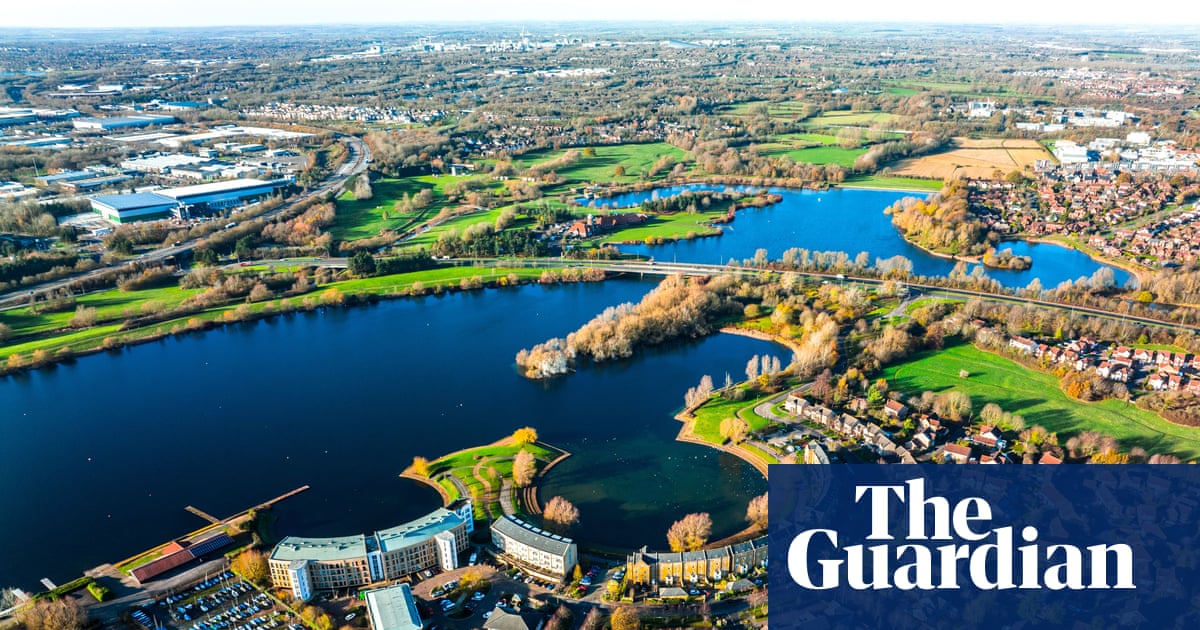
Revealed: the top 10 UK cities for first-time buyers
Full Article
📰 Original Source
Read full article at Theguardian →KhanList aggregates and links to publicly available news content. We do not host full articles from third-party sources. Always verify important information with original sources.