
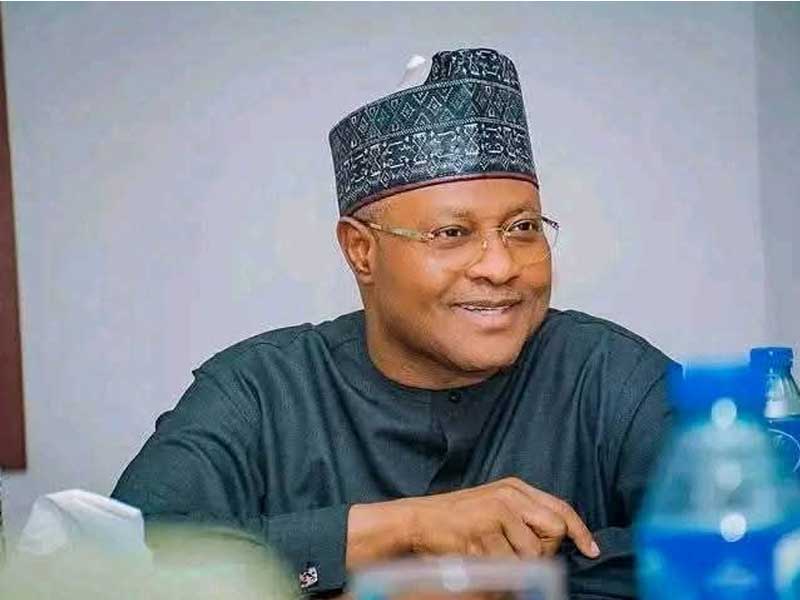
Uba Sani is committed to repositioning the State as one of the nation’s foremost sporting destinations, writes HAMEED ZAKARIA There are some public projects whose significance cannot be measured merely by the concrete, steel, turf and structures that they produce. Their real value lies in the memories they revive, the opportunities they create, the aspirations they ignite and the future they make possible. The ongoing reconstruction of the Ahmadu Bello Stadium (ABS), Kaduna, belongs in that category. When Governor Uba Sani speaks of rebuilding the stadium, therefore, he is speaking about something considerably bigger than renovating a sporting facility. He is speaking about restoring a legacy, reviving a sporting culture and repositioning Kaduna State as one of the foremost sporting destinations in Nigeria. The symbolism is particularly powerful because the stadium bears the name of one of the most consequential figures in the history of Northern Nigeria — the late Sir Ahmadu Bello, the Sardauna of Sokoto and Premier of the former Northern Region. The Ahmadu Bello name carries with it a tradition of vision, institution-building and service to society. Restoring the stadium to a world-class standard is, in many respects, a statement that Kaduna is determined to renew that tradition of excellence. Governor Sani’s administration has set out an ambitious vision for the facility. The reconstructed stadium is expected to have a 33,000-capacity main bowl, more than twice its original 16,000 capacity, alongside a hybrid turf described by the governor as the first of its kind in Nigeria. The training pitches have already been completed, while work continues on the main bowl, ticketing points, media centre and athletes’ hostel. These are important physical developments. But the more compelling question is: What will a revitalised Ahmadu Bello Stadium mean for Kaduna and its people? The answer begins with the young people. Kaduna is a state with a significant youthful population. For thousands of young people, sport is not merely entertainment. It represents an avenue for self-expression, discipline, friendship, livelihood and, potentially, a pathway out of poverty. Football in particular possesses an extraordinary capacity to capture the imagination of young Nigerians. A boy kicking a ball on a dusty neighbourhood field can see himself becoming the next Nigerian football star. A young woman discovering her talent in athletics can dream of representing Kaduna and Nigeria on the international stage. A properly equipped sporting complex can transform those dreams from distant fantasies into realistic possibilities. For instance, contemporary historical football records have Kaduna as the base of “DIC Bees” (Defence Industries Corporation). DIC Bees is very much part of Kaduna’s sporting heritage story. The club reached the 1983 Challenge Cup final, where they lost to Rangers International on penalties after a 0–0 draw, before later becoming Ranchers Bees and achieving further glory, including winning the WAFU Cup in 1989 This is where the reconstruction of ABS assumes enormous significance. A modern stadium can provide the infrastructure around which an entire sporting ecosystem can be reestablished. It can accommodate football, athletics and other sporting activities; provide training facilities for young athletes; attract professional clubs; host competitions; and create an environment where sporting talent can be identified, nurtured and exposed. The governor himself has identified this wider objective, stressing that the administration’s ambition goes beyond rebuilding a stadium. It is about attracting major competitions, expanding opportunities for young people, increasing internally generated revenue and stimulating wider economic activity. That is an important way of looking at public infrastructure. A stadium of international standard does not serve only the footballers who play on its pitch. It creates demand for coaches, sports administrators, physiotherapists, security personnel, event managers, caterers, transport operators, hoteliers, journalists, photographers, vendors and numerous other service providers. When major competitions come to Kaduna, thousands of visitors may require accommodation, transportation, food and other services. Local businesses benefit. Hotels become busier. Restaurants attract customers. Transport operators earn more. Young people acquire skills and employment opportunities. In that sense, sport can become an instrument of economic development. But perhaps one of the most profound benefits of the sporting renaissance envisaged by the Uba Sani administration is its potential contribution to youth engagement and social stability. Across communities affected by insecurity, one of the vulnerabilities of young people is the absence of meaningful opportunities. An idle young person with little hope of employment, education or productive engagement can become susceptible to manipulation by criminal and extremist elements. This is not to suggest that poverty or unemployment automatically turns young people into terrorists. It does not. But terrorist and criminal organisations can exploit frustration, alienation, unemployment and the absence of hope in recruiting vulnerable individuals. Sport offers an alternative. A football academy, athletics programme, basketball court or properly organised youth competition may appear modest when viewed individually. Collectively, however, such programmes can give young people something invaluable: a sense of purpose. The young person who spends his afternoon training, preparing for a tournament and working toward a sporting goal is spending that time developing discipline, relationships and ambition. The young athlete who believes that talent can earn a scholarship, a professional contract or a place on a state or national team has a reason to invest in his or her future. This is why the sporting dimension of governance should not be dismissed as mere recreation. For Kaduna, sport can be part of a broader strategy of youth empowerment and social resilience. The reconstruction of ABS also carries a historical responsibility. Kaduna has played a remarkable role in the development of Nigerian football. The state has produced and nurtured footballers, administrators and sporting personalities who have contributed to Nigeria’s reputation at home and abroad. The stadium itself has been part of that history. By restoring it, Kaduna is effectively reopening a chapter that had been allowed to fade. The governor’s decision to use the occasion to honour the members of Nigeria’s legendary Atlanta 1996 Olympic football team adds another powerful dimension to the initiative. Daniel Amokachi, Garba Lawal, Emmanuel Babayaro and other sporting icons joined Governor Sani on the inspection tour. Their presence was a reminder of an era when Nigerian football captured the imagination of the world. The Atlanta 1996 victory was more than a sporting triumph. It was a moment of national pride. Nigeria’s dramatic victory announced the country’s footballing talent to the world and inspired an entire generation. Yet, according to the governor, the players were promised land and streets named in their honour three decades ago, promises that remained unfulfilled. The Uba Sani administration’s decision to allocate land to the legends and name streets across Kaduna State after them therefore represents more than ceremonial recognition. It is an attempt to correct an old omission. Societies are judged partly by how they treat those who have brought them honour. Athletes who sacrificed years of training, endured setbacks and represented their country deserve recognition that extends beyond applause immediately after victory. Naming streets after them gives their achievements a permanent place in the physical landscape of the state. Allocating land to the legends gives practical expression to that appreciation. More importantly, it allows today’s young people to encounter the names of yesterday’s heroes and ask the obvious question: Who were these people, and what did they achieve? That is how sporting heritage is transmitted from one generation to another. Governor Sani’s November 2026 completion target for the reconstruction of ABS is consequently worth watching closely. If delivered as projected, Kaduna would not have simply renovated a stadium, but a modern sporting complex capable of hosting major local and international competitions. That could have profound implications for the state’s sporting identity. Kaduna’s ambition should not end with the completion of the stadium, however. The infrastructure must be matched by programmes that make it accessible to young people across the state. Talent identification, grassroots competitions, academies, coaching programmes, school sports and opportunities for young athletes should form part of the larger vision. The stadium should become the centre of a sporting network extending beyond Kaduna metropolis into the state’s communities. That is where the true legacy of the project will ultimately be measured. The real success will not simply be the number of seats in the stadium or the quality of its turf. It will be measured by the young footballer who discovers a pathway to professionalism; the athlete who receives the training needed to represent Kaduna; the coach who finds employment; the entrepreneur whose business grows because competitions are coming to the state; and, perhaps most importantly, the young person who chooses a life of purpose and possibility over the destructive alternatives offered by criminal or terrorist recruiters. This is why Uba Sani’s sporting initiative deserves to be viewed within the broader context of governance. Rebuilding the Ahmadu Bello Stadium is about physical infrastructure, but it is also about psychological infrastructure — rebuilding confidence, restoring ambition and reminding Kaduna’s young people that their state can provide platforms upon which their talents can flourish. The name Ahmadu Bello is itself a reminder of what visionary leadership can achieve when institutions are built with the future in mind. Today, decades after the stadium first became an important landmark in Kaduna’s sporting history, Governor Uba Sani is seeking to give that institution a new lease of life. His message is clear: Kaduna does not merely want to remember its sporting glory. It wants to rebuild the foundations upon which a new generation can create another one. And perhaps that is the most compelling aspect of the entire project. Kaduna is not simply rebuilding a stadium. It is rebuilding a sporting culture, honouring its heroes, creating opportunities for its youth and reclaiming a place it once occupied with distinction in Nigerian sports. If that vision is pursued with consistency beyond the construction phase, the reconstructed Ahmadu Bello Stadium could become much more than a magnificent sporting arena. It could become a symbol of Kaduna’s renewal — a place where history meets opportunity, where heroes are remembered, where young talents are discovered, and where the dreams of a new generation are given room to run. Zakaria, a freelance sports journalist, writes from Kaduna
RESTORING KADUNA’S SPORTING GLORY
Full Article
Original Source
Read the full article at Thisdaylive →KhanList aggregates and links to publicly available news content. We do not host full articles from third-party sources. Always verify important information with original sources.