
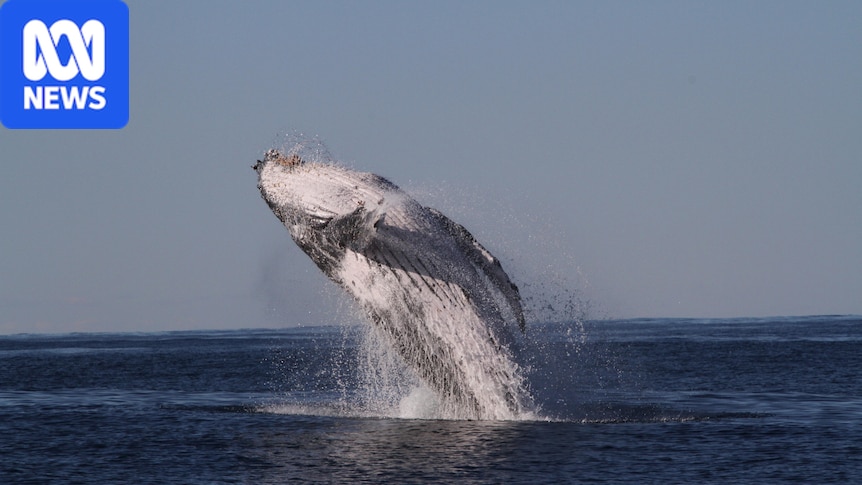
Researchers say a drop-off in humpback whales migrating along Western Australia's coast this year reflects a developing trend across the Southern Hemisphere.Observable whale numbers making the annual journey from the Southern Ocean to WA's northern waters dropped by 60 per cent this year.Whale researchers and watchers also saw fewer calves and more strandings and entanglements along the state's coastline.Mothers with calves were also scarce on the southern migration after birthing off the north Kimberley."It certainly has been an odd year for the humpback whales," Geographe Marine Research team leader Capri Jolliffe said.Marine Scientist Olaf Meynecke also described the season as "strange.""Reports around the Southern Hemisphere, from different populations of humpbacks, are all telling the same story of low numbers," Dr Meynecke said.The Griffith University researcher said the earlier sea ice melts meant the whales were spending less time in their feeding grounds.Four dead whales have washed ashore during November and October along popular beaches in WA. (ABC News: Lucy Murray)At the same time, lower food supplies due to changing krill populations and phytoplankton blooms were also having an impact."We had mums looking quite thin," Dr Meynecke said."You can see their fat reserves have been depleted and that's concerning because they need enough milk for their calves."We've had strandings of unhealthy whales, seen unfit whales."Population cycles no surprise for whale watcherCameron Birch says he is not worried about this year's drop in whale numbers. (ABC Kimberley: Vanessa Mills)Veteran Broome whale watcher Cameron Birch said he travelled much further than normal from the coast to find whales for tourists."We went nearly twice as far out, 10 or 12 nautical miles offshore," he said."And definitely less on the water, instead of interacting with 10 or 15 whales a day, it might only be two or three."Whale watching is a popular activity in Broome from June to October. (ABC Kimberley: Vanessa Mills)But Mr Birch believes the drop-off is not yet cause for alarm."Over the last 25 years we've seen this cyclic seasonality — we'll have amazing numbers for a few years, then they'll thin out," he said."And we've had times, say three years in a row, of low numbers then bang; they just bounce back again."So until we start to see a pattern, I wouldn't be concerned."A mother humpback whale and calf in Exmouth Gulf in a previous year's migration. (Supplied: Murdoch University)Dr Meynecke said whale entanglements had risen to 60 this year across Australia, a jump of 20 per cent.But he feared for their survival rate and that there could be many more unreported entanglements."There's a tragedy behind every number, but what are the grey numbers? They could be double," he said.Dr Olaf Meynecke, seen tagging a whale, says there needs to be more shared research globally on whales and marine environments. (Supplied: Dr Olaf Meynecke)Dr Meynecke said ongoing research was vital, as humpbacks were often a bellwether for other whale populations."If humpback whales start to struggle then all the other large whales start to struggle," he said."They're all signals telling us they're experiencing change."
Researchers worried by decline in migrating humpback whales off WA
Full Article
Original Source
Read the full article at Abc →KhanList aggregates and links to publicly available news content. We do not host full articles from third-party sources. Always verify important information with original sources.