
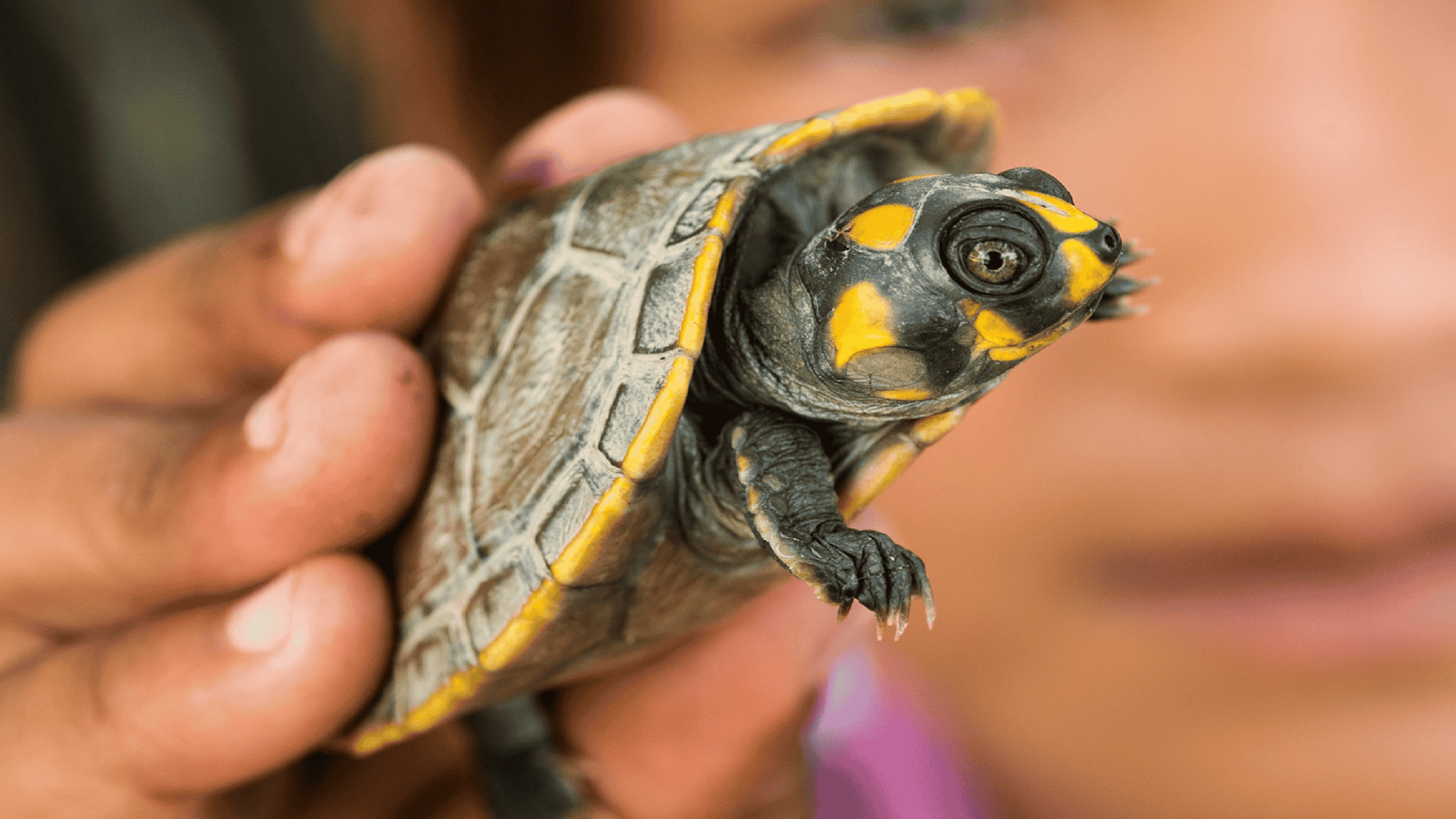
Researchers conducted a comprehensive review of scientific studies to provide an overview of wildlife trafficking in the Brazilian Amazon and help close the information gap about animal abuse in the region.Amazon birds are the main targets of wildlife traffickers, followed by mammals, reptiles and fish, the researchers found.Feeding and using animals in religious rituals or for medicinal purposes are main drivers of violations.Brazil’s neighboring countries act as export hubs for Brazilian wildlife, such as zebra pleco fish sent to Asia through Colombia. Home of the world’s largest biodiversity, the Brazilian Amazon is one of the main hubs for international wildlife trafficking. Every day, thousands of animals are taken from the rainforest to be sold in other parts of the country and abroad. Despite its key role in this illegal market, there is still a lack of information about wildlife trafficking in the region. Data on animal seizures is scattered at the municipal, state and federal levels. The lack of an integrated system, along with the region’s vast territories and porous international borders, makes it difficult to get a full picture of wildlife trafficking in the rainforest. “Every river you travel on in the Amazon will have traffic incidents,” conservation intelligence specialist Antônio de Carvalho, from the conservation NGO WCS Brazil, told Mongabay in a phone interview. WCS Brazil is currently working on a Global Wildlife Trafficking Observatory, which will rely on artificial intelligence to gather information about wildlife trafficking from news websites and academic researchers. The goal is to support the work of investigators, environmental agents and journalists. “A lot of data on seizures is lost because the seizure is simply carried out and the animals are released right there on the spot, and that doesn’t even make it into official statistics,” Carvalho said. The zebra pleco (Hypancistrus zebra) lives only in a small stretch of the Xingu River, in Pará, and is highly coveted as an ornamental fish. Image courtesy of Birger A. In another attempt to close this information gap and help shape strategies to protect Brazil’s biodiversity, researchers analyzed 34 scientific papers about wildlife trafficking in the Brazilian Amazon to identify the main drivers, routes and targeted species. The study was published in July in Human Ecology. “I felt that a broader perspective [on the topic] was missing — like a bird’s-eye view,” lead author Marta Custodio Lopes, from the Federal Rural University of Pernambuco, told Mongabay in an interview. The study identified 137 wild animal species being illegally traded in the Brazilian Amazon. Most of them were birds (36.4%), followed by mammals (28.4%), reptiles (18.9%) and fishes (15.3%). “Throughout Brazil, birds are the main drivers of traffic, and in the Amazon I encountered a wide variety of bird species [being illegally traded],” Lopes said. Unlike other parts of the country, however, the pet trade is not the only driver of bird trafficking in the Amazon. “There were many large and medium-sized bird species that were used for food, which is a more local characteristic,” she explained. Food is also a huge driver for trafficking of Amazon turtles and their eggs, which are consumed in Brazil and smuggled to neighboring countries. According to Carvalho, a well-known route crosses the border with Peru and then reaches Asian countries. “Podocnemis [a genus of freshwater turtles] hatchlings arrive in Asia and are taken to farms, where they are fed as if they were fish. There, they grow and are slaughtered,” he said. Medicinal, spiritual and religious purposes are also main drivers of wildlife trafficking in the Brazilian Amazon, Lopes’ research found. Birds are among the main targets of wildlife trafficking in the Amazon, and are often sold in open air markets across the country. Image courtesy of Daiane Cortes/IBAMA. “I found it interesting that more than a third of the species trafficked are used for mystical and religious purposes,” biodiversity consultant Sandra Charity told Mongabay. “But I felt there was a lack of results that would justify a tourism-oriented purpose — for example, ‘ecotourism’ experiences involving swimming with captive river dolphins, as well as the dozens of mini-zoos scattered throughout the Amazon.” In 2020, Charity and Juliana Ferreira, executive director at Freeland Brasil, produced a comprehensive report on wildlife trafficking in Brazil for the international NGO Traffic. They relied on a variety of data, including wildlife seizures from IBAMA, Brazil’s environmental agency, media reports and interviews with environmental agents. Lopes’ study, in turn, relies solely on peer-reviewed articles published in scientific journals, which limits its scope to areas most accessible to academic researchers. “We have several blind spots where I haven’t found any articles,” Lopes said. “Researchers don’t have the funds to conduct research far from river channels or state capitals.” Neighboring countries serve as export hubs Many traffickers use Brazil’s neighboring countries as export hubs for the Amazon wildlife. One example is the zebra pleco (Hypancistrus zebra), a critically endangered fish endemic to the Xingu River, in Pará state. Highly coveted as an ornamental fish, the species travels 2,000 kilometers (1,242 miles) in the hands of traffickers to reach the tri-border area between Brazil, Colombia and Peru. “It leaves the Xingu region, crosses the entire state of Amazonas to reach the border, and once it enters Colombia, it is sold to countries such as the United States and Germany,” Carvalho said. In early September, Mongabay reported that the zebra pleco was also for sale at Bangkok’s Chatuchak Market in Thailand. According to Carvalho, Amazon river people are paid around one real ($0.19) per fish, which are sold up to 300 reais ($58) in the United States. “It becomes very valuable.” Map with the main wildlife trafficking routes in the Brazilian Amazon. Image from “The Illegal Wildlife Trade in the Brazilian Amazon: A Systematic Review of Patterns, Routes, and Drivers,” published in Human Ecology. The municipalities of Tabatinga, in Brazil, and Letícia, in Colombia, are separated by a single street and considered “mandatory checkpoints along the trafficking route” according to Traffic’s 2020 report. “In this border region, wild animals such as freshwater turtles and fish for consumption are transported and sold in large quantities,” the report states. Other important wildlife trafficking routes go through Guyana and Suriname. Unlike Brazil, these countries allow the capture and trade of certain quantities of native animals. According to experts, animals illegally captured in Brazil are laundered in these countries and then sent to other international markets. “The routes are determined by the relative ease with which the illegal origin of many Pan-Amazonian species can be laundered,” Charity said. According to her, wildlife trafficking in the Brazilian Amazon has been increasingly linked to other environmental crimes, such as illegal logging, and to cartels. Banner image: Some species of Amazon turtles, such as the yellow-spotted river turtle (Podocnemis unifilis), are part of the diet of many Amazon people. Image courtesy of Valdemir Cunha/Greenpeace. Vantara in talks with Brazil on ‘strategic cooperation’ on threatened species, FOIA documents reveal Citation: Lopes, M. C., Alves, R. R. D. N., Schiel, N., … De la Fuente, M. F. (2026). The Illegal Wildlife Trade in the Brazilian Amazon: A Systematic Review of Patterns, Routes, and Drivers. Human Ecology, 54(4), 59. doi:10.1007/s10745-026-00715-z FEEDBACK: Use this form to send a message to the author of this post. If you want to post a public comment, you can do that at the bottom of the page. Credits Topics
Researchers uncover hidden routes and patterns of Amazon wildlife trade
Full Article
Original Source
Read the full article at News →KhanList aggregates and links to publicly available news content. We do not host full articles from third-party sources. Always verify important information with original sources.