
When I first settled in the U.S. in 2016 to teach economics at a small liberal arts college in Upstate New York, my friends back home in Türkiye bombarded me with tons of questions about my new country. What struck me most about the cities, people, universities, and culture? They were expecting to hear something about American small talk, skyscrapers, or endless cornfields. I talked about runners. They were everywhere. And what surprised me most was the popularity of long-distance running among my colleagues and students.I soon began to log more miles myself. I had always been a runner, but in my culture, running is mostly a complementary activity: We Turkish people run before our workout to warm up or to increase endurance for other sports such as soccer and basketball. After moving to the U.S., I found myself defending long-distance running to my friends back home. “All the educated and smart people here run,” I told them. “Running is good and can make me smarter, too.” I realized I was making two distinct claims, and I started to wonder which one is actually true: Do smart people run, or does running make people smarter?Several studies and statistics confirm that running has been a sport among educated people from the start: Data from the 1998 New York City Marathon, which documented the occupations of the finishers of the race, shows that about half of them belonged to the “professional managerial class,” one of whose main five occupations is “teacher educator.” Sociologist Vincent Serravallo, who analyzed this data, noted that the other two classes—the working class and business owners—were represented only with 18 percent and 2.6 percent, respectively. Other statistics confirm that running is the sport of high achievers: The 2009 American National Runner Survey, for example, revealed that 79 percent of runners had an undergraduate or graduate college degree and 73 percent of them had an annual income of at least $75,000 (equivalent to about $116,700 today). This data suggests that educated people are more conscious about their health, and therefore may spend more time exercising and running.Health benefits may be an important motivation, but people run for different reasons, says Mary Pritchard, PhD, a health psychologist at Boise State University who studies diet and exercise habits. What defines people in academia is their ability to concentrate (more than their intelligence), and running can feed that ability. “Running helps with your focus and drive,” Pritchard says. “If you’ve ever been a distance runner, you have that ability to focus and ignore the pain, ignore the hunger. I think that translates into other areas of your life.” In his memoir What I Talk About When I Talk About Running, Haruki Murakami discussed how being a runner helped him become a novelist, another occupation that requires sustained focus over a prolonged period.Running itself has “relatively low cost of entry”—all you need is a pair of shoes and motivation, says Eric Martin, PhD, a professor of Sport and Exercise Psychology at Boise State University. But socioeconomic factors like neighborhood safety and social support also play a role, he adds, and are influenced by income. In addition, running is costly in terms of time; you have to find time to run but also to recover and rest. Many physical and psychological benefits can be observed “after just a 20- to 30-minute moderate-intensity session,” Martin says. But if you run to have mental clarity to solve some bigger problems by working them out in the background when running, you may need more than a quick run, Pritchard adds.When it comes to whether running genuinely boosts intelligence, the experts were careful not to favor running over other cardio exercises, such as cycling and swimming. And they couldn’t tell which direction of causality is correct: from running to smartness or from smartness to running. Pritchard compared the problem to the chicken-and-egg paradox; it is difficult to determine which one is the cause and which one is the effect. “Running doesn’t necessarily make people smarter, but I would say engaging in consistent physical activity can support cognitive functioning and psychological well-being,” Martin says.There may be one more reason why running is so attractive to intellectuals: It is inherently political. During the 1970s, runners (along with cyclists) were among the first to object to the hegemony of automobiles over the use of public spaces. Running on the road, despite the aggressive behavior of drivers, was a political attitude that transformed our understanding of the use of urban space. Women, minorities, and people from different social classes also had to change the political landscape surrounding the use of public spaces and fought to run wherever and whenever they wanted. In his article titled “Positive Addiction: Running and Human Potential in the 1970s”, Darcy C. Plymire mentioned how the desire to create alternative lifestyles and a social reality caused the number of runners to surge in the U.S. during that decade. Running was the preference of the idealistic and socially conscious baby boomer generation. People in academia who are well-known for their universalist tendencies may be sticking to the preferences of the former generations.In my own experience, running has helped me in different ways at different stages of my life. At the beginning of my academic career, it helped me cope with the stress of big projects that required relentless persistence, such as writing my PhD thesis. Later in my life, I realized that to be good at a primary activity—whether running or being a professor—one needs to engage in secondary activities, such as resistance training for running and improving communication skills for academia. Finally, as I get older, thanks to running, I have learned the importance of taking breaks: training is incomplete without recovery, just as learning is incomplete without rest and sleep. So, if running has made me smarter, it did so not only because of running itself, but also because of the habits that come with it.Emre Balikci, PhD, is a lecturer at Boise State University. Over the last decade, he has run one full and several half marathons. He is smart enough to know that running probably won’t make him an Einstein, but he still finds it valuable for outrunning the daily concerns and hassles of life.
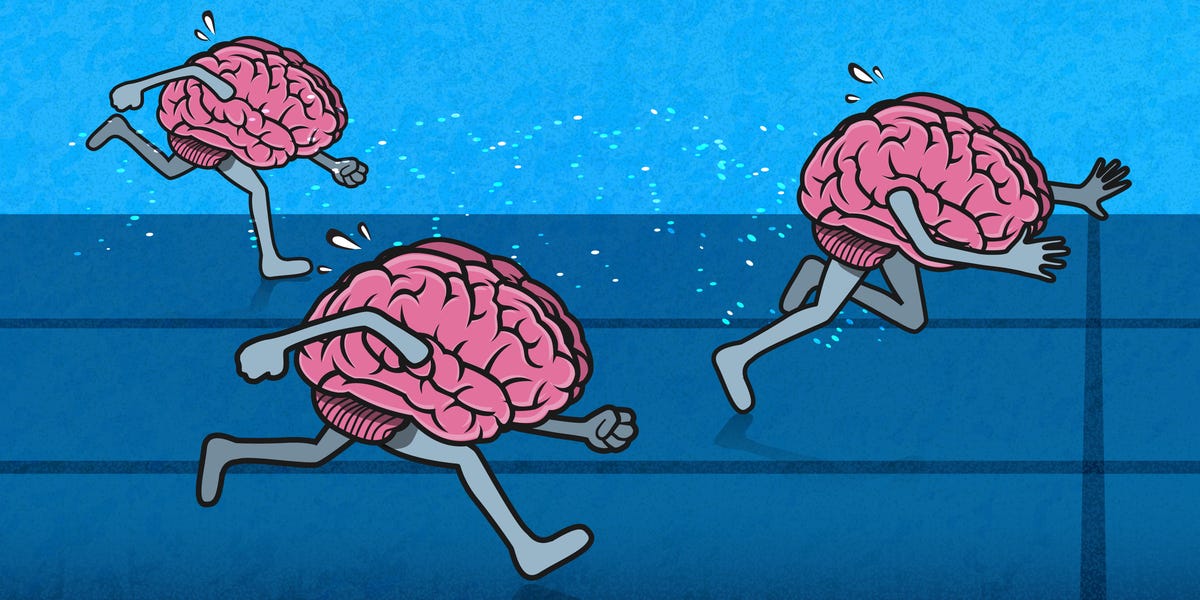
Research Shows Runners Have Stronger Brain Connectivity. But Does That Mean Running Makes You Smarter—or That Smart People Run?
Full Article
Original Source
Read the full article at Runnersworld →KhanList aggregates and links to publicly available news content. We do not host full articles from third-party sources. Always verify important information with original sources.