
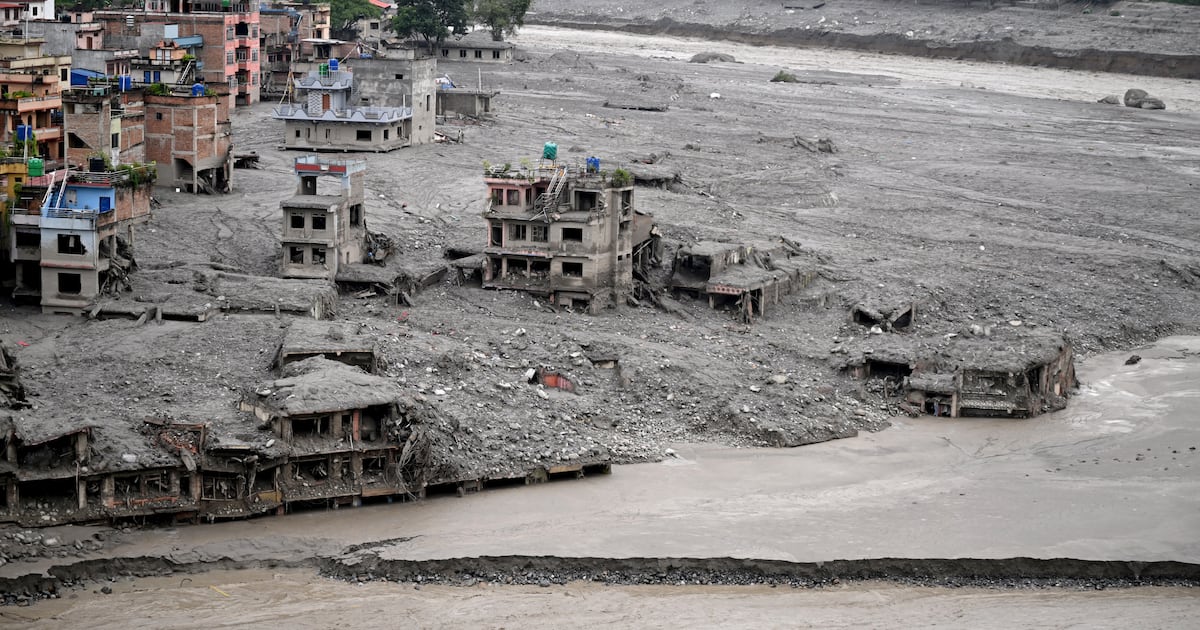
The death toll in the catastrophic flooding in Nepal and Tibet climbed past 900 on Monday, with more than 4,700 missing, authorities said. The deadly floods occurred last Wednesday morning after an enormous section of a glacier in the Himalayas broke loose and crashed on to the valley floor in Nepal’s Langtang national park, unleashing a massive surge of water, mud, rock and ice that swept through rivers and valleys. The resulting floods obliterated villages and destroyed power stations, roads and bridges.Rescue teams have reported finding bodies hundreds of kilometres downstream from the disaster zone in the Chitwan district of Nepal, near the Tibetan border. Some were recovered from neighbouring India, nearly 200km downstream from the Himalayan region where the destruction began. Hundreds of bodies, many unidentified, have been buried in shallow graves in Nepal as they began decomposing in the humid weather in the plains of the Himalayan country.READ MORETwo Irish citizens are among the missing in Nepal. They have been identified as Santosh Sahu and Spandan Sahu by the country’s department of tourism. The men’s names were among a list of more than 500 unaccounted for tourists published by the department last week. According to the department, Spandan is 18 and Santosh is 46.Nepali officials said that the focus was on reaching hundreds of workers believed to be trapped inside about half a dozen hydropower project tunnels that had been blocked by mud and rock debris.Nepal’s disaster management authority said that 933 people were missing from hydropower projects in the flood-hit region. Pictures and videos shared by rescue teams showed earth-moving equipment digging and shovelling mud and rocks under lights in the dark of the night as workers watched. Soldiers used torchlight in a big pit they had created to look for space to get into one tunnel.“A large amount of debris has been deposited and that is posing us a big challenge to open the tunnels,” a Nepal army spokesperson said. “Our main focus is on opening the tunnels.”Rescue work continues in the aftermath of flash floods at Trishuli Centre in Nepal's Nuwakot district. Photograph: Arun Sankar/AFP via Getty Images The Red Cross has estimated that more than 90,000 people are likely to have been affected by the disaster, which China has linked to the effects of climate change.Nepal’s prime minister Ballendra Shah said the flood was an “unprecedented and devastating natural disaster” and it remained challenging to compile a complete assessment of the damage.“Despite the adverse weather, difficult terrain and continuing risks, we are moving forward with determination to save the lives of our citizens,” he said in a Facebook post late on Sunday, adding that nearly 21,000 security personnel were involved in the rescue operations, besides civilian workers and volunteers.On the Chinese side, authorities said 16 people were killed in Gyirong County and 546 were missing.Beijing has said 261 foreign nationals from 23 countries were unaccounted for in Tibet, near a key border crossing with Nepal. China’s state-run CCTV reported Beijing has mobilised more than 2,100 rescue workers and has been airdropping equipment and supplies to frontline rescuers, while its soldiers used life-detection equipment to look for the missing.Although Nepal has said that it does not need foreign help in general rescue and search, it has leant on giant neighbours India and China for their expertise in tunnel rescue.Rescue operations have been suspended several times since Friday because of bad weather and concerns that a lake formed across the Nepal-China border by the disaster could trigger fresh flooding after it began overflowing into Nepal’s rivers.The flood was “caused by glacier instability under the long-term effects of global warming”, Chinese state broadcaster CCTV reported, saying it was a “new and prominent feature of cryosphere disasters” on the Tibetan plateau. – Reuters
Rescue efforts intensify after Nepal-Tibet flooding as deaths climb past 900
Full Article
Original Source
Read the full article at Irishtimes →KhanList aggregates and links to publicly available news content. We do not host full articles from third-party sources. Always verify important information with original sources.