
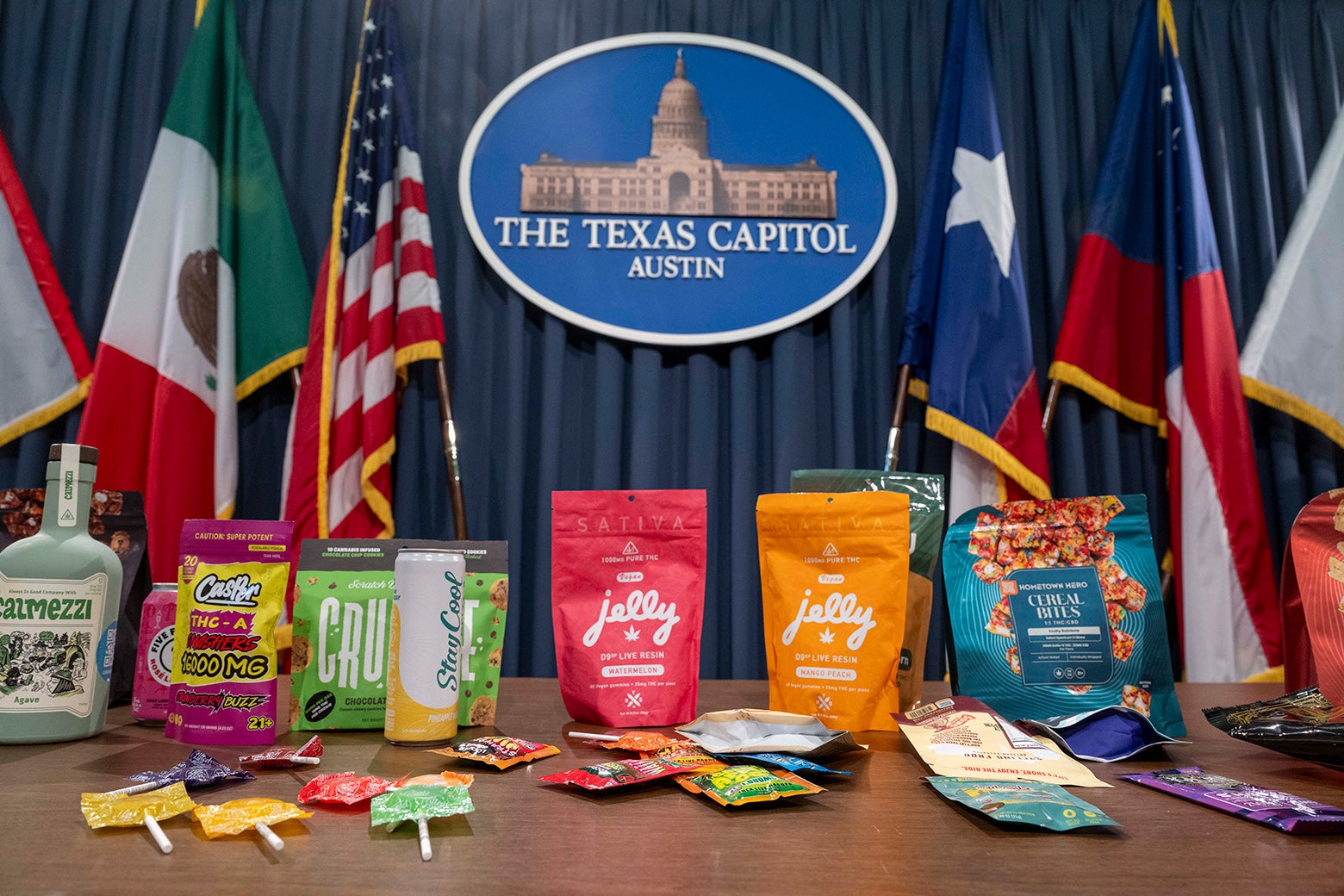
Politics The GOP’s Weed Crackdown Is Blowing Up in Its Face Republicans revived reefer madness just as legal cannabis became popular with their own voters. By Enter your email to receive alerts for this author. Sign in or create an account to better manage your email preferences. Unsubscribe from email alerts Are you sure you want to unsubscribe from email alerts for Nitish Pahwa? Sept 02, 20261:37 PM Bob Daemmrich/ZUMA Press Wire/Reuters Sign up for the Slatest to get the most insightful analysis, criticism, and advice out there, delivered to your inbox daily. Once again, government officials are trying to restrict marijuana products around the United States. And once again, Americans of all political stripes are pissed off—plausibly enough to shake up this fall’s midterms. At the federal level, Republican lawmakers and the Trump administration are attempting to rectify a huge mistake they made last November, when they passed an ill-advised bill that, if allowed to go into effect, would all but smother the United States’ flowering hemp industry. In red states like Iowa, Kansas, and Ohio—where polls have shown Democratic momentum in the gubernatorial races—promising candidates are insisting on the need to finally, belatedly legalize it. A bid in blue Massachusetts to have voters approve a rollback of the state’s recreational industry faces overwhelming popular opposition. And the anger is especially boiling down in Texas, where even Joe Rogan is warning that GOP intransigence on weed could well cause the Lone Star State to vote Democratic in the upcoming midterms. Since the 2024 election, conservative politicians have attempted to stoke reefer madness as a backlash to the legalization movement’s state-by-state victories. Their justifications, which seized on legitimate concerns over the unfortunate prevalence of misleadingly packaged hemp-derived candies stocked in unlicensed gas stations and smoke shops, have pivoted away from children’s safety to old, tired arguments for outright prohibition. And this fall, they’re likely to see their concerted counteractions fall flat—even, and especially, in the areas they’d least expect. Texas, which does not appear to have learned from the uproar its lawmakers inspired the last time they attempted a weed crackdown, provides an incisive example. In late July, a long-pending state rule went into effect that outlawed all sales of certain smokable THC products derived from hemp, including milder and medicinal pot alternatives. These derivatives, which were federally legalized by the 2018 farm bill, allowed a limited lineup of retail cannabis options in a state where medical marijuana is legal, but recreational bud is not. (Individual Texan cities where residents voted to either legalize or decriminalize the plant have seen those efforts preempted by municipal and state authorities.) The restrictions—which date back to a 2021 Health Services Department rule imposing the harshest drug-law regulations on THC derivatives—are newly enforceable, thanks to a January ruling from the Texas Supreme Court allowing the Lone Star State to fine or jail retailers who’ve established themselves in the hemp business. If they’re not licensed medical providers, they’re only able to sell standard delta-9 flowers with less than 0.3 percent THC content. It’s yet another burden on Texas’ pot enthusiasts, who’ve already had to deal with the fallout from an attempted ban on smokable hemp and another law, passed about a year ago, that illegalized the sale (though not the possession) of THC vape pens. Democratic Senate nominee James Talarico has already seized on the issue, referring to these harsh rollbacks as an example of “the nanny state at its worst.” His Republican opponent, Attorney General Ken Paxton, has notably pivoted his rhetorical tack from outspoken denunciation of legal cannabis to professing to not know any details about his own administration’s relevant rules. A county judge has even complained that Paxton’s office is not responding in a timely manner to queries about how the state wishes to proceed in court, now that multiple hemp businesses have filed lawsuits. Already staring down constituent anger over wildlife destruction (from border-wall buildouts) and noise pollution (from data center projects), the Texas GOP is reckoning with the very real possibility that once-loyal voters will follow through on their public threats to vote blue this round. They have also likely noticed that Talarico’s stance on hemp is not hurting him in the polls. Another concern for regular Texans: Even the low-THC hemp exempted from the state rules may soon be illegal to sell nationally, thanks to the congressional bill signed last year that, if allowed to go into effect, would forbid growth of crops with more than 0.3 percent THC. From the moment it was introduced, that federal crackdown inspired plenty of jitters from the Trump White House, as well as Republicans who represent areas that had largely benefited from Congress’ willingness to relax historic restraints on hemp cultivation. (This legal stigmatization of the widely useful crop, a consequence of the War on Drugs, only began to unravel by 2014.) In agriculture-heavy red states like Iowa, Kansas, and Texas, farmers, entrepreneurs, and everyday conservatives have benefited from the billions of dollars in business and tax revenue unlocked by the industry, which also opened up paths for veterans, seniors, and disabled residents to make use of salves for chronic pain. It was perhaps a belated recognition of these consequences—along with some phone calls from President Donald Trump himself—that inspired the GOP-controlled Senate to delay the implementation of the new federal hemp standards, pushing back their enactment date from election season to mid-December, instead. On Tuesday, the House of Representatives followed suit. (In a subsequent statement to Slate, the Hemp Beverage Alliance wrote that its industry “looks forward to working with Congress to create a regulatory framework that protects public health, keeps products away from minors, and permanently removes the bad actors that sell untested, high-potency, copycat gummies and candies that target children.”) In a manner historically unusual for GOP presidents, Trump has helped lead the push to reschedule the classification of cannabis at a national level, in a move that will continue to help hemp enthusiasts experiment and figure out ways to develop and sell this crop in a safe and scalable manner. But the chief executive—who’s extremely unpopular for a host of other reasons, including economic mismanagement and immigration-law abuses—is not on the ballot this fall. The people on his side who are on the ballot are those who’ve historically echoed the same baseless fearmongering that dominated 1980s-era messaging around marijuana. It’s not the ’80s anymore, and even Republican voters understand that, along with the many other independent, on-the-fence Americans who may have swung toward Trump in 2024 but are far more skeptical of his party now. The people from outside the base, those who aren’t too attached to partisan politics and enjoy the freedoms that allow them to burn one, are now feeling burned themselves—and they’re about to make that clear in November. Elections Marijuana Republicans Texas 2026 Midterms
Republicans Just Handed Democrats a Surprisingly Potent Win
Full Article
Original Source
Read the full article at Slate →KhanList aggregates and links to publicly available news content. We do not host full articles from third-party sources. Always verify important information with original sources.