
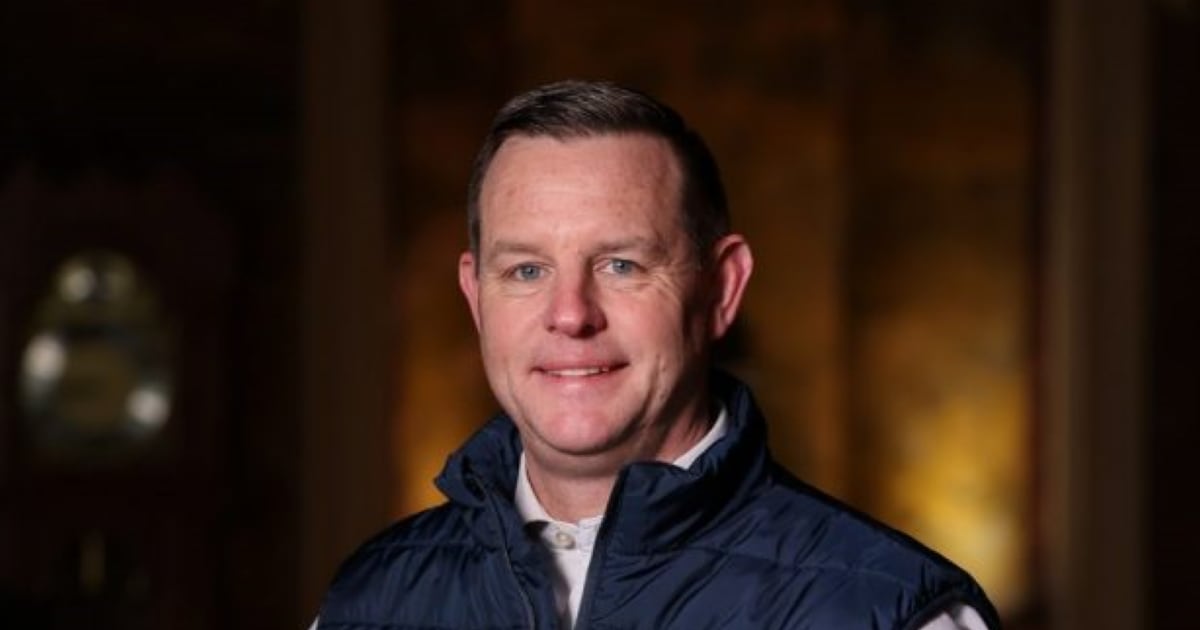
David Johnstone, Northern Ireland’s Veterans Commissioner, has a message he believes few in the Republic want to hear.Now extended in office for another three years, Johnstone has been vocal – very vocal, in the view of some – in the role, where his job is to be a voice for British military veterans living in the North.Sitting in a Dublin hotel after meetings in the nearby British Embassy, the softly-spoken Johnstone is angry on two fronts.He is unhappy about the failure on the Republic’s part to face up to its sins or omissions during Northern Ireland’s Troubles, along with its attitudes towards legacy questions facing British veterans, many of whom are in their 70s.READ MORE“The Irish Government was not some sort of neutral player. It was arguably an active participant, or, at the very least, turned a blind eye to the terrorism coming from the south,” he tells The Irish Times in an interview.Johnstone claims the “vast majority” of the IRA’s gelignite in the early 1970s came from the Irish Industrial Explosives factory in Enfield, Co Meath, with a British explosives expert warning as early as 1972 that it was possible “to get a case a day out without it showing up”.“Of course, the Irish State knew what was happening,” argues Johnstone, who claims that Irish politicians and officials do not want to rake over the past, while the southern public has never shown interest.The vast majority of the 500 killings along the Border – soldiers, Royal Ulster Constabulary (RUC) and “ordinary Protestants and ordinary Catholics” – were planned in the south where killers “hopped over the Border and hopped back into a safe haven”, he says.The amendments to the legacy legislation published by the Northern Ireland Secretary of State Chris Bryant on Monday will take time to study, though London has “clearly” listened to some of the veterans’ concerns, but not all. [ British attorney general to approve future prosecutions of former UK soldiers under legacy law changesOpens in new window ]Today, he argues that Dublin’s pressure has played a role in London refusing that would see veterans’ prosecutions taking place only if “new and compelling evidence” emerged that was not available at the time.Under a deal last year, Dublin will put €25 million behind a new Garda unit that will “endeavour to answer questions that victims or family members may have” about past Garda investigations, but not carry out fresh investigations. “That’s tokenism,” Johnstone argues.“In three years, the money’s gone unless more’s found. On the other side of the Border, it’s a five-year process that’s going to cost about £2 billion [€2.4 billion] – and that’s conservative.”Throughout his interview, Johnstone insists there is no question that veterans who committed crimes while in uniform should be prosecuted.“That is not at issue – at all,” he says with emphasis.However, cases should not be reopened unless there is “clear and compelling evidence” not available when the first investigations were carried out by the British military before 1976 or afterwards by the RUC.Not every investigation would stand up today, Johnson concedes.“Some would fall short, yes. In west Belfast, they couldn’t cordon off a spot, spend three days sifting through rubble. They had, maybe, half an hour, 40 minutes. Or else they were the target,” he says.The eight-man IRA unit killed in a shoot out with SAS soldiers following the bombing of the Loughgall RUC station in Co Armagh, in May 1987. Clockwise from top left: Gerard O’Callaghan (29), Antony Gormley (25), James Lynagh (32), Eugene Kelly (25), Declan Arthurs (21), Patrick McKerney (32), Seamus Donnelly (21) and Patrick Kelly (25). Photograph: PA “That’s what really frustrates veterans. The idea that we can look through today’s lens and demand that what happened 30, 40, 50 years ago is investigated again is absolute folly. It’s totally unacceptable.”For veterans, a few cases stand out.They include, in particular, the June 1991 killings of three IRA men – Tony Doris, Peter Ryan, and Lawrence McNally – in Coagh, Co Tyrone, when they went to kill a part-time Ulster Defence Regiment soldier.A coroner’s inquest ruled that the lethal force used was “reasonable, justified, and proportionate”, while the Court of Appeal in 2026 dismissed an appeal by Roisin Nugent, the daughter of Tony Doris.However, she has been granted legal aid to take an appeal to the Supreme Court in London, challenging the legality of the actions of one of the SAS soldiers, Soldier B, who is now in his 70s.“I’m pretty familiar with this one,” says Johnston “He’s had three legal cases. Every one said he used lawful actions. It was proportionate and yet here we go again. He has had seven years wondering if he will be charged with murder.”The same goes for the 1992 SAS killing in Clonoe, Co Tyrone, of four IRA man – Kevin Barry O’Donnell, Sean O’Farrell, Peter Clancy and Daniel Vincent – after they had attacked Coalisland RUC station with a lorry-mounted .50 calibre heavy machine-gun.This case was referred in February 2025 on to Northern Ireland’s Public Prosecution Service by Judge Michael Humphries after he ruled that the killings were “unjustified and unreasonable”.The soldiers did not hold an honest belief that lethal force was necessary, they had made no attempt to arrest and firing up to 570 rounds without warning or challenge was unreasonable, he says.Equally, they lied when they said they were fired upon, while the operation was not planned, or controlled properly by the military and police commanders to limit the need for lethal force.Johnstone, a former Royal Irish Regiment officer, is withering about the judgment.“The idea that you can stand up in a car park against people with a DsHK .50 calibre [machine gun] and go: ‘Excuse me, guys, can you lay down your weapons?’ That is suicide.”Then, there is the 1987 killing of eight IRA men as they tried to destroy the RUC station in Loughgall, Co Armagh, the biggest single of life suffered by the IRA during the history of The Troubles.The wreckage of the mechanical digger and the van used by the IRA men at Loughgall in May 1987. Photograph: Tom Lawlor/The Irish Times Johnstone bridles even at its mention, especially its return to the Coroner’s Court.“If ever there was a clear-cut case, it’s Loughgall. The idea that you could arrest James Lynagh and Patrick Kelly is just insane. Please do not insult our intelligence,” he says.Operations such Coagh, Clonoe and Loughgall were “planned by senior military, signed off by the chief constable, signed off by the general officer commanding [GOC], and, usually, signed off by the prime minister”, says Johnstone.“This is where veterans say enough is enough. They were there under lawful orders,” he says. “So, if there’s a problem, it’s not the soldiers’ fault. Put the prime minister in the dock, put the GOC, or the chief constable.”
Republic ‘not some sort of neutral player’ during Troubles, says NI Veterans Commissioner
Full Article
Original Source
Read the full article at Irishtimes →KhanList aggregates and links to publicly available news content. We do not host full articles from third-party sources. Always verify important information with original sources.