
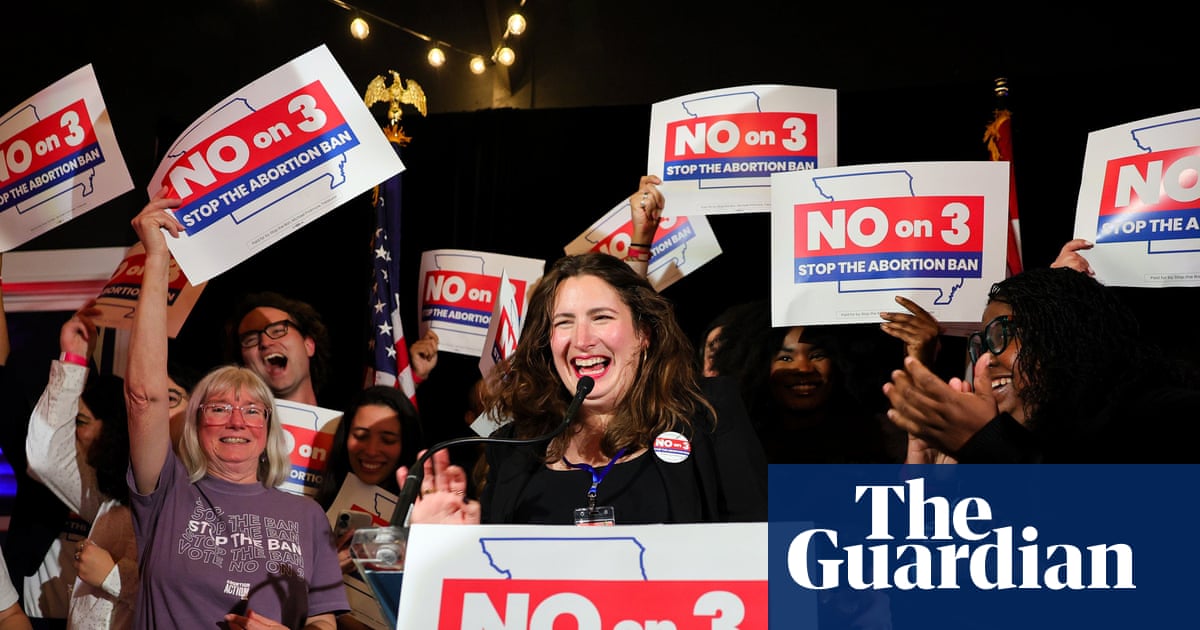
Reproductive rights were on the ballot on Tuesday night as voters weighed in on several abortion-related measures, delivering a largely successful night for reproductive rights advocates encompassed by a historic blue wave.In Nevada, voters approved an amendment enshrining abortion rights in the state constitution, permanently protecting access to abortion through the second trimester after a second referendum on the measure.Question 6, which establishes a “fundamental right to abortion”, was leading 62.3% to 37.7% with 86% of Nevada votes counted when the Associated Press called the race. The amendment allows the state to regulate abortion after viability, except when medically necessary to “protect the life or health of the pregnant patient”.Virginia voters also approved a constitutional amendment establishing a “fundamental right to reproductive freedom”.This measure also protects access to abortion during the first two trimesters of pregnancy. It permits government regulation in the third trimester while preserving access to abortion when necessary to protect the life or health of the pregnant woman. The amendment also establishes rights to contraception and fertility care, among other protections.In Missouri, voters rejected an effort to overturn the constitutional right to reproductive freedom they had approved in 2024. Amendment 3, which would have repealed those protections, restricted abortion, and prohibited gender transition surgeries and certain other procedures for minors, failed by a margin of 55% to 45%.The proposal, placed on the ballot by the Republican-led legislature, would have banned abortion except in cases of rape and incest during the first 12 weeks of pregnancy, or later in cases involving fetal anomalies.Meanwhile, voters in Idaho, one of the nation’s most conservative states, rejected an effort to repeal the state’s abortion ban. The result leaves in place Idaho’s abortion restrictions, which took effect in 2022 following the US supreme court’s decision to overturn Roe v Wade, ending the nationwide constitutional right to abortion.Tuesday’s results followed a record year for abortion-related ballot measures in 2024, when voters decided 11 statewide measures, the most in a single year as of 2026.Voters decided 65 abortion-related ballot measures between 1970 and 2025, according to Ballotpedia. Of those, 44 were supported by organizations identifying as anti-abortion, while 21 had the backing of organizations describing themselves as pro-choice or supportive of reproductive rights.The supreme court’s 2022 decision overturning the nationwide right to abortion gave states greater authority to establish their own abortion policies. Since that ruling, voters in more than one-fifth of states have approved ballot measures protecting abortion rights.Reproductive rights advocates also celebrated Democratic victories in House and Senate races, where candidates made reproductive healthcare a central campaign issue.In a statement on social media, Reproductive Freedom for All, a prominent pro-choice organization, wrote: “The American people sent a clear message: Our government belongs to us, not the extremists who have spent years attacking our fundamental freedoms. By taking back the House and Senate, voters have put a powerful check on Trump and his attacks on reproductive freedom.”The Center for Reproductive Rights also celebrated the victories, writing in a statement: “What. a. night. The future of our reproductive rights will be shaped by the actions elected officials take. The work ahead MUST include protecting access to abortion and advancing federal safeguards for reproductive freedom.”Abdul El-Sayed, a progressive doctor who won the state’s Senate race on Michigan, had emphasized the right to personal healthcare decisions throughout his campaign. He repeatedly highlighted his Republican opponent Mike Rogers’ support for extreme abortion bans.In New Hampshire, Chris Pappas won his Senate race after drawing attention to opponent John Sununu’s record on abortion. Pappas made Sununu’s support for an abortion ban a central issue, along with his support for the supreme court justice Samuel Alito, who authored the Dobbs decision overturning Roe v Wade.Jon Ossoff secured his re-election to the US Senate in Georgia after challenging Republican opponent Mike Collins over his previous support for a total abortion ban. During a Senate debate, Ossoff confronted Collins about his past position on abortion and pressed him to explain why his stance had changed.
Reproductive rights protected in several states by midterm election ballot measures
Full Article
Original Source
Read the full article at Theguardian →KhanList aggregates and links to publicly available news content. We do not host full articles from third-party sources. Always verify important information with original sources.