
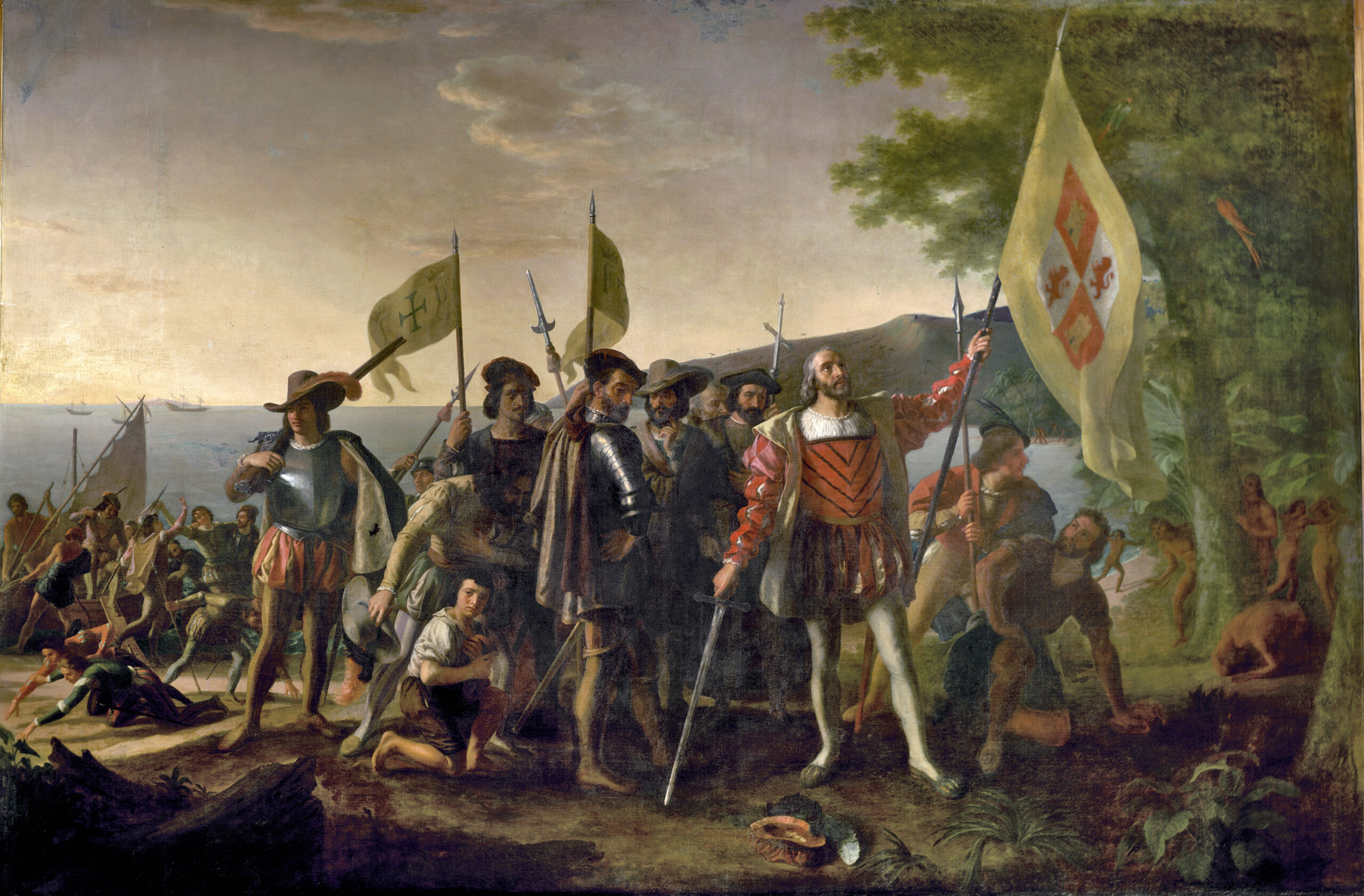
Democrat Sen. Martin Heinrich and 14 of his Senate colleagues recently introduced a new resolution declaring their support for designating the second Monday of October, currently the federal holiday of Columbus Day, as “Indigenous Peoples’ Day.” Although the sponsors of S. Res. 900 seem very purposefully to refrain from expressly condemning Columbus Day, this resolution is anything but politically neutral, explicitly describing Western contact in the New World as resulting in “suppression, forced assimilation, and genocide of Indigenous Peoples.” And with that, S. Res. 900 gives the game away as yet another Democrat attempt to erase American culture in favor of a new, woke, anti-West civilization. Rather than choose literally any other day of the year, its advocates selected Columbus Day as part of a broader campaign to redefine who and what we as Americans celebrate. A Holiday Obviously Intended to Replace The resolution’s sponsors, including Democrat notables Elizabeth Warren, Tim Kaine, Adam Schiff, and Cory Booker, acknowledge that some cities and states still recognize the holiday, which has been celebrated in the United States since 1792 and officially became a federal holiday in 1971. They seek to justify their proposal by noting that Indigenous Peoples’ Day is widespread, with more than “200 municipalities, 17 states, and the District of Columbia” already observing or recognizing it. Left out of that comment is that in many of these locations, such as Maine, Vermont, New Mexico, and D.C., Columbus Day was replaced by Indigenous Peoples’ Day, with all mention of that “villain” Columbus excised from their calendars. Moreover, the co-sponsors add, Columbus Day “does not currently provide an opportunity to reflect on the stories and perseverance of the Indigenous Peoples of the lands that are now part of the United States.” That’s a curious (if not disingenuous) assertion, given that Columbus Day wasn’t established to exclude anyone, but to honor a daring 15th- and 16th-century explorer who is singularly responsible for bringing the Old World and New World into contact with one another, thereby facilitating the circumstances that led to the establishment of the American colonies and the United States. To complain that Columbus Day doesn’t provide an opportunity to honor indigenous peoples is a bit like complaining that Independence Day doesn’t expressly honor the contributions of blacks who suffered slavery. All of this makes it obvious that continued efforts to redefine the second Monday of October as Indigenous Peoples’ Day isn’t simply about honoring a certain group. Rather, the focus on Columbus Day is a classic example of damnatio memoriae, the ancient Roman practice of dishonoring disgraced rulers after their death by removing their names from inscriptions, destroying their portraits and statues, and posthumously stripping them of honors. Columbus Has Always Been Integral to American Identity Now, some folks may ask: “So what?” Christopher Columbus, after all, was not an American, and he predates the founding of our country by centuries. He was not an outspoken advocate for such ideals as liberty, freedom of speech or religion, or representative government that we associate with the fundamentals of American identity. He was an Italian Catholic who hoped the riches he sought in the Far East would fund Catholic military efforts in the Old World to deter and even defeat encroaching Islamic powers such as the Ottomans. Yet Columbus, from very early in American history, was identified as an integral component of our nation’s self-understanding. It was he who exhibited a remarkable creativity and courage in seeking to broaden the West’s horizons, and, though he did not seem to realize it even at his death, Columbus’ efforts dramatically reshaped world history. As early as 1791, what is now Washington, D.C., was being called the “Territory of Columbia,” in his honor. Over the course of our nation’s history, Columbus took on additional meaning with waves of Italian immigrants who shared his ethnic heritage. President Benjamin Harrison in 1892 issued a proclamation for the 400th anniversary of Columbus “sailing the ocean blue,” which was in part intended as a conciliatory gesture to Italian Americans following anti-Italian violence in New Orleans. Italian immigrants embraced the holiday, as did many other Catholic immigrants, including Blessed Fr. Michael J. McGivney, who in 1882 founded the Knights of Columbus, a fraternal organization that today claims millions of members and is involved in literally millions of hours of volunteering and community service every year. Why Defending Columbus Day Is a Hill to Die On Today, many malign Columbus as a “genocidal” “colonizer.” Though his record of governance in the Caribbean is not an admirable one, these attacks represent presentist, chronological snobbery that applies anachronistic, absurd categories to historical figures. Indeed, the very fact that Columbus wanted natives to become baptized Christians like himself demonstrated that he could perceive, however inchoately, their inherent dignity as human beings. Moreover, Democrats’ attacks on Columbus are emblematic of a broader, vicious program that aims to destroy America’s traditional heroes in favor of a new national narrative based on victimhood, entitlement, and “hyphenation” rather than heroic virtue possessed by men such as Columbus. As we all saw during the George Floyd riots in 2020, woke activists targeted for canceling not only Columbus but George Washington, Thomas Jefferson, George Mason, and Abraham Lincoln, among many others. It is not too much to interpret the aggressive, often violent attacks on statues and memorials of these great men as the foreshadowing of the more violent political activism we are witnessing today, with constant threats of violence against not only the president but other politicians, conservative members of the Supreme Court, and even the assassination of civilian Charlie Kirk. There is nothing intrinsically wrong with honoring all those who contribute to our national identity, whatever their race or ethnicity. But the promotion of Indigenous Peoples’ Day has never been neutral or dispassionate. It is part of a broader ideological program in which “victimizers” like Columbus are out and “victims” of various minority hyphenated groups are in. To be complicit in this project is not merely a “nice thing to do” to show respect for American Indians. It is to participate in the woke remaking of our great nation. Casey Chalk is a senior contributor at The Federalist and an editor and columnist at The New Oxford Review. He is a regular contributor at many publications and the author of three books, including the upcoming "Wisdom From the Cross: How Jesus’ Seven Last Words Teach Us How to Live (and Die)" (Sophia Institute Press, 2026). Christopher ColumbusColumbus DayHistoryholidaysIndigenous Peoples' Daythe Westwoke
Replacing Columbus Day With ‘Indigenous Peoples’ Day’ Is An Attack On America
Full Article
Original Source
Read the full article at Thefederalist →KhanList aggregates and links to publicly available news content. We do not host full articles from third-party sources. Always verify important information with original sources.