
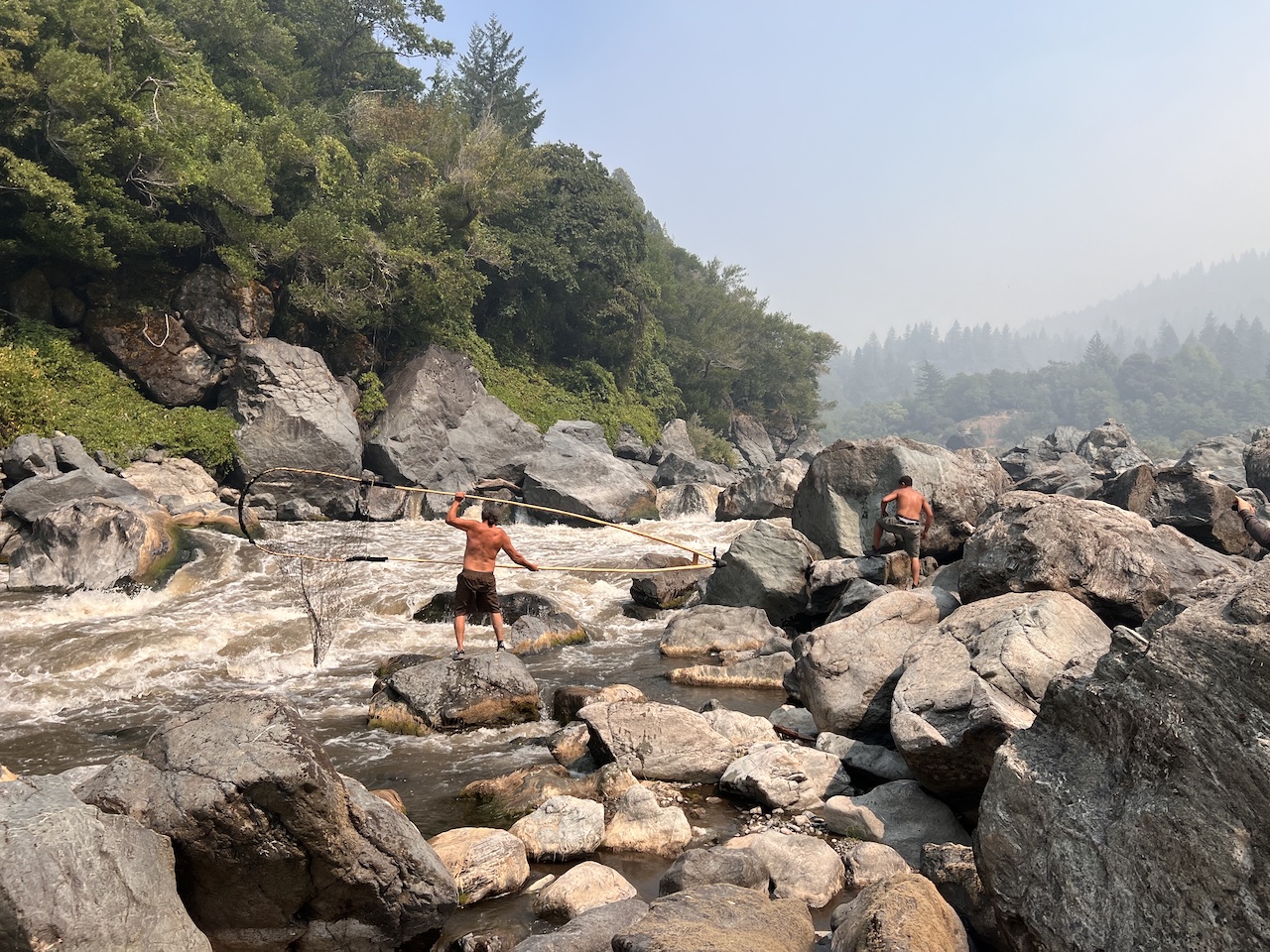
On Aug. 18, the Trump administration proposed fully rescinding the 2001 Roadless Rule, which bars new road construction and commercial logging on about 45 million acres of national forest, opening a public comment period that closes Sept. 21.A study published in July in PLOS Water found that about 25 million Americans draw drinking water from watersheds fed by roadless areas, where roads and logging raise erosion and turbidity and drive up treatment costs.USDA says the repeal will reduce wildfire risk, but research shows most U.S. wildfires are started by people and ignition density is roughly four times higher near roads than in roadless country.Roadless areas cover just 2% of the land in the lower 48 states yet provide habitat for 57% of the country’s vulnerable terrestrial species, and USDA’s own summary acknowledges that most Tribes it consulted oppose the repeal. The drinking water for about 25 million Americans starts in the backcountry of the national forests, on land where roads are few by design. A rule the Trump administration proposed last week could open that land to roads and logging. On Aug. 18, the U.S. Department of Agriculture filed a proposed rule to fully rescind the U.S. Forest Service’s 2001 Roadless Area Conservation Rule, which bars new road construction and commercial logging on about 45 million acres (18 million hectares) of national forest. It was published in the Federal Register on Aug. 20, opening a 30-day public comment period that closes at midnight on Sept. 21. The proposed rule has drawn widespread criticism among wildland firefighters, environmental organizations, lawmakers and scientists. Much of the debate has centered on logging and fire. But researchers say some of the largest costs run downstream, into the taps of people’s homes. Wilder Mountain Inventoried Roadless Area ,Green Mountain National Forest in Vermont. Photo courtesy of Zack Porter / Standing Trees. Forests work as natural filters. They intercept rain, slow runoff, and trap sediment before water reaches streams, rivers and reservoirs. Roads and logging can undo that work, casting off sediment that utility companies must clean and driving up treatment costs. A 2024 study in Forests found that forest roads contribute up to 90 percent of sediment loads in streams and are “seriously disrupting the safety and stability of watersheds.” A study published in July in PLOS Water estimated that about 25 million Americans draw drinking water from watersheds fed by roadless areas. In Colorado, New Mexico and Montana, those watersheds supply more than a third of the population. Southern California’s Angeles National Forest alone serves more than 4 million customers. New Mexico’s congressional delegation notes the state’s forests supply more than 75% of the water for Albuquerque and Santa Fe, New Mexio. David Mildrexler, a scientist with the Partnership for Policy Integrity who monitors timber sales and hikes roadless country across the West, has seen the difference on the ground. In intact watersheds, he told Mongabay, “the water is able to move as it naturally does through the ground, instead of being intercepted by this deep road cut, captured, put into a ditch or put into a culvert.” He and his colleagues have begun calling these forests “critical drinking infrastructure.” Screenshot of an interactive map of all roadless areas in the U.S. by The Outdoor Alliance. The cost of roads Mildrexler co-authored a separate analysis in Biological Conservation that found roadless areas rank among the highest-integrity forests in the country, often rivaling formally protected wilderness. Building roads into them would degrade clean water and wildlife habitat, the authors wrote, calling the case for repeal “fiscally misguided and ecologically flawed.” The fiscal argument starts with roads the government already cannot afford. U.S. national forests already have many miles of roads, eight times more than the entire U.S. interstate highway system. The Forest Service carries a $10.8 billion maintenance backlog on the roads it has, and these new roads into remote terrain would be among the costliest to build, Mildrexler said. “Many [roads] are heavily eroded and prone to landslides, and driving vehicles on them can spread invasive species. They need billions of dollars in repairs,” Patrick Parenteau, Professor of Law Emeritus at Vermont Law & Graduate School, wrote in The Conversation. “If the Trump administration goes through with rescinding [the] rule,” Parenteau said, “you can count on lawsuits, and they won’t be easy for the administration to win.” Joseph Canyon Roadless Area, located on the Wallowa-Whitman National Forest of Northeast Oregon. Photo courtesy of David Mildrexler. Recreation and tourism could also face costs. “Wyoming’s roadless areas are the elk country, trout streams, hunting grounds, and backcountry places that define this state,” Julia Stuble, Wyoming state director for The Wilderness Society, said in a statement. However, recreation advocacy groups such as the Blue Ribbon Coalition, the California Association of 4 Wheel Drive Clubs, United Four Wheel Drive Associations, and the American Council of Snowmobile Associations support the recission. How much wood would a road let out USDA says allowing roads would “reduce regulatory burden” and hand decisions to local forest managers. The document also ties the change to logging, citing an executive order in which President Trump declared the country has ample wood “but heavy-handed Federal policies have prevented full utilization of these resources.” “For too long, outdated restrictions have kept tens of millions of forested acres off-limits to the very treatments that improve forest health and reduce wildfire risk to our communities,” Agriculture Secretary Brooke Rollins said in a statement. By the USDA’s own estimate, the change could open about 4.8 million acres (1.9 million hectares) to timber harvest. USDA stresses that the rule orders no logging or road building on its own and that logging all of that land is “unlikely.” This essentially uses taxpayer money to build roads so private companies can profit, Mildexter told Mongabay. “Road construction and logging would fragment wildlife habitat, increase sediment in rivers and streams, and degrade the clean water and medicines our people depend on,” wrote the Lac Vieux Desert Band of Lake Superior Chippewa Indians, a federally recognized Indian Tribe located in Michigan, in a letter to Senator Rollins. Kilkenny Inventoried Roadless Area in the White Mountain National Forest, New Hampshire. Image courtesy of by Zack Porter/ Standing Trees. Fighting fire with roads? The administration’s central claim is that repeal will prevent wildfires. The research cuts the other way. Most U.S. wildfires are started by people, and most human ignitions occur within about 50 meters (164 feet) of a road. “Constructing new logging roads into roadless areas will increase human-caused wildfire ignitions by careless recreationists, criminal arsonists, or simple accidents,” Carson States, a ten-season firefighter and engine boss from Oregon, said in a statement from FUSEE, Firefighters United for Safety, Ethics, and Ecology. The proposed rule concedes that “greater public access can increase human-caused ignition potential in some locations,” while arguing new roads could still help crews protect communities. “There are already a ton of roads through the national forests that are impossible to drive on without bucking downed logs for hours,” said Anthony Perez-Orozco, engine crewmember with the Forest Service in central Idaho. “The poorly maintained condition of most existing logging roads make engines seldom used for initial attack.” Smokejumpers, heli-rappelers, and helitack crews, which enter from the above, have long been used to manage fires. Firefighters watch as a wildfire called the Plaskett Fire burns towards Highway 1 on Friday, Aug. 28, 2026, in Big Sur, Calif. (AP Photo/Ethan Swope) Bill Avey, who spent decades managing Montana’s national forests, wrote that the current roadless rule already allows fire suppression, small-diameter thinning, prescribed fire and emergency action. “In my experience, the Roadless Rule doesn’t pose an insurmountable barrier to good land management; it simply requires baseline analysis and thought before impacting the landscape,” he wrote. “Logging roads are designed for resource extraction, not wildfire suppression,” Timothy Ingalsbee, FUSEE’s executive director and a former Forest Service engine crewmember, said in a statement. The administration’s aim, he added, “is to get the timber, ore and oil out, not put fires out.” Wildlife burden Wildlife would feel the roads too. Roadless areas cover just 2% of the land in the lower 48 states, yet provide habitat for 57% of the country’s vulnerable terrestrial species, according to an analysis by the NGO Defenders of Wildlife. Roads “lower habitat connectivity” and bring higher mortality and lower reproduction, disrupting the movements of deer, elk, black bears and bighorn sheep, New Mexico’s lawmakers wrote in a September 2025 letter asking USDA to exclude the state’s 1.6 million protected acres (650,000 hectares). A Center for Biological Diversity report, Deadly Incursions, found that scrapping the rule would put 7.4 million acres (3 million hectares) of designated endangered species critical habitat and nearly 1,800 miles (2900 kilometers) of protected rivers and streams at risk, affecting species such as grizzly bears, wolverines, salmon, Canada lynxes, American martens and wolves. Canada lynxes require large areas of intact forest to thrive. Image by Keith Williams via Wikimedia Commons (CC BY 2.0). Some of that habitat crosses the border. New Mexico’s Gila and the adjoining Apache-Sitgreaves National Forest in Arizona are the recovery grounds for the endangered Mexican gray wolf. Farther west, the jaguars in Arizona’s Sky Islands belong to a breeding population centered in Sonora, Mexico. The New Mexico delegation noted that jaguars avoid habitat within 2.8 miles (4.5 kilometers) of a road. Alaska’s Tongass, the largest national forest and the biggest block of roadless land at stake, holds the world’s largest temperate rainforest, dense brown bear populations, and millions of wild salmon. Roughly 9 million acres (3.6 million hectares) of it could lose protection if the roadless rule is rescinded. This forest stores 20% of the carbon held in all U.S. national forests and supports roughly 40% of North American bird species. Indigenous opposition The Tongass region is home to tens of thousands of Indigenous people. And many other roadless areas are integral to the lives Tribes across the nation. “For the Tribes of the Tongass, these forests are not merely resources—they are our homelands. Our communities rely on them for cultural, nutritional, spiritual, and economic sustenance,” a delegation of thirteen tribal southern Alaska Tribal Governments wrote in a letter to Secretary Rollins. This was one of dozens of letters from tribes across the country submitted to the US Forest Service during an abbreviated comment period in September of 2025. USDA’s own summary acknowledged that the rescission “would have substantial direct effects on Indian Tribes” and that most Tribes it consulted oppose the repeal, viewing it as a threat to sovereignty, sacred sites and water. “Once you lose these places,” Mildrexler said, “you can’t get them back.” Banner image of Karuk tribal members Ron Reed and Sonny Mitchell catching the first fall chinook salmon of the on the Klamath river in late August 2024. Photo by Liz Kimbrough for Mongabay. US proposes rescinding Roadless Rule protections for national forests Citations: Olden, J. D., Postel, S. L., Dombeck, M. P., Kesting, H., Freeman, P., & Comte, L. (2026). Assessing the value of the US Roadless Rule for people and nature. PLOS Water, 5(7), e0000538. Mildrexler, D. J., Berner, L. T., Law, B. E., & Booth, M. S. (2026). Roadless rule rescission threatens highest integrity forest ecosystems in the United States. Biological Conservation, 321, 111950. Balch, J. K., Bradley, B. A., Abatzoglou, J. T., Nagy, R. C., Fusco, E. J., & Mahood, A. L. (2017). Human-started wildfires expand the fire niche across the United States. Proceedings of the National Academy of Sciences,114(11), 2946-2951. Aplet, G. H., Hartger, P., & Dietz, M. S. (2026). Three-decade record of contiguous-US national forest wildfires indicates increased density of ignitions near roads.Fire Ecology,22(1), 8. Yu, J., Zhao, Q., Yu, Z., Liu, Y., & Ding, S. (2024). A review of the sediment production and transport processes of forest road erosion. Forests, 15(3), 454. Liz Kimbrough is a staff writer for Mongabay and holds a Ph.D. in ecology and evolutionary biology from Tulane University, where she studied the microbiomes of trees. View more of her reporting here. FEEDBACK: Use this form to send a message directly to the author of this post. If you want to post a public comment, you can do that at the bottom of the page. Cite this articleLiz Kimbrough (2026). Repeal of U.S. Roadless Rule could threaten drinking water for 25 million people. Mongabay Conservation news. DOI: https://doi.org/10.66709/news-328497 Credits Topics
Repeal of U.S. Roadless Rule could threaten drinking water for 25 million people
Full Article
Original Source
Read the full article at News →KhanList aggregates and links to publicly available news content. We do not host full articles from third-party sources. Always verify important information with original sources.