
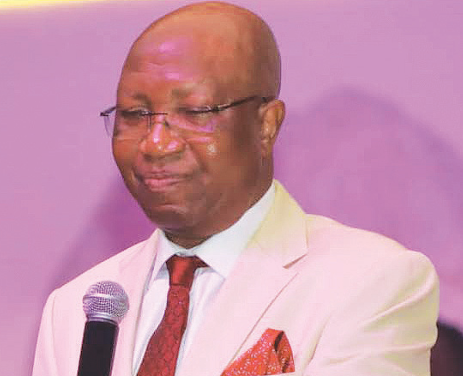
Follow THISDAYLIVE on GoogleAdd us as a preferred source to see more of our stories in Google Follow us on Google He bestrides the Nigerian legal firmament like a colossus, handling some of the most complex cases in the courts. Called to the Bar 50 years ago, and elevated to the Inner Bar 35 years ago, he has held virtually every major office the profession can offer: Attorney-General of the old Ondo State, President of the Nigerian Bar Association, Chairman of the Body of Benchers, and many more. Chief Wole Olanipekun, GCON, SAN, who turned 75 last week, insists there is no intellectual retirement in the practice of law. He continues to work at full strength. Even with two of his children already Senior Advocates of Nigeria, he remains focused on advancing the cause of the profession and mentoring younger Lawyers. He demonstrated this commitment at the launch of his six-volume book, “Wole Olanipekun Through the Cases”, in Abuja last week. The event, a gathering of the who-is-who of the Nigerian legal community, was attended by President Bola Ahmed Tinubu,GCFR and the Senate President, Godswill Akpabio, GCON. Chief Olanipekun spoke with Onikepo Braithwaite and Jude Igbanoi in this rare, no-holds-barred interview on his odyssey in the legal profession Learned Silk, You were called to the Nigerian Bar in 1976 and elevated to the rank of Senior Advocate of Nigeria in 1991. Looking back over five decades, what has sustained your passion for advocacy and the practice of law? After 50 years at the Bar and 35 years as a SAN, how do you define professional success? Is it measured primarily by cases won, institutions built, or something else? Are you fulfilled? Or there’s still plenty more you want to do? For me, those numbers resonate more than mere passage of years. It is not about the numbers, but the mountains mounted and the valleys trod. Counting fifty years at the Bar and also counting thirty-five years at the Inner Bar is an invitation to pause, deeply reflect and interrogate some fundamental questions: What truly sustains a lifetime in the law? In my view, the answer has remained constant. What has sustained my passion for advocacy is the fact that I have never regarded law merely as a profession. I have always viewed it as a calling, a ministry in its own realm, and a sacred trust reposed in one by Almighty God. When I was called to the Nigerian Bar on 4th July, 1976, I did not enter the profession with grand ambitions of titles, honours or public offices. Like many young Lawyers of my generation, my aspiration was simple, though perhaps, demanding. I desired to become a good Lawyer. I wanted to master advocacy. I wanted to understand the law, contribute to its development and use it as an instrument for the advancement of justice and humanity. Those aspirations have not changed after five decades. However, I must confess that right from the get-go, I also wanted to attain the great heights a good number of the potentates of the profession attained, from within and outside Nigeria, and I eagerly looked forward to emulating them, using each of them as my point of reference. One of the beautiful peculiarities of the legal profession is that it never permits intellectual retirement. New questions emerge daily. New frontiers are constantly being explored. Consequently, every matter presents a fresh challenge, and every brief an opportunity for further learning. That intellectual stimulation, has remained one of the enduring attractions of legal practice for me. Nevertheless, experience has taught me that professional success cannot be measured solely by the number of cases won. If that were the standard, then every Lawyer who wins his cases would necessarily be fulfilled, and the one who loses his cases frustrated. No Lawyer, however gifted, wins every case. Indeed, a Lawyer who claims never to have lost a case has either not practised long enough, or has not handled sufficiently difficult matters. Litigation, by its very nature, produces winners and losers. I believe professional success should be assessed through a broader prism. Part of it is certainly reflected in one’s contribution to jurisprudence and the development of the law. Part of it lies in the institutions one helps to build and strengthen. Part of it is reflected in the standards one preserves, and transmits to younger generations. Part of it is measured by one’s fidelity to integrity, professional ethics and scholarship. Above all, I believe success is measured by impact. When I look back today, I derive immense satisfaction not merely from cases conducted or offices occupied, but from institutions strengthened, younger Lawyers mentored, scholarships awarded, lives touched and opportunities created for others. I derive satisfaction from the fact that, some Lawyers who once sat in our Chambers as pupils have gone on to become Senior Advocates of Nigeria, Judges, academics, captains of industry and respected leaders in society. I derive satisfaction from meeting beneficiaries of our scholarship schemes who have become Lawyers, doctors, engineers and other professionals. I derive satisfaction from seeing institutions which some of us helped to build, continuing to serve succeeding generations. Therefore, if posterity were someday to ask how I would wish to be remembered, my answer would be simple: not necessarily as one who won many cases or occupied many offices, but as one who feared God, honoured the law, strengthened institutions, mentored younger generations, upheld professional integrity and contributed, however modestly, to the advancement of the legal profession and the service of humanity. As President of the Nigerian Bar Association (2002–2004), what do you consider the most significant achievements or interventions of that tenure? Although my tenure at the NBA presidency was characterised by numerous pioneering accomplishments, I consider the most significant achievements of our administration to be those that strengthened the institutional foundations of the Nigerian Bar and continue to endure long after we left office. Foremost among these were the following: i. The establishment and inauguration of the two flagship Sections of the NBA; the Section on Business Law (SBL) and the Section on Legal Practice (SLP). Immediately we assumed office, we constituted a Committee to draft the Bye-laws for the two Committees, and took them to NEC for approvals. After this, we appointed officers for the two Sections with George Etomi chairing the Business Law Session and Yusuf Alli, SAN chairing the Section on Legal Practice. I recall the first Secretary of the Section on Legal Practice was Kayode Adeniyi, Esq., now Adeniyi, JCA. We experimented the take-off of the two Sections at the Annual Conference in Enugu in 2003, and it was a huge success. At the end of the Conference, I also recall a prominent Bar Leader, Chief Debo Akande, SAN, former General Secretary of the NBA, saying that with the coming onboard of the two Sections, the NBA had been revolutionised. ii. We conceived the idea of the NBA Stamp and Seal regime, and it was approved by the NBA-NEC under my leadership. It was formally launched and commissioned at the NEC meeting held in July 2004 at Ilorin by the then Chief Justice of Nigeria, Hon. Justice M. L Uwais, GCON. But, somehow, the scheme wasn’t revived or given the necessary push, until when Okey Wali, SAN took over as the NBA President. iii. We revitalised the Continuing Legal Education Programme of the Association and I appointed Prof Jadesola Akande, OFR, as the Chairman of the Committee, with a mandate to organise Continuing Legal Education programmes in Lagos, Port Harcourt and Kaduna, for a start. iv. During my campaign for the office of the NBA President, I promised to get the NBA registered under Part C of the Companies and Allied Matters Act, particularly on the heels of the Supreme Court decision in Fawehinmi v NBA (No. 2) (1989) 2 NWLR (Pt. 105) 558 SC, wherein the Supreme Court pronounced that the NBA was not a juristic person. I took the idea to NEC, and later got the AGM to ratify the names of the first Trustees of the NBA, under the Chairmanship of the late Alhaji Abdullahi Ibrahim, CON, SAN. I procured the Certificate of Incorporation from the CAC, shortly before I left office. Since then, NBA has been sued and is being sued in the name of Registered Trustees of the NBA. v. If the records have not been lost in the NBA Secretariat, we kick-started the insurance scheme for Lawyers all over the country, and paid reasonable premium to Leadway Insurance Company, and I can recall that many Lawyers benefitted, including a particular Lawyer from the Port-Harcourt Branch who had visibility problems. Three Insurance companies bided for provision of the service, but Leadway was picked as the best. vi. Cognisant of the poor salaries being paid to Lawyers across the country, we divided Nigeria into some zones – Lagos, Port Harcourt, Kano, Abuja, Ibadan, Enugu, etc. and advised senior Lawyers and Law Firms to adhere to salary and wages recommended for each of the zones. It was also emphasised by our Administration that, on no condition should any Lawyer in the country as at then, earn below N75,000. Indeed, it was the NBA that brought the idea of minimum wage to Nigeria. vii. Nigerian Lawyers troop to the IBA Conference every year and also attend the elaborate party at the ‘Nigerian Nite’ in the host country. But, many people don’t know how it all started. The fact is that, there was no precedent for it before I assumed office as President; but, I introduced it at the IBA Conference held in Durban, South Africa, in October 2002, and in doing so, I used my personal funds to organise the first Nite. I recall that I released the funds to a three-man Committee constituted to organise the event comprising Chief Mamman Mike Osuman, SAN, Richard Oma Ahonaruogho, SAN and Kunle Uthman, SAN. The first Nite at Durban recorded a huge success with the likes of Prof Jadesola Akande, Chief Mrs Akintola, Chief Sena Anthony etc. viii. We equally revived the Nigerian Bar Journal, which had become dormant, and within a relatively short period. produced seven editions. We pursued constitutional and statutory reforms within the profession, including amendments to the NBA Constitution and aspects of the Legal Practitioners Act. ix. It was my Executive who started the construction of the NBA House in Lagos, a building which now fetches the NBA substantial revenue. x. A popular item that now recurs at any NEC meeting is the ‘State-of-the-Nation’. I introduced it at the NBA NEC meeting, at Makurdi in 2002. At that time, NEC meetings were held in two days – Fridays and Saturdays. The first day would be wholly devoted to NBA/Lawyer affairs and concerns, while the second day would be committed to national issues in all ramifications. On the latter day, what transpired in any part of the country concerning the legal profession, would be tabled by the individual Branches, including security concerns anywhere in Nigeria, governance or misgovernance; whether at the Federal or State levels, etc. At the end of every NEC meeting, a comprehensive communiqué would be issued. I recall co-opting Prof Ernest Ojukwu, SAN into drafting the Communiqué with me. It was the same Ernest Ojukwu that I deliberately picked, as the Chairman of the Editorial Board. xi. Everybody now talks about the ‘President’s Dinner’ during the NBA Conference without asking how it berthed. I copied it from the American Bar Association Conference which I attended as NBA President, and decided to introduce it during our Conference. It started under my regime at our Annual Conference in Enugu in 2003, and the first Keynote Speaker was Chief Andrew Anyamene, SAN. It was meant to bring together some core leaders of the Bar/Profession at a formal session, to cross-fertilise ideas in a more relaxed atmosphere, to jaw-jaw on matters relating to the legal profession and later clink glasses. xii. My administration also led other West African countries to establish the West African Bar Association (WABA), with the election of Mr Femi Falana, SAN as the first President. xiii. It was also our Executive that first inaugurated the NBA Election Monitoring Team to monitor the 2003 General Elections, with the late Blessing Ukiri as its pioneer Chairman. We registered the Committee with INEC, and provided it with the requisite funding and equipment to discharge its mandate. Members of the Team were visible across the country, wearing NBA-branded T-shirts and face caps as they monitored the elections. At the conclusion of the exercise, the Team submitted its report to the Executive Committee. Following painstaking deliberations on its findings, we issued a detailed statement on the elections. xiv. Although some people might describe this as an intangible achievement, I do not think it is. I gave elaborate recognition, honour and respect to all my predecessors-in-office, and at no time did I denigrate any of them. In fact, I paid courtesy visits to all of them who were alive as soon as I assumed office. xv. I never collected a dime for any of my official trips, in and out of the country, including my trips for IBA and CLA Conferences. I paid for all of them from my humble earnings. Overall, we ran the NBA as a very robust Association that poignantly defended the rule of law, constantly intervening in the affairs of the country, and our voice was very clear and respected. Notwithstanding the foregoing, I have realised recently, that some people, because of the peculiar nature of NBA politics recently, would want to change the narration and history; forgetting that records are sacrosanct; and history cannot be easily manipulated. Pictures also do not lie. Fortunately, the majority of the members of my Exco are still alive, and they can bear eloquent testimonies to what I have said. You have served as Chairman of the Body of Benchers and held various other institutional roles (including membership of the National Judicial Council and Legal Practitioners Privileges Committee at different times). What is your assessment of the current state of professional regulation and discipline at the Bar? Having had the privilege of serving the legal profession in various capacities, including as Chairman of the Body of Benchers, member of the National Judicial Council and member of the Legal Practitioners Privileges Committee at different periods, I approach this question from the standpoint of an institutional stakeholder and elder statesman of the Bar, rather than from that of a critic. My assessment is, therefore, cautionary. Truth be told, no institution can afford the luxury of self-adulation. Every generation must periodically examine itself with honesty, humility and sincere candour. One area that continues to engage my attention, is the need to strengthen the culture of professional self-regulation. The legal profession occupies a unique position, because it is one of the few professions substantially governed by its own members. Such a privilege carries corresponding responsibilities. Professional discipline must never be viewed as a weapon for settling personal scores, nor should it become an instrument of calculated vilification. While I am of the bold view that misconduct, wherever established, should not be excused nor romanticised, I am also of the view that regulation should not be confined to punishment alone. Discipline is important, but prevention is even more important. In many instances, ethical lapses are traceable to deficiencies in mentorship, professional formation and exposure. Character is not built in a courtroom. It is cultivated over time through association, example and apprenticeship. It is for this reason, that I have repeatedly emphasised the imperative of restoring chambers to their traditional role as centres of learning, mentorship and professional formation. There is also a broader question of professional culture. In my formative years at the Bar, Counsel contested cases vigorously in court and maintained cordiality outside it. Seniors commanded respect, not because respect was demanded, but because it was earned through scholarship, conduct and example. Juniors equally appreciated that professional growth required patience, humility and apprenticeship. While many of those values remain, there is an increasing need to consciously preserve them for future generations. As I often remind younger Lawyers, professions do not decline suddenly; they decline gradually whenever standards are lowered, mentorship weakens and character becomes subordinate to ambition. Conversely, professions flourish when integrity is celebrated, excellence is rewarded, discipline is applied fairly and institutions remain stronger than personalities. My considered view, therefore, is that the regulatory architecture of the profession is substantially sound. What is required is continual refinement, greater consistency, stronger mentorship, deeper ethical consciousness and an unwavering commitment by all of us to preserve the dignity, honour and nobility of the Bar. Congratulations on the launching of your Book and being conferred with the honour of the Grand Commander of the Order of the Nigeria Sir. What motivated you to compile and publish a book on some of your important cases at this stage of your career? How did you select which matters to include? Thank you very much. The title of the six-volume publication is Wole Olanipekun Through The Cases. First, how did I come by the title? Let me confess that, the title of the work is not credited to me. It was through one of my mentees, a Lawyer from my Ikere nativity, Taiwo Olukoyede (Fakoyede), who at a point in time, worked as an Associate Counsel in the Law Office of the late Doyen and indefatigable potentate of the Bar, Chief F.R.A. Williams, CFR, SAN, who introduced the idea to me, after which he handed me a copy of the publication titled “F.R.A. Williams Through The Cases”, which, incidentally, was edited by him. In the Foreword to the publication, that great Jurist of all time, the quintessential Kayode Eso, JSC, posited thus: “It is normal to have biographies of great Judges ‘through the cases’, and equally normal to have biographies of great advocates through the cases… There have been Patrick Hastings’ ‘Cases in Court’, biographies of Carson, illuminating his matchless cross-examination of Oscar Wilde, one of the greatest wits of his age; of the Edwardian trombone, Edward Clarke; of Marshall Hall, …the studies of the life of Sir Hartley Shawcross. There have even been scintillating stories of the Nigerian elite advocates and of our own ‘Cock’ of the Bar, Eusebius James Alexander Taylor”. Against the foregoing background, I later called upon him to play a major role in the production of the work. The ‘fruits’ of that profound suggestion is the six-volume publication. To this amiable gentleman and prodigious legal practitioner, I express my boundless gratitude. Thus, after five decades at the Bar, I considered it imperative to document, for posterity, some of the topical cases that I have had the privilege of handling and leading in the development of Nigerian law. These works, in my view, would be an added value to the chronicle of the evolution of legal thoughts and adjudication in Nigeria. The cases featured therein, traverse a substantial labyrinth of our entire corpus, including land law, company law, environmental law, oil and gas law, banking and finance, electoral jurisprudence, chieftaincy, criminal law, civil causes, constitutional law, maritime law, energy law, and other important areas of our legal system. In many respects, they dovetail with the legal, constitutional and institutional journey of our nation itself. As to the selection of the cases, let me say without being immodest that I have had the privilege of handling and attending to a multiplicity of cases or causes, running into several hundreds, if not thousands, from the Magistracy to the High Court, through to the Court of Appeal, and berthing at the Supreme Court. To my mind, every case is important, and every client is very much valued; I attached substantial importance and attention to every case I handled, and, by extension, which our Office undertakes. Considerable difficulty was faced in selecting the cases encapsulated in the six volumes, but as much as possible, most of the cases I attended to at the Supreme Court were included, particularly, the ones I handled before the manuscript went out for publication. As for the Court of Appeal, the editors were very selective, focusing primarily on the recondite nature and constitutional importance of the cases. Let me confess again that, not up to 10% of the cases I handled at the Court of Appeal are included in the volumes. The editors were also more strict in respect of the High Court causes, which run into several hundreds. Be that as it may, the objective was not to showcase victories, but to highlight decisions that, in one way or another, helped shape legal discourse. I must also add that if these volumes help preserve a segment of Nigeria’s legal history, strengthen legal scholarship, and inspire younger Lawyers to appreciate the nobility, discipline and intellectual demands of advocacy, then the purpose for which they were conceived would have been fulfilled. Some reflect defining moments in our constitutional development. Others shape democratic governance; a handful influence the corporate-commercial world; many more intersect our constitutional and electoral jurisprudence. Yet, a common thread that runs through all is the truism that it is only the law that resolves conflict and preserve order. In Marwa v Nyako (2012) 6 NWLR (Pt. 1296) 199, where the Apex Court agreed with my submission as the leading Counsel to Marwa, the Appellant, five serving Governors were removed in one fell swoop; thereafter, the National Assembly was compelled to amend Section 182 of the Constitution by adding a new subsection (3) which reads thus: “A person who was sworn-in as Governor to complete the term for which another person was elected as Governor shall not be elected to such office for more than a single term”. Imagine what would have been the fate of all succeeding Presidents, Vice-Presidents, Governors and Deputy-Governors, had we not taken the humongous jurisprudential challenge in Inakoju v Adeleke (2007) 4 NWLR (Pt. 1025) 427, a cause that challenged the raw audacity and recklessness of the Oyo State legislature, to impeach a sitting Governor at D’Rovans Hotel, Ring Road, Ibadan, anchoring their impunity on the tenuous proposition that the Constitution prohibits any Court from looking into or adjudicating on their reckless behaviour. Indeed, by the time we had filed all our processes at the Court of Appeal, I recall a highly respected jurist, a most Senior Advocate of Nigeria and former President of the NBA, saying that we were only going to court to have a good time – that no court could override the decision of a House of Assembly on the impeachment or removal of a Governor from office. How rudderless and chaotic would our democratic journey have become if both the Court of Appeal and the Supreme Court did not stop or set aside the sacking, by the mere statement (ipse dixit), of the President, of a sitting Vice-President from office, had we not taken up the gauntlet in A.-G., Federation v Abubakar (2007) 10 NWLR (Pt. 1041) 1 S.C. Around the same time, a sitting Vice-President was to be prosecuted for criminal offences at the Code of Conduct Tribunal, but we also successfully intervened to checkmate the constitutional effrontery, and got it stopped by the Supreme Court, as captured in A.G Federation v Abubakar (2007) 8 NWLR (Pt. 1035) 117. J.K. Randle v Kwara Breweries Limited (1986) 6 SC 1, the very first case I was privileged to handle at the Supreme Court, defines how the juristic personality of an incorporated company should be proved and established. Then, more recently, we were able to interrogate and successfully challenge the absurdity inherent in a debtor-company, seeking to absolve itself of debt liability, by deflecting its responsibility to register the charge, as contemplated under the Companies and Allied Matters Act. The foregoing are just snippets of some of the causes captured by the publications; but, far beyond this, is the in-depth review and critical analysis of each of and every one of the cases by tested legal practitioners, celebrated academics, and proven Jurists, a feature, which by itself, is most enlightening, highly educative and mentally stimulating. The case of Inakoju v Adeleke is widely regarded as having reshaped the law on gubernatorial impeachment. Can you walk us through the strategic thinking behind that matter and the constitutional principles it established? You have led teams that restored electoral mandates for several Governors (including Oba Rasheed Ladoja, Oshiomhole, Mimiko and Fayemi) and have been involved in presidential election petitions. How do you view the evolution of election jurisprudence in Nigeria over the last two decades, and what remains the greatest threat to its integrity? It is apt to give the background to Inakoju v Adeleke (2007) 4 NWLR (Pt. 1025) 427. Immediately after the impeachment of Governor Ladoja by some Legislators at the D’Rovans Hotel, Ring Road, Ibadan, an action was filed on behalf of Adeleke, the majority factional Speaker of the House of Assembly who was loyal to Governor Ladoja. Let me confess that we were not the counsel that started the action at the High Court; however, it was thrown out without any consideration. In his ruling of 28th December, 2005, the learned trial Judge upheld the preliminary objection and declined jurisdiction, on the footing that impeachment was a purely political process insulated from judicial scrutiny by the ouster provisions of Section 188 of the Constitution. It was at this stage that the then Governor of Lagos State, Asiwaju Bola Ahmed Tinubu, put a distress call across to me, pleading that I should lead a team of very experienced and cerebral Lawyers to take up the cause of Governor Rasheed Ladoja, in the action already instituted by Adeleke. The senior Lawyers include: Oluwarotimi Akeredolu, SAN, Kola Awodein, SAN, Adeniyi Akintola, SAN, Prof Taiwo Osipitan, SAN, Femi Falana, and Dele Adesina. The point must be made that not much transpired at the High Court, because the trial Judge, merely zeroed her brief ruling on the provision of Section 188(10) of the Constitution which purports to oust the jurisdiction of any Court from entertaining any impeachment or removal proceedings of a Governor or Deputy-Governor under the said subsection. This was also the decision of the Court of Appeal during the Second Republic on the heels of the impeachment of the then Governor of Kaduna State, Alhaji Balarabe Musa by the Kaduna State House of Assembly, as demonstrated in Balarabe Musa v Kaduna State House of Assembly & Ors. (1982) 3 NCLR 463 HC, Balarabe Musa v Auta Hamza & Ors (1982) 3 NCLR 229, and a couple of others. Without sounding immodest, whenever any problem in human life is solved, it would appear to the ordinary man that the problem was never complex or tough, because the mountain has been levelled. A lot of questions agitated my mind, which I transmitted to the team, including whether Section 188 subsection (10) should be read in isolation from Section 188 subsections (1) – (9); whether D’Rovans Hotel qualifies as part of the sacred Chambers of the House of Assembly as defined by the Constitution; whether the Constitutional quorum specified for the sitting of the House could be determined from among the rebellious group, rather than the entire membership of the House; what constitutes proper ‘Notice’ to be given to the Governor under the Constitution, etc. It was at this stage that our team started meeting in different locations in Lagos, including my office and the office of Kola Awodein, SAN at Marina. A formidable Notice of Appeal was prepared with very elaborate grounds of appeal covering all the issues identified, and same was filed at the Court of Appeal. Let me make the point that it was at this stage that the impeached Governor Ladoja filed an application to be joined as a party in the appeal – as an ‘Interested Party’, through Yusuf Alli, SAN, and his application was granted. Fast forward, the Court of Appeal, in a full panel of five Justices led by Ogebe, JCA (as he then was), painstakingly considered all the issues presented before it by the team led by me, allowed the appeal and set aside the decision of the High Court as well as all steps, actions and decisions of the House of Assembly in respect of the impeachment of Gov. Ladoja. At the High Court, as well as the Court of Appeal, the Plaintiffs/Appellants were: Adeleke, who was the authentic Speaker, and Dauda, who was the authentic Deputy-Speaker, and their faction was loyal to Governor Ladoja. Again, their locus standi was challenged on the ground that neither of them was Governor; but, the counter-argument was that the Constitution recognises the role of the Speaker as the central figure in the entire impeachment proceedings; not just to preside, but to determine when Notice is given, when it is received, and when to constitute the panel. The decision of the Court of Appeal is reported as Adeleke v O.S.H.A. 2006 16 NWLR (Pt. 1006) 608. For clarity’s sake, Inakoju was the leader and Speaker of the rebellious group of 18 legislators. I recall vividly that the then strong man of Ibadan politics, the late Alhaji Lamidi Adedibu, stupefied by my advocacy at the Court of Appeal, mandated some hoodlums to attack us immediately after we left the courtroom, but still within the Court precincts. It was at this stage, that Prince Lateef Fagbemi, SAN, Counsel to the Respondents, vehemently protested, joined us, and asked them to also ‘deal’ with us alongside with him. This was what disarmed them, and I continue to praise Prince Lateef Fagbemi, SAN, for his gallantry. Fast forward again, Inakoju group appealed to the Supreme Court, hence, the title of the case became Inakoju v Adeleke. The appeal was dismissed; the decision of the Court of Appeal was allowed. The point must also be made at this stage that, immediately after the appeal was argued on 7th December, 2006, the seven Justices retired into Chambers, and later came out with a short ruling, dismissing the appeal, stating that their reasons will be given later. The reason was very obvious, as all this while, Gov. Ladoja was prevented from resuming his duties as Governor, despite the fact that the judgement of the Court of Appeal was given on 1st November, 2006. It was immediately after the dismissal of the appeal on 7th December, 2006, that Ladoja was reinstated. Even at that, one of the senior Counsel in the team, Chief Niyi Akintola, SAN and myself had to address a world press conference, calling the attention of all and sundry to the fact that the Federal Government did not want to comply with the decision of the Apex Court. Inakoju v Adeleke still remains a constitutional watershed, a locus classicus of our time, a decision which has check-mated the rampant impeachment of Governors and Deputy-Governors by powers and principalities. On my involvement in the celebrated cases of Mimiko v Agagu, Osunbor v Oshiomhole, and Fayemi v Oni, let me make myself clear. In Mimiko v Agagu, at the Tribunal but Agagu v Mimiko, at the Court of Appeal, was another very challenging cause for me and the team I led. By and large, both at the Tribunal and the Court of Appeal, Mimiko’s mandate as Governor of Ondo State was retrieved, the decision is now reported as Agagu v Mimiko (2009) 7 NWLR (Pt. 1140) 342. The Oshiomhole case was of the same trajectory with that of Mimiko but I led his team at the Court of Appeal. The decision is now reported as Osunbor v Oshiomhole (2007) 18 NWLR (Pt. 1065) 32. As for Fayemi v Oni (2009) 7 NWLR (Pt. 1140) 223, while we prepared all the processes for Fayemi, twice at the Tribunal and twice at the Court of Appeal, I chose not to make any physical appearance in any of the courts for some reasons, but I assisted in assembling the legal team. By and large, a lot of research was put into each and every one of the three cases. Looking back over the last two decades, I believe election jurisprudence in Nigeria has matured considerably. Our courts have moved beyond a purely technical approach, and have increasingly demonstrated a willingness to interrogate the substance of electoral disputes. Through a long line of decisions, the Judiciary has reinforced the principle that electoral contests are not merely about declaring winners, but about safeguarding the sanctity of the ballot and preserving public confidence in democratic governance. Election petitions have also contributed significantly to the refinement of legal principles relating to burden of proof, substantial compliance, electronic evidence, voters’ registers, accreditation procedures, and the collation of results. That said, the greatest threat to the integrity of election jurisprudence is not necessarily the law itself, but the quality of the electoral process from which disputes arise. Where electoral management is deficient, where public officials fail to discharge their responsibilities with transparency, or where political actors place expediency above principle, even the most developed jurisprudence comes under strain. Courts can only decide cases on the evidence presented before them; they cannot, and should not, substitute themselves for the electorate. Thus, the enduring lesson from these landmark decisions is that democracy is best safeguarded when all stakeholders, electoral bodies, political actors, Lawyers, and Judges alike, respect the provisions of the Constitution, the Electoral Act, and the rule of law. The Judiciary remains the final constitutional guardian, but the true integrity of elections depends on a collective national commitment to ensuring that the votes of citizens genuinely count, and are faithfully reflected in the declared result. You successfully challenged the purported removal of then Vice-President Atiku Abubakar in 2007. What lessons does that decision still hold for the supremacy of the Constitution over executive action? It is common knowledge that during the second term of President Olusegun Obasanjo, the relationship between him and his Vice-President was frosty. On a particular night, it was announced over the network news that the Vice-President has been removed from office. Again, Asiwaju Bola Ahmed Tinubu played a role at encouraging the legal team that I led to take up the challenge. The Constitution is clear and very unambiguous as to how the President and Vice-President can be removed from office, as elaborated under Sections 143, 144 and 146 of the Constitution. Here, the Vice-President was not impeached, no notice of misconduct was levelled against him, he was not interrogated by anybody, he did not resign or tender any resignation letter, no allegation of disability to perform the function of office was levelled against him, etc., yet, the President, who enjoyed the same immunity latitudes with the Vice-President, singularly and unprecedentedly, removed his Vice-President from office. It was a clear threat to democracy; there was no precedent for it anywhere. To me, law should be used as a potent instrument to challenge and checkmate arbitrariness whether in high or low places, whether as between citizens inter se, or as between citizens and government, or vice-versa. From the Court of Appeal to the Supreme Court, the President’s attempt to remove his Vice-President was successfully challenged. The matter did not end there, as the Supreme Court made very far-reaching pronouncements on all the issues agitated before it. A particular allegation was made against the Vice-President, that he had resigned his membership of the political party that elected him and the President, and that this translated to his resignation from office. The Supreme Court agreed with us that the Vice-President could only resign or be removed from office, in accordance with the strict provisions of the Constitution. The Court also agreed with the distinction drawn by us, as between the office of the Vice-President and that of the National Assembly, particularly, how and when a member of the National Assembly elected on the platform of a political party resigns from that political party, thus, losing his seat in the National Assembly. The point must be made that, the same sitting Vice-President was charged before the Code of Conduct Tribunal for some criminal offences by the Federal Government, despite the clear provision of Section 308 of the 1999 Constitution, giving him immunity from criminal prosecution. We successfully challenged this constitutional impunity and aberration, as can be seen in A.-G., Federation v Abubakar (2007) 8 NWLR (Pt. 1035) 117 C.A. Nigeria is approaching another election cycle. In a few months, election petitions will clog up our judicial system. What does this say about our democracy, if after almost 30 years, we still have so many elections being challenged at tribunals? The fact that other cases are then stalled for these election related matters, makes the wheels of justice move even slower. What can be done to address this? The persistence of extensive electoral litigation almost three decades after our return to democratic governance, should concern every thoughtful student of constitutionalism. Democracy matures not merely when elections are conducted regularly, but when electoral outcomes increasingly command public confidence and acceptance. To that extent, the sheer volume of election petitions that follow virtually every electoral cycle, tells us that there is still considerable work to be done in strengthening our democratic architecture. However, I would hesitate to conclude that the existence of election petitions is, in itself, evidence of democratic failure. On the contrary, the availability of lawful mechanisms for resolving electoral disputes is one of the hallmarks of constitutional democracy. The greater concern is the scale, frequency and predictability of such litigation. We appear to have reached a stage where elections are often viewed as having two phases: the first before the electorate and the second before the courts. That is neither healthy nor sustainable, for any democracy. One of the unintended consequences is the enormous burden placed upon the Judiciary. Every election cycle witnesses the redeployment of substantial judicial resources, to electoral adjudication. Judges who would ordinarily be attending to commercial disputes, land matters, criminal trials, family causes and other civil proceedings, are temporarily reassigned to election tribunals. The result is that non-electoral litigants, whose disputes are equally deserving of prompt resolution, often face prolonged delays. Justice, after all, must not only be done in election matters; it must also be available to businessmen, investors, families, property owners and ordinary citizens whose disputes have nothing whatsoever to do with politics. I have always maintained that the long-term solution lies in reducing the causes of electoral litigation, rather than merely increasing our capacity to adjudicate it. Political parties must first strengthen internal democracy. A significant percentage of electoral disputes originate, not from the general elections themselves, but from party congresses, primaries, delegate selection processes and candidate nominations. A party that fails to conduct its internal affairs democratically, often exports its disputes to the courts. Electoral administration, must also continue to improve. The more transparent, credible and technologically reliable the electoral process becomes, the fewer grounds there will be for post-election contests. Citizens are more likely to accept outcomes, when they have confidence in the process that produced them. Furthermore, our political culture requires refinement. Public office should not be perceived, as a prize to be captured at all costs. Many electoral disputes are driven not merely by legal grievances, but by the desperation that surrounds political power. Democracy flourishes where leadership is viewed as service, rather than conquest. I also remain persuaded that Nigeria should give serious consideration to the establishment of a specialised Constitutional Court or Electoral Court. I advocated this position years ago, including in my lecture at Oxford University on electoral jurisprudence and democratic development. Such a court would allow High Courts to concentrate on their ordinary jurisdiction, while simultaneously promoting consistency and expertise in electoral adjudication. More importantly, it would reduce the disruption occasioned by the periodic redeployment of Judges across the country for election-related matters. Beyond institutional reforms, there is a deeper philosophical question. The true success of a democracy, is not measured by the number of election petitions it can determine. It is measured by the number of elections, whose outcomes are accepted without judicial intervention. The stronger a democracy becomes, the less frequently it needs courts to determine who won elections. The ballot box should remain the primary source of democratic legitimacy, while the courtroom should remain the forum for correcting exceptional violations. The more we reverse that order, the healthier our democracy will become. Indeed, I have often said that the true measure of electoral success is not the number of petitions filed after an election, but the number of electoral outcomes accepted without recourse to litigation. When elections are substantially won at polling units rather than in courtrooms, we would have taken a significant step towards democratic maturity. That, in my respectful view, is the destination towards which Nigeria must steadily aspire. Let me reiterate the point I have always made, that of all democracies in the world; Nigeria remains the most litigious in terms of electoral petitions arising from electoral processes. It is becoming nauseating, if not irritating. For example, mid-term elections were recently conducted in the USA, whereby the functions of both the Republican and Democratic Parties were changed. Some young Nigerians won elections into Congress. The sitting President accepted the results of the elections, and not a single election petition has been filed. Whereas, if it were Nigeria, Judges who would adjudicate on anticipated election petitions, would have been sworn-in in a large-scale ceremony. To my mind, we should be more sober and reflective in respect of the way and manner we yield or surrender the final decision of the electorate, as demonstrated through the ballot box to the court. Ours has no precedent, not even in India, which is the largest democracy in the world. Some have argued that the Constitution gives the Sharia Courts criminal jurisdiction, via the enactment of the State Houses of Assembly. Is this the accurate position of the law? My answer is in the negative, albeit with a necessary constitutional distinction between the Sharia Courts of first instance established under State laws and the constitutionally recognised Sharia Court of Appeal. The starting point is the Constitution itself. Sections 275, 276 and 277 of the Constitution of the Federal Republic of Nigeria, 1999 (as amended), establish and define the jurisdiction of the Sharia Court of Appeal. In particular, Section 277(1) and (2) principally delineate its appellate and supervisory jurisdiction in respect of questions of Islamic Personal Law, including marriage, guardianship, succession, inheritance, gifts and other specified matters. I am not unmindful that Section 277(1) contemplates the conferment of additional jurisdiction by State legislation. However, such legislative power cannot be construed as an unrestricted licence to confer jurisdiction, in disregard of the constitutional character and limitations of the Court. It must be interpreted within the confines of the highlighted jurisdiction. There is a canon of statutory interpretation called ejusdem generis rule or reverse ejusdem generis rule, which requires that where general words are followed by enumeration of specific words belonging to a particular class, or where enumeration of specific words belonging to a particular class are followed by general words, the general words are to be interpreted in light of the specific enumeration. By the numerous decisions of the Supreme Court, including in Baka v Muhammed (2025) LPELR-81315(SC), the Sharia Court of Appeal is a Court of enumerated jurisdiction, and not one of general jurisdiction. As such, for the Sharia Court of Appeal to have jurisdiction over an appeal, the subject matter of the appeal must fit into one of the enumerated areas of its jurisdiction. The subject-matter of an appeal over which the Sharia Court of Appeal can exercise jurisdiction, must be an issue of Islamic Personal Law. The Court of Appeal in Abubakar Faransi v Habsatu Noma (2007) 10 NWLR (Pt. 1041), examined Section 14 of the Kebbi State Sharia (Administration of Justice) Law, 2000, which purported to confer civil and criminal appellate jurisdiction upon the Sharia Court of Appeal. The Court held that the provision, insofar as it purported to confer unlimited jurisdiction beyond the contemplation of Section 277(1) and (2) of the Constitution, was unconstitutional and void to the extent of its inconsistency. Even more instructive is the subsequent decision in Garba Burgu Fada v Aliyu Ibrahim (2015) LCN/7822(CA), delivered on 2nd March, 2015, where the Court of Appeal expressly revisited and reaffirmed Abubakar Faransi, reiterating that a State legislature cannot, through statutory enactment, confer unlimited civil and criminal appellate jurisdiction upon the Sharia Court of Appeal in derogation of Section 277 of the Constitution. The Court consequently, allowed the appeal and remitted the matter to the High Court of Kebbi State for determination. These decisions underscore a fundamental constitutional principle: legislative competence, however extensive within its proper sphere, cannot be exercised in a manner that overrides or subverts the Constitution. You have mentored several Lawyers, including some within your firm, to the rank of SAN. What principles guided your approach to mentoring, and what do you tell young Lawyers today about building a sustainable practice? What is your advice for new Senior Advocates of Nigeria who recently got admitted to the Inner Bar? Mentorship, to my mind, is not merely about teaching law; it is about shaping character. Throughout my professional journey, I have always believed that scholarship without integrity is dangerous, and brilliance without discipline is unsustainable. Consequently, the principles that have guided my approach to mentorship are simple: hard work, honesty, humility, loyalty to the profession, respect for colleagues and Judges, fear of God, and an unwavering commitment to excellence. I have always encouraged younger Lawyers to see legal practice, not as a platform for instant gratification, but as a lifelong apprenticeship in learning, service and self-improvement. To young lawyers seeking to build a sustainable practice, my advice is straightforward: focus more on competence than visibility, more on substance than publicity, and more on reputation than remuneration. The legal profession rewards patience. There are no meaningful substitutes for preparation, diligence, industry and continuous learning. A good name remains a Lawyer’s greatest asset. Clients come and go; cases are won and lost; but character, once damaged, is often difficult to restore. Build your reputation brick by brick, and guard it jealously. As for those who have recently been elevated to the rank of Senior Advocate of Nigeria, I congratulate them warmly, but I also remind them that the rank is not the destination; it is the beginning of a higher responsibility. The Silk is not merely a badge of distinction. It is a call to greater scholarship, greater restraint, greater mentorship and greater service to the Bar, the Bench and society. The profession expects a Senior Advocate to be an exemplar of professional ethics, learning, dignity and leadership. Ultimately, whether one is a young Lawyer or a newly appointed Senior Advocate, the enduring test remains the same: not how much distinction one acquires, but how much value one adds. As for the new Senior Advocates of Nigeria, my advice for them is that, the attainment of the rank is not an end in itself. Beyond the privileges it confers on you, it equally imposes on you the onerous duties of leadership at the Bar, respect and courtesy towards the Bench and all colleagues, forensic advocacy, candour and fairness in legal submissions, mentorship of younger Lawyers, adherence to the rule of law, exhaustive methodical and scholarly research, community development, societal engineering, and above all, the fear of God. Much as the rank of Senior Advocate of Nigeria is mostly associated with the word “privilege” even as observable from the nomenclature of the statutory Body that undertakes the worthy task of selection, I see the rank more in terms of responsibilities than privilege, and I implore you all to see it as such. Lastly, let me counsel them to be very slow at pointing accusing fingers at either their colleagues or seniors. From my personal experience, I never lifted any finger against any senior colleague even when I know that he or she has wronged me. President Bola Tinubu recently sent the Legal Practitioners Bill to the National Assembly, with innovative provisions, like compulsory two-year pupillage for new wigs. What specific provisions of the Bill would you consider as priority, and urge for prompt implementation? The Legal Practitioners Bill represents one of the most ambitious attempts in recent times, to reform the legal profession and align it with contemporary realities. Having regard to the complexities confronting legal practice today, I believe the profession should approach the Bill neither with uncritical enthusiasm, nor with outright resistance. Rather, we must interrogate its provisions through the prism of what best serves the administration of justice, the development of the profession and the public interest. If I were to identify the provisions that deserve priority attention, I would begin with those relating to professional formation, continuing legal education, discipline and the welfare of younger Lawyers. The proposed framework for compulsory pupillage, is undoubtedly one of the most far-reaching aspects of the Bill. While reasonable minds may differ on its structure, duration or implementation, the underlying philosophy is difficult to fault. A profession as demanding as ours thrives on apprenticeship, mentorship and supervised learning. The transition from law school to legal practice, should not be left entirely to chance. More importantly, if pupillage is to be mandatory, then the accompanying provisions on remuneration, welfare, supervision and protection of pupils become equally important, for learning must never become a licence for exploitation. I am also particularly interested, in the provisions strengthening Continuing Professional Development and professional discipline. The law evolves daily, and a Lawyer who ceases to learn soon begins to decline. Similarly, every profession preserves its integrity through the consistent enforcement of ethical standards. Public confidence in the legal profession ultimately depends not only on the brilliance of Lawyers, but also on the effectiveness of its disciplinary architecture. The proposed reforms concerning professional regulation, the Body of Benchers and disciplinary oversight therefore, deserve careful consideration and prompt implementation. Ultimately, I believe the most important objective of the Bill should be the restoration and preservation of professional excellence. Laws alone cannot produce great Lawyers. Character, scholarship, mentorship, discipline and integrity remain indispensable. If the Bill succeeds in strengthening those pillars, protecting younger practitioners, promoting lifelong learning and safeguarding the dignity and independence of the profession, it would have made a substantial contribution to the future of the Nigerian Bar. Indeed, the true test of any reform is not what it promises on paper, but the quality of the institutions and professionals it produces thereafter. Thank you, Learned Silk.
“Remember Me as God-fearing and One Who Honoured the Law”
Full Article
Original Source
Read the full article at Thisdaylive →KhanList aggregates and links to publicly available news content. We do not host full articles from third-party sources. Always verify important information with original sources.