
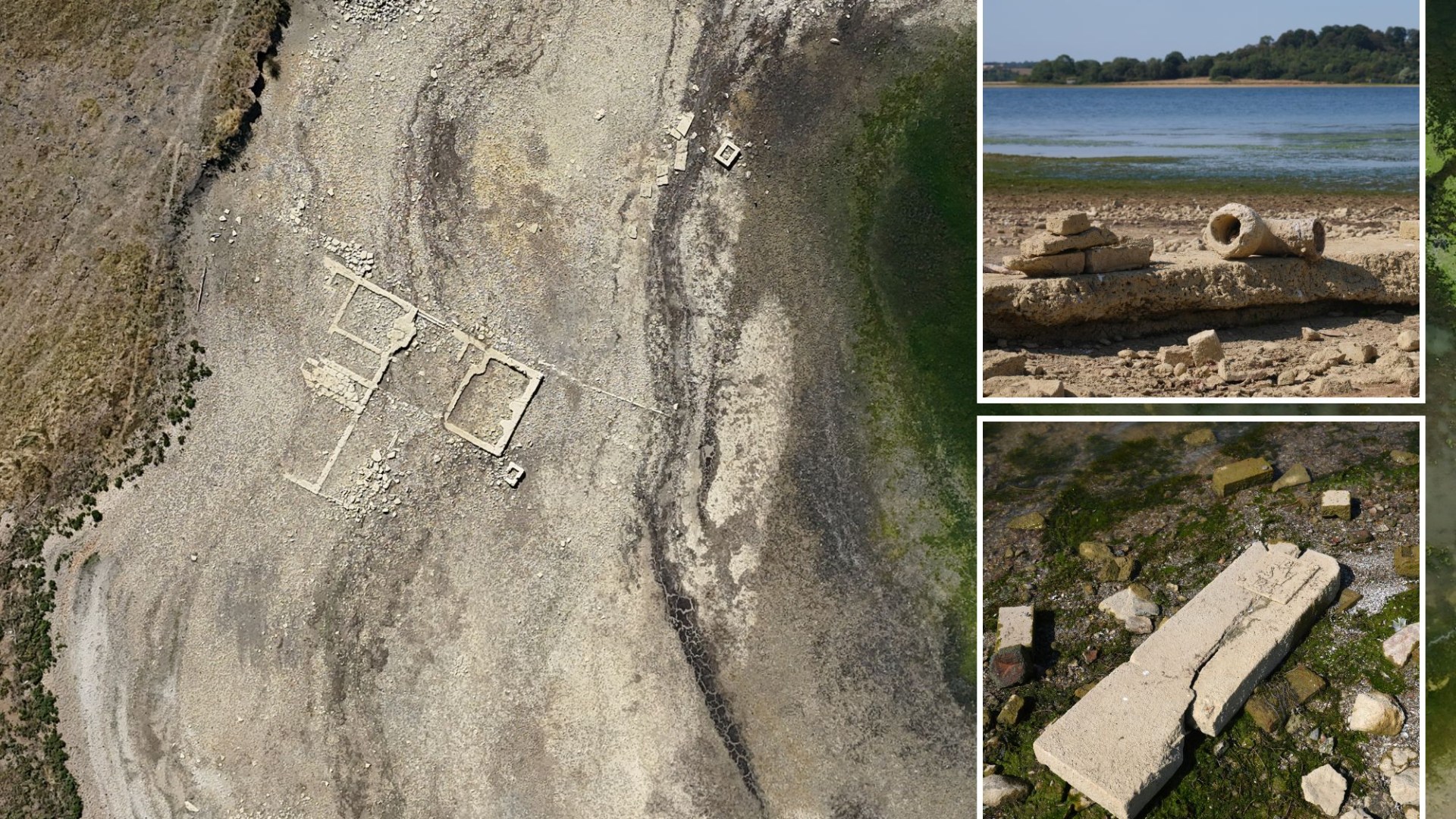
BRITAIN’S brutal drought has uncovered the remains of a lost village which was demolished and flooded to create a reservoir almost 50 years ago. Stonework from Nether Hambleton has emerged from the depths at Rutland Water in the East Midlands as water levels continue to plunge. Britain’s brutal drought has uncovered the remains of a lost village in the East Midlands Credit: PA It has uncovered the remains of the buildings which were demolished in the 1970s Credit: PA The village was among a number of small communities cleared in the 1970s before the Gwash valley near Empingham was dammed to create the vast reservoir. Residents of Nether Hambleton and nearby Middle Hambleton were relocated before cottages, farms and farmhouses were demolished and the area flooded. Sign up for The Sun newsletter Thank you! Construction of the reservoir was completed in 1976, with flooding taking a further three years, according to the Leicestershire and Rutland Wildlife Trust. More than 3,000 acres of land were submerged to create one of the largest man-made bodies of water in western Europe, covering more than four square miles. Stonework from the lost village of Nether Hambleton is revealed by the low water levels Credit: PA More than 3,000 acres of land were submerged with the residents being rehoused Credit: PA Stonework from the lost village discovered Credit: PA Rutland Water reservoir in the East Midlands Credit: PA At its deepest, Rutland Water reaches around 34 metres. But after months of exceptionally dry weather, falling water levels have now exposed stonework left behind after Nether Hambleton was demolished. The eerie remains offer a rare glimpse of the village which disappeared beneath the water more than half a century ago. The remarkable discovery comes as England‘s drought continues to worsen. Most read in The Sun Rainfall across the East Midlands has been below average for five consecutive months, the Environment Agency said. The spring and summer period has been the driest in the region since 1995, while July was the driest on record. The East Midlands, Lincolnshire and Northamptonshire, Kent and East Sussex, and Solent and the South Downs were among the latest areas to be officially moved into drought status onMonday. And now the country is bracing for another blast of extreme heat, with temperatures set to rocket towards 38C on Thursday. The Met Office has issued an amber extreme heat warning for London and parts of the South East, East Midlands, East of England, West Midlands and South Yorkshire. The warning will run from 9am until midnight on Thursday, with temperatures expected to reach 37C or 38C in some areas. Drought conditions are worsening Credit: PA Drought is continuing to drain reservoirs — and uncovering lost villages Credit: PA The heat is expected to add further pressure to already parched landscapes, with officials warning that drought conditions will continue until there is significant and sustained rainfall. Tony Grayling, strategic drought lead at the Environment Agency and chairman of the National Drought Group, said: “Drought conditions are worsening and will continue to do so until we seesignificant and sustained rainfall. “We know the hot and dry weather is taking a real toll on farming and there will be long-lasting impacts on our environment. “We want everyone to stay safe and hydrated over the summer, but we need everyone’s help in using a little less water to make sure our current water reserves last.” He added: “Every drop we can save is a drop more for your local farmers, local wildlife and local rivers.” The extreme heat warning comes as the UK faces its fifth heatwave of the summer, with the mercury expected to climb day by day before peaking on Thursday. But the combination of heat and bone-dry ground has sparked growing fears over wildfires. Firefighters have been battling blazes across the UK, including a major fire in the New Forest in Hampshire, while crews in South Wales have tackled multiple wildfire incidents. There could finally be some relief next week, with early signs of showers moving across the country on Sunday. The rain could bring the first proper downpours to parts of southern England in two months. But for now, the drought is continuing to drain reservoirs — and uncovering extraordinary glimpses of the villages lost beneath Britain’s waters Comment now
Remains of lost UK village demolished & flooded 50 years ago to create reservoir re-emerges after drought
Full Article
Original Source
Read the full article at Thesun →KhanList aggregates and links to publicly available news content. We do not host full articles from third-party sources. Always verify important information with original sources.