
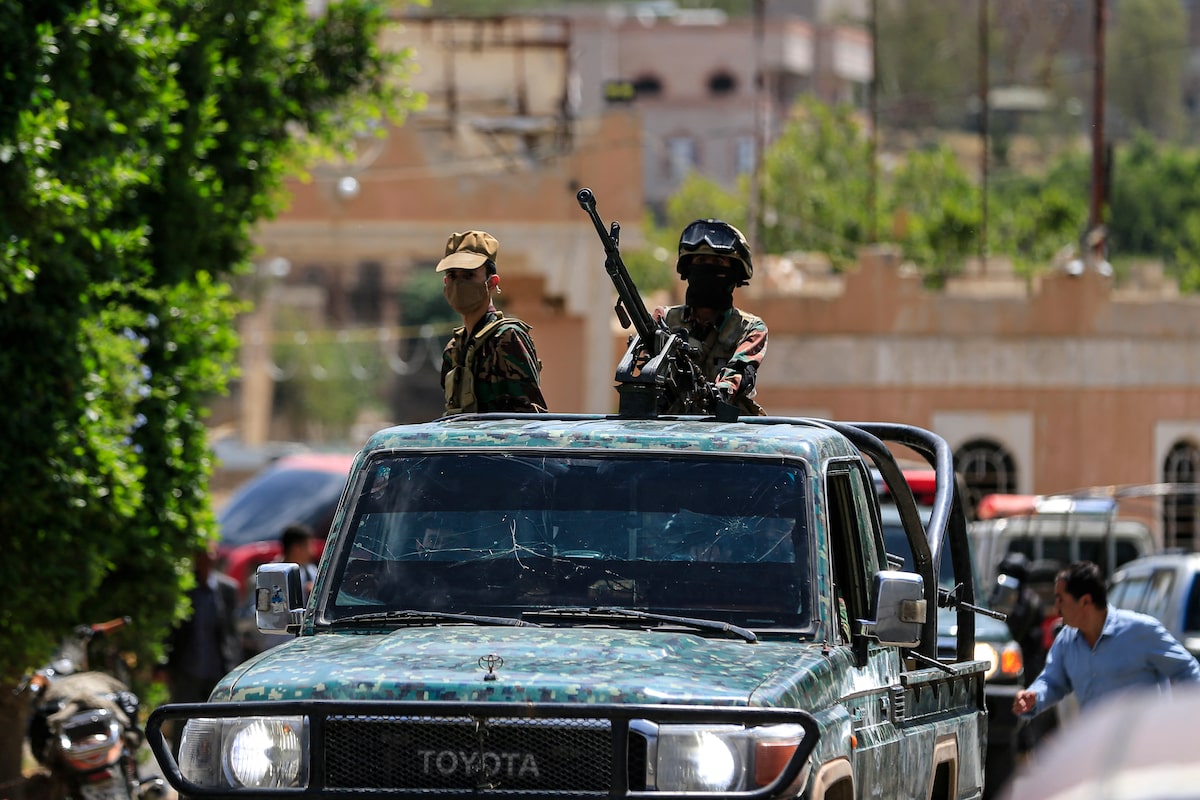
Open this photo in gallery:Houthi armed forces patrol the Yemeni capital of Sanaa last weekend. The Iran-backed rebels captured the Red Sea coast, cementing their hold on the Bab el-Mandeb Strait, a vital waterway.MOHAMMED HUWAIS/AFP/Getty ImagesHumanitarian agencies say they are facing a “triple chokepoint” on their food supply routes after Houthi rebels captured strategic sites on the Red Sea, adding to pressures caused by blockages in the Black Sea and the Strait of Hormuz.The Iran-backed Houthis made rapid territorial gains in Yemen last week, taking control of most of its western Red Sea coast and a key island in the Bab el-Mandeb Strait, a major shipping lane. From their new bases they can threaten ships on the Red Sea, where as much as 14 per cent of global maritime trade passes.Relief agencies, including United Nations organizations, had already reported higher food and oil costs as a result of the Iran war and the Russian invasion of Ukraine. Disruptions on the Red Sea will exacerbate the situation, making it increasingly difficult to supply emergency aid to crisis zones such as Sudan.“This adds to the chokepoints that are already there − the Strait of Hormuz and the escalation in the Black Sea − and now we have the Bab el-Mandeb and the risks related to that,” said Carl Skau, acting executive director of the UN’s World Food Programme. “We’re seeing these three chokepoints pushing global hunger.”In Africa and elsewhere, tens of millions of people could be forced into hunger as a result of the worsening barriers to supply routes, the WFP says.Sudan, with 20 million people in acute hunger and 14 million displaced from their homes, is considered the world’s biggest humanitarian disaster. Humanitarian assistance to the country was slashed when Western governments cut billions of dollars from their aid budgets last year, and it was further jeopardized by Iran’s shutdown of the Strait of Hormuz, which triggered a sharp rise in energy and food costs for UN aid missions.“It takes much longer to bring rice in from India, for example, due to these disruptions,” Mr. Skau told journalists at a UN briefing. “And this was only when we had the issue in the Hormuz. Now, with Bab el-Mandeb, things risk getting even worse. It’s all hitting at once.”The UN’s refugee agency, UNHCR, says the Red Sea conflict could increase transport costs and delay the delivery of crucial supplies. While the agency has emergency supplies in place, “any further deterioration could force rerouting via the Cape of Good Hope, adding 25 to 30 days to shipping times,” it said Tuesday.Bab el-Mandeb, or the “Gate of Tears,” is a narrow strait at the mouth of the Red Sea. Last week the Houthis captured Perim Island, a volcanic island in the waterway, from where major shipping lanes are within easy range of their missiles, drones and artillery.Open this photo in gallery:A commercial vessel anchors off Yemen's coast at Bab el-Mandeb on Saturday.-/AFP/Getty ImagesThe Saudi-backed Yemeni government escalated its air strikes on Houthi targets this week, seeking to dislodge them. But the Houthis are reportedly still in control of the Red Sea coast.The UN Security Council, debating the Houthi advances Tuesday, voiced alarm at the situation. “The Red Sea and the Bab el-Mandeb are vital lifelines, linking our continent to global commerce and food supply,” said Liberian diplomat Lewis Brown, speaking on behalf of three African countries. “Maritime disruption imposes an intolerable tax on developing nations.”The implications for Sudan could be huge. The cost of basic food in the country has already soared almost 40 per cent over the past seven months, partly because of higher fuel costs, the WFP says. Its shipping costs have already increased 20 per cent, while its fuel costs for humanitarian flights have jumped 35 per cent.Donor funding for the agency’s Sudan operation this year has dropped to barely half of last year’s level. “Our operations are completely underfunded, and there is a risk that we will have to scale back quite significantly in the next few weeks unless more funding is being provided,” Mr. Skau said.The International Organization for Migration warned this week that it might be forced to halt its relief supplies for hundreds of thousands of displaced Sudanese people within weeks unless it gets urgent support from donors.“The entire humanitarian system could collapse within weeks if we don’t act now,” IOM director-general Amy Pope said in a statement.Big trouble in South Africa’s motor cityAnother chokepoint is the Black Sea, where Russian attacks and blockades have targeted Ukrainian ports and shipping lanes. Russia and Ukraine provide about a third of global wheat supply, but their grain shipments through the Bosphorus Strait are down 40 per cent from last year.“Russia is systematically strangling Ukraine’s ability to feed the world,” the European Union said in a statement. “It is weaponizing hunger against millions in Africa, Asia, and the Middle East.”The Houthi offensive, meanwhile, has triggered a refugee crisis in Yemen. More than 100,000 people have been displaced inside the country, while another 2,400 have crossed by boat to Djibouti.“People are arriving after a difficult sea journey, many exhausted, distressed and carrying what little they could take with them,” said Sandrine Desamours, the UNHCR representative in Djibouti, in a statement.In some places in Yemen, as many as seven families are sharing a single tent, while others are sleeping outdoors under trees, according to the Norwegian Refugee Council.
Relief agencies face ‘triple chokepoint’ on food supply routes after rapid Houthi advance
Full Article
Original Source
Read the full article at Theglobeandmail →KhanList aggregates and links to publicly available news content. We do not host full articles from third-party sources. Always verify important information with original sources.