
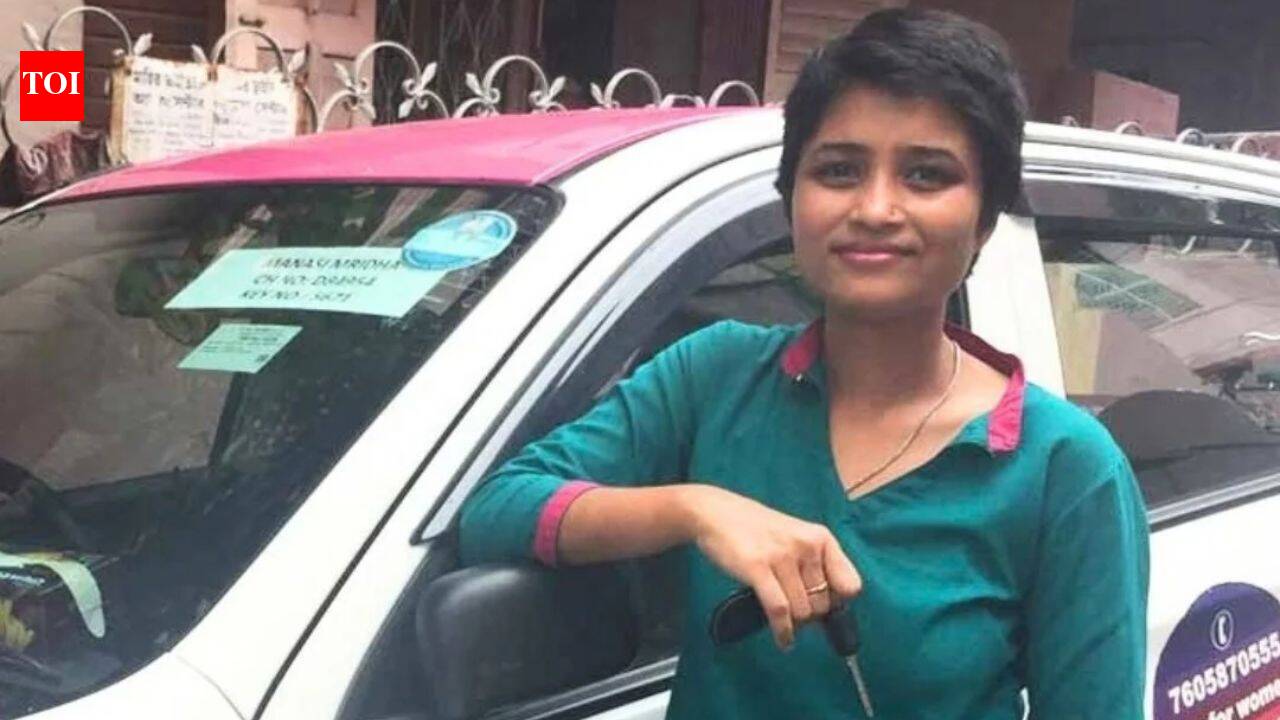
When Manasi Mridha was born, her father reportedly did not even come to the hospital to see her. According to accounts of her life, the reason was painfully simple: he had wanted a son, not a daughter. Years later, after her younger sister was born, the family faced even greater hardship. Her father abandoned the family, leaving her mother to raise the two girls with little support. Manasi's mother worked as a cook in other people's homes, while the family struggled to meet basic needs. Manasi's education was also affected by poverty. She eventually dropped out of school in Class IX. At a young age, she was married and later became a widow, leaving her to raise her young son while facing rejection from her in-laws and limited support from her own family. Her story could have ended there. Instead, Manasi began taking whatever work she could find to support herself and her child.From odd jobs to learning how to drive13 Jul 2026 | 13:11What's one stereotype about women that you're tired of hearing?After being pushed into difficult circumstances, Manasi worked in several jobs, including domestic work, selling clothes and working in a bank. She eventually discovered an opportunity that would change the direction of her life. Through the Azad Foundation's Women on Wheels programme, she received professional driver training. The programme was designed to help women from resource-poor backgrounds enter non-traditional livelihoods and earn a living with greater dignity and independence. Her training went beyond simply learning how to drive. She was taught skills including map reading, first aid, self-defence and communication. After completing the training, she worked as a professional driver and also trained other women in driving.Her association with Sakha, a social enterprise working to create safer transport solutions for women by women, became another important step in her journey. A Times of India report from 2019 described Manasi as one of Kolkata's first women cab drivers and highlighted her determination to establish herself in a profession largely dominated by men. Manasi eventually developed another ambition: she wanted to own a car and become financially independent through driving.Her name appeared first among the Pink Cab selectionsThat opportunity came in 2019, when women-only Pink Cabs were introduced in Kolkata under the West Bengal government's Gatidhara scheme. According to GetBengal, around 150 women applied for the programme, and Manasi's name appeared first on the selected list. She became the first Pink Cab driver associated with the initiative, with her vehicle flagged off by then West Bengal Chief Minister Mamata Banerjee. A contemporary Telegraph India report also documented Manasi as part of Kolkata's first group of women Pink Cab drivers. The report noted that she had arrived in Kolkata with her infant son after being widowed and had built a life for herself through work. It also described her as a driving instructor in addition to her work as a cab driver.The Pink Cab was more than just a vehicle for Manasi. It represented something she had wanted for years: the ability to earn independently and make decisions about her own life. Her journey was not without resistance. In 2019, she spoke about facing hostility from male cab drivers, including being pushed out of designated parking spaces. Rather than backing down, she began standing her ground. “The day I realized that they (male cabbies) do it as they don’t want to give us any room to grow to prevent competition, I refused to budge,” she told The Times of India. She also made it clear that her struggle was bigger than her own career. “My fight is not just for myself, but for all the women cabbies who are similarly victimized,” she said.From rejection to financial independenceManasi's story stands out because her achievement was built through several difficult transitions. She lost educational opportunities, became a young mother and widow, faced rejection from family and had to take up different jobs simply to survive. But professional driving gave her more than an income. It gave her confidence, mobility and a place in a profession where women were still a minority. Her story was also part of a larger effort by organisations such as Azad Foundation and Sakha to help women from disadvantaged backgrounds enter professional driving. A GlobalGiving report on Azad Foundation's Women on Wheels programme documented the organisation's work with women from resource-poor communities and highlighted Manasi's journey as one example of women entering the male-dominated transport sector.Today, the most striking part of Manasi's story is not simply that she became a Pink Cab driver. It is that she built an independent life after circumstances repeatedly told her that she had limited choices. The father who reportedly rejected her because she was a girl could not determine what she would become. Manasi eventually took the driver's seat herself, and with it, control over the direction of her own life.
Rejected for being a girl, Manasi Mridha became Kolkata’s first Pink Cab driver
Full Article
Original Source
Read the full article at Timesofindia →KhanList aggregates and links to publicly available news content. We do not host full articles from third-party sources. Always verify important information with original sources.