
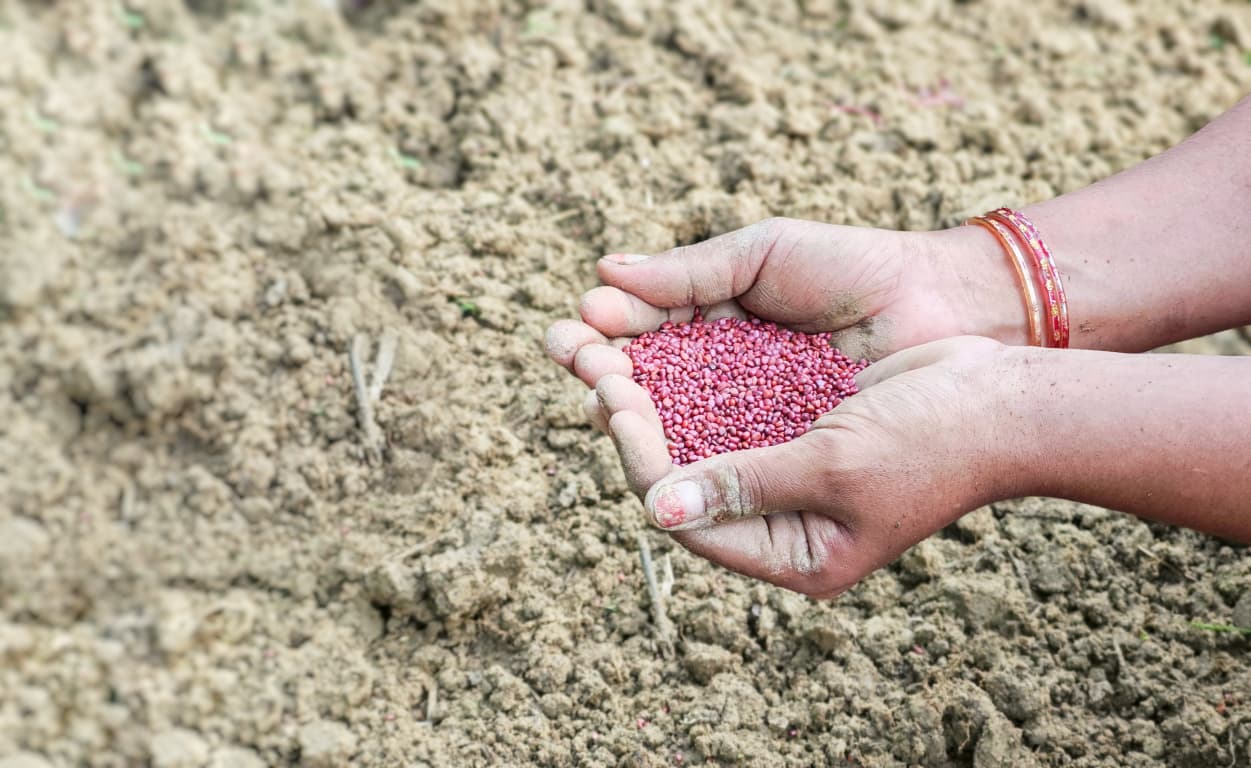
After the 2017 influx, over 1,500 hectares of protected forest in Cox’s Bazar were cleared to build refugee shelters, stripping the hillsides of vegetation and triggering a crisis of deadly landslides and soil erosion.Rohingya refugees are using traditional agroecology techniques on agroforestry plots, such as multi-layered intercropping, organic composting, and seed saving, to heal the degraded landscape and grow food amid deep cuts to international food aid.Supported by NGOs like UNHCR and FAO, large-scale reforestation projects have planted nearly one million tree seedlings and restored 200 hectares of camp land, using a mix of fast-growing species and deep-rooted native trees, including fruit trees, to stabilize the sandy slopes and prevent landslides.While reforestation efforts in the camp are showing measurable success, the long-term survival of forests is impacted by funding shortages and a lack of secure land rights for refugees. KUTUPALONG REFUGEE CAMP, Bangladesh —”It is like a jail, but it isn’t a jail,” says Roshid Ahamed Bin, a 47-year-old Rohingya farmer, living in what is now a refugee camp in Bangladesh. It is far from the farmland where he used to live in Myanmar, before he and thousands of Rohingya people like him fled persecution eight years ago. Here, amid the world’s largest refugee settlement with over 1.1 million refugees, space is tight and evergreen forests have paid the price. But families are combining NGO-funded farming projects with traditional Rohingya agroecology techniques to create agroforestry plots that are restoring land while helping refugees become self-sufficient in response to deep cuts in international food aid. “I feel so bad here as I have no land, but I am keeping my ancestors’ heritage alive. Growing these crops reminds me of the life we had in Myanmar. Here, life is difficult,” said Amina Khatun, a 58-year-old refugee living in Camp 1W, a sector of the sprawling settlement. Before the 2017 influx, Kutupalong refugee camp in Cox’s Bazar was a tropical evergreen forest, dominated by Dipterocarpus species, and sanctuary for endangered Asian elephants (Elephas maximus). To make way for the massive refugee settlements, the Bangladeshi government allocated roughly 2,500 hectares (6,100 acres) of protected forest land, and refugees and aid agencies cleared the vegetation to build shelters and provide firewood. Over 1,500 hectares of forest were cleared in total. The rain, with nowhere to soak in, ran straight down the slopes. Landslides became a seasonal terror, sources told Mongabay. But in the past several years, on the hillsides where there was once bare, sandy earth and the blue-black glare of tarpaulin, there are now nurseries and gardens. Across the camps, more than 159,000 refugees are engaged in homestead gardening. Space is severely limited, and not all use agroecology techniques. Some farmers rely on chemical sprays and paddy fields to make ends meet. A restored hillside inside the refugee camp in Cox’s Bazar, Bangladesh, where planted trees are helping to stabilize the sandy slopes. Image by Ata Ullah. But among them, there are traditional food gardens and permaculture designs that avoid synthetic pesticides entirely, relying instead on intercropping, a mix of trees and organic soil management. Knowledge that crossed the border Mongabay sat with Roshid Ahamed Bin inside Camp 27. He remembers the farmland in Rakhine state, Myanmar, before 2017. Despite the confinement of the camp, Ahamed Bin has found a way to reconnect with the life he left behind. Like many Rohingya refugees here, he was a farmer in Myanmar. Now, he is among a growing number of refugees using agroforestry to restore the camp’s degraded landscape and feed their families. “Our land may be far away, but the farming passion of our ancestors remains part of our lives,” he told Mongabay. Back in Myanmar, farming was not just a livelihood for his family, but a way of life rooted in the land. His family grew rice, vegetables, and fruit, using layered intercropping and agroforestry. They planted local varieties of banana, papaya, and mango trees directly beside their vegetable gardens to maximize space and provide shade. They removed insects by hand, added animal manure and composted leaves to keep the soil alive, and saved seeds from healthy crops. A Rohingya woman holds a handful of radish seeds in Cox’s Bazar, Bangladesh. Image by Ata Ullah. Rohingya refugee camp in Ukhiya, Cox’s Bazar. Amid recurring landslides, growing numbers of Rohingya refugees in Bangladesh are being forced to adapt to increasingly limited camp space. Image by Md shameem ul islam via Wikimedia Commons (CC BY 4.0). Several U.N. agencies and NGOs are providing support to these efforts and they actively integrate Rohingya traditional knowledge into their programs. The UNHCR SuLMER project has rehabilitated the Shoa Ma’r Jhiri stream, stabilized slopes, and introduced kitchen gardens, relying on community input to decide what to plant. CARE’s training in ‘sack and vertical gardening’ builds on the Rohingya tradition of maximizing tiny spaces. Similarly, when FAO and WFP distribute seeds, they rely on the refugees’ traditional knowledge of seed-saving and intercropping. Together, these programs have engaged tens of thousands of refugees. “They have skills in planting, fertilizer, pest control, harvesting, timing,” said Jahir Ahamed, a staffer at the UNHCR SuLMER prokect. “We use suitable practices in gardening activities.” Because families like his fled so quickly, they didn’t bring their own seeds from Myanmar and rely on those from distributed. They grow many leafy vegetables and gourds, like amaranth and Indian spinach. Mabia Khatun, 38, from Camp 17, recalls her own farm practices. “We saved seeds from healthy plants,” she said. A practice, they still engage in with seeds provided by NGOs. “Sometimes we exchanged seeds with neighbors. Our elders taught us to care for plants and protect the land.” According to FAO and UNHCR reports, the restoration involves a mix of fast-growing tree species for quick ground cover and slower native species for long-term slope stability. On the ground, this looks like multi-layered intercropping. This method is highly strategic for the camp’s harsh environment. By stacking plants of different heights together, families can grow food in tiny spaces while the deep roots hold the sandy soil in place. “Every seed I plant reminds me of my homeland and gives me hope for tomorrow,” said Roshid Ahamed. Refugees plant tall fruit trees like mango and papaya to create canopy shade, then underplant them with climbing vegetables such as bottle gourd and pumpkin that use the trees and shelter walls for support. At the soil level, families replace chemical inputs with composted household waste and animal manure to rebuild fertility. The impacts, so far, are measurable, according to the organizations. The FAO reports that reforestation and land stabilization efforts have helped restore degraded forest land and improve ecosystem services. The use of native species protects local biodiversity while stabilizing the sandy, erosion-prone slopes that threaten shelters during the monsoon. Beyond just stabilizing the hillsides, these new trees are actively rebuilding the local ecosystem. As the roots spread and the canopy grows, the forest slowly returns, bringing back shade and moisture to an area that was stripped bare. The FAO has also piloted dry-season planting techniques inside the camps, achieving a 100% seedling survival rate in trial sites by using water-efficient methods. A bottle gourd hangs from a bamboo trellis outside a Rohingya shelter in Cox’s Bazar, Bangladesh. Image by Ata Ullah. An uphill battle But keeping agroecology traditions alive in Bangladesh required adapting to a new reality. While families brought generations of farming knowledge with them, they had to merge it with modern, large-scale restoration efforts to heal the devastated landscape. These traditional techniques are now central to the entire camp’s restoration, said sources. According to UNHCR, agencies have planted nearly one million tree seedlings, including native species, to stabilize slopes, and collective efforts have When they arrived in Bangladesh, they tried to grow food but the camp was different. The hillsides had been stripped of their topsoil, leaving behind hard, sandy earth. There was no open farmland, only the tight spaces between shelters. Water was scarce, and the rains that did come washed away what little soil remained. To overcome these limitations, families adapted their traditional methods, planting in sacks and building vertical bamboo gardens on their shelter walls to maximize space, while carefully saving every drop of water to keep the seedlings alive. “Some grew well,” Ahamed Bin said. “But limited space, poor soil, and water shortages made farming difficult.” Despite these harsh conditions, some refugees refused to give up. They began experimenting with small plots of land between the shelters, determined to make the sandy earth productive again. Amina Khatun, 58, in Camp 1W, said she did not wait for an NGO to tell her what to do. A farmer sprays chemical pesticides on a field of coriander in Cox’s Bazar, Bangladesh. Image by Ata Ullah. “I saw people doing it and started my passion,” she said. She organized a group of six women. They started a nursery on a small plot of unused land wedged between camp shelters, less than a tenth of a hectare in size. The land is not theirs. Under Bangladeshi law, refugees cannot own land. The space was allocated by camp authorities and the UNHCR SuLMER project specifically for community gardening and nursery projects, giving the women temporary permission to cultivate it. They grow climbing vegetables like bottle gourd and pumpkin on fences and nets to maximize space, alongside fruit trees such as papaya, banana, and jackfruit, and winter crops like brinjal and pepper. Mabia joined the nursery too. “I wanted to help my community restore greenery and protect the environment,” she said. Their daily work is slow and physical. They prepare the soil. They fill seedling bags. They plant seeds. They water young plants. They remove weeds. They check each seedling’s health. They prepare them for planting. They use seeds from two sources: some are provided by the UNHCR SuLMER project, while others the women buy themselves from local markets. Some days are harder than others because of heat, rain, and water shortages. The women don’t just work together. They share responsibility. Some prepare soil and plant seeds, while others water and maintain the seedlings. This shared labor has created a strong sense of solidarity among the women. “When women grow trees, they grow more than plants; they also grow confidence, knowledge, and hope for their community,” Mabia said. This work has changed their lives, they told Mongabay. Amina said it has given her confidence and an income. She earns money by selling surplus seedlings and vegetables to other refugees in the camp. While she did not give an exact figure, she said the small earnings help her buy extra food and contribute to her household. But she also said there is criticism. But breaking traditional gender roles in the camp has not been without its challenges. While the work brings financial independence, it also sparks disapproval from some members of the community who are not used to seeing women take on public labor. “Sometimes people look down on this profession,” she said. “But now, that’s fine, we can do something.” For Mabia, it is the same. “It gives me an opportunity to contribute to my family,” she said. She has learned new skills from organized nursery work, even though she already knew how to grow plants in Rakhine. She says the work has given her confidence and the chance to support her community. But they face problems. Limited space, water shortages, and difficulty getting good-quality seeds are constant. Despite their success, the lack of formal support means the women are constantly fighting against the environment. The basic resources they need to keep their nursery alive are often out of reach. Uncertain future for the land and refugees The future of these restored areas is uncertain. According to the UNHCR SuLMER report, the long-term sustainability of efforts depends heavily on continued funding and community oversight. This includes encouraging local behavior change, such as stopping the dumping of solid waste into the rehabilitated streams and preventing the unauthorized cutting of newly planted trees. The report notes that without clear land ownership, management responsibilities, and continued monitoring, the restored areas could be degraded again. A Rohingya family works a plot of community land in Cox’s Bazar. Image by Ata Ullah. These environmental vulnerabilities are compounded by the uncertainty of the refugees’ future. The longer families remain in limbo, the harder it becomes to plan for the long-term care of these forests. This concern is not abstract. The Government of Bangladesh has stated that Rohingya refugees are in the country temporarily and are expected to repatriate to Myanmar when conditions allow, a position repeatedly stated in Joint Response Plan documents. If that happens, the question of what happens to the reforested slopes and nurseries is left in limbo. For the women who planted these gardens, they tell Mongabay the uncertainty of their future and where exactly they will go if they return to Myanmar makes the work even more personal. Despite the looming threat of relocation, the women say the gardens are more than just a food source; they are a way to hold onto their identity. By nurturing these plots, they are keeping their culture alive, even as their legal status remains precarious. “Growing a plant in the camp reminds me of my home in Rakhine and gives me hope for a better future,” Mabia said. “I want to pass on our traditions to the younger generation.” Banner image: A Rohingya woman holds a handful of radish seeds in Cox’s Bazar, Bangladesh. Image by Ata Ullah. Bangladesh’s Rohingya refugee camps become increasingly vulnerable to landslides FEEDBACK: Use this form to send a message to the author of this post. If you want to post a public comment, you can do that at the bottom of the page. Credits Topics
Refugee families use agroforestry to restore degraded landscape in Bangladesh camp
Full Article
Original Source
Read the full article at News →KhanList aggregates and links to publicly available news content. We do not host full articles from third-party sources. Always verify important information with original sources.