
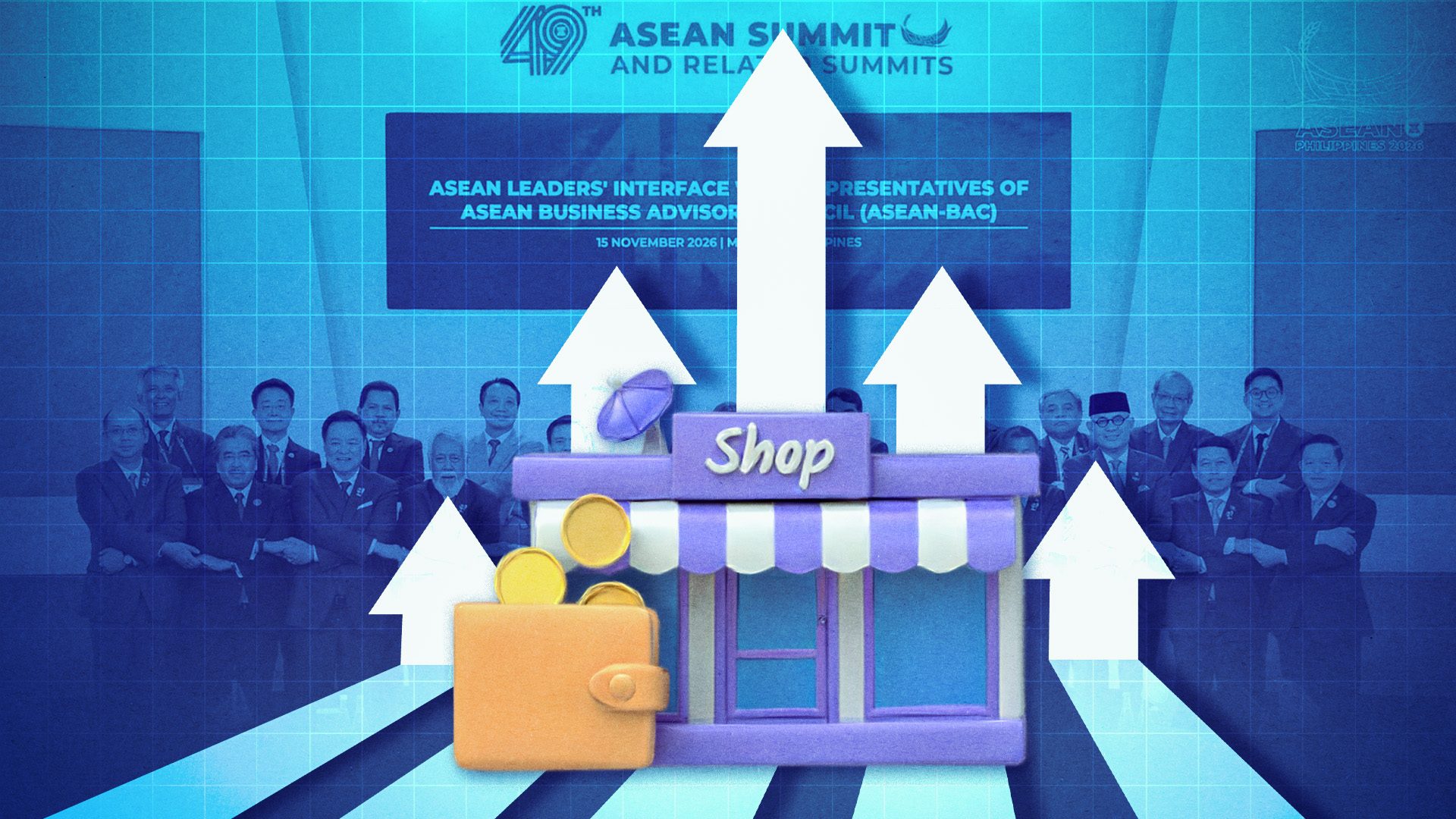
From a landmark digital economy agreement to investment-ready energy projects, here's what businesses can take away from the Philippines' ASEAN hosting The Philippines hosted the 49th ASEAN Summit, where significant business developments included the signing of the Digital Economy Framework Agreement and an enhanced ASEAN Power Grid agreement. Investment opportunities were highlighted at the Fourth ASEAN Investment Forum, featuring projects like sustainable aviation fuel and solar power initiatives, with substantial funding sought from investors. Despite challenges in regional economic integration, ASEAN remains an attractive investment destination, with foreign direct investment reaching a record $246 billion in 2025. This is AI-generated. Read the article for full context. Report any errors. The Philippines hosted the 49th ASEAN Summit and Related Summits from November 15 to 17. But aside from bringing world leaders to Manila, ASEAN also drew delegations of businessmen and investors hungry to make deals. Let’s start with some of the biggest business developments to keep on your radar: Digital economy. All 11 ASEAN countries signed the Digital Economy Framework Agreement (DEFA), which seeks to simplify cross-border e-commerce, digital payments, and data transfers across the region. With implementation targeted by May 2027, the Department of Trade and Industry plans to conduct trade shows and information campaigns next year to help entrepreneurs understand the agreement. Regional power grid. All ASEAN members signed an enhanced agreement on the ASEAN Power Grid that could eventually allow them to buy and sell electricity across borders. While construction remains some ways off, the International Energy Agency estimates that ASEAN will need $27 billion in cross-border power interconnection investments through 2040, on top of more than $300 billion to expand and modernize domestic grids, presenting opportunities for infrastructure developers and financial institutions. Free trade agreements. Canada concluded negotiations for separate free trade agreements with the Philippines and ASEAN. The Philippine-Canada agreement, targeted for signing in 2027, covers goods, services, investments, and digital trade, opening another avenue for businesses looking to diversify their markets. US trade relations. US President Donald Trump also flew to Manila for a special summit with ASEAN leaders and a state visit with Marcos, during which he announced what he called the “biggest trade deal” between the Philippines and the US. Although no formal agreement was signed, Trump claimed that the Philippines had agreed to source 100% of its agricultural and energy imports from the US, which Philippine officials have since questioned. Watch how discussions unfold, as even a partial shift toward US suppliers could reshape supply chains and introduce greater competition for local producers. Beyond the high-level meetings, ASEAN-related forums also brought together an eclectic mix of business leaders and global personalities – from Tessie Sy-Coson, Martha Sazon, and Maria Ressa to Angelina Jolie – for discussions spanning inclusive growth, food and energy security, and artificial intelligence. Among the businesspeople in the lineup, a recurring theme was how difficult it remains to do business across ASEAN, despite its long-held dream of being a single marketplace. Ayala Corporation chairman Jaime Augusto Zobel de Ayala lamented differences in regulatory standards and investment approvals, while former CIMB Group chairman Nazir Razak criticized the slow pace of regional economic integration. READ: From micro to massive, ASEAN’s entrepreneurs face regulatory hurdles Yet ASEAN is still an attractive investment destination, with foreign direct investment reaching a record $246 billion in 2025, up 10%. And there was no shortage of investment opportunities being pitched. At the Fourth ASEAN Investment Forum, gathered in one room were Philippine Board of Investments managing head Ceferino Rodolfo, global infrastructure investor I Squared Capital, and representatives of sovereign wealth funds from Malaysia, Indonesia, Vietnam, and of course, the Philippines’ own Maharlika Investment Corporation. Between them, these institutions oversee assets worth well over $100 billion – a dealmaking goldmine. Here’s a peek at some of the Philippine projects being pitched to investors there, as detailed in an investment booklet distributed during the event and seen by Rappler: Project SAFAL. ALCOM’s proposed $340-million sustainable aviation fuel (SAF) project is seeking $102 million in equity and $238 million in debt financing, with a projected equity internal rate of return (IRR) of 28%. SPV Clark. SAFAsia’s proposed $226-million facility in New Clark City would convert locally available waste into jet fuel, targeting annual production of 20,000 tons beginning in 2028. The project seeks $67.8 million in equity and $158.2 million in debt financing, with a project IRR of 14% to 17%. Burgos Solar Power Project. Zenith Renewable’s proposed 64.5-megawatt solar farm in Pangasinan, paired with 51.2 MWh battery storage, seeks $12 million for a 70% equity stake, with a target IRR of 13.4%. San Pedro Agri-Solar Power Project. Another Zenith project combining agricultural land use with solar power generation seeks $2 million for a 70% equity stake, with a projected IRR of 17%. READ: [Vantage Point] The ASEAN Summit’s billions: Who pays, who gains? However, one investment opportunity conspicuously absent from every ASEAN discussion was the US-led Pax Silica initiative. As officials had indicated beforehand, no Pax Silica deal was signed during the summit or US President Donald Trump’s subsequent state visit. Given the protests surrounding Trump’s arrival and opposition to Pax Silica itself, the administration had little political incentive to draw even more attention to the controversial project. We hope this readout helps inform your next strategy or boardroom decision. And as always, feel free to tell us what to tackle next, dear business leader.– Rappler.com Readout is a new content series from data consultancy The Nerve, bringing you insights that bridge the gap between quick news headlines and dense technical reports. Readout tracks and explains business shifts in different Philippine industries. Crafted from on-the-ground reporting and data-driven analyses, Readout provides a clear read on where market and consumption are headed, what’s shaping demand across different sectors, who the key players are, and why it all matters. Subscribe to the Readout newsletter here. How does this make you feel? Loading
[READOUT] What businesses can get out of ASEAN 2026
Full Article
Original Source
Read the full article at Rappler →KhanList aggregates and links to publicly available news content. We do not host full articles from third-party sources. Always verify important information with original sources.