
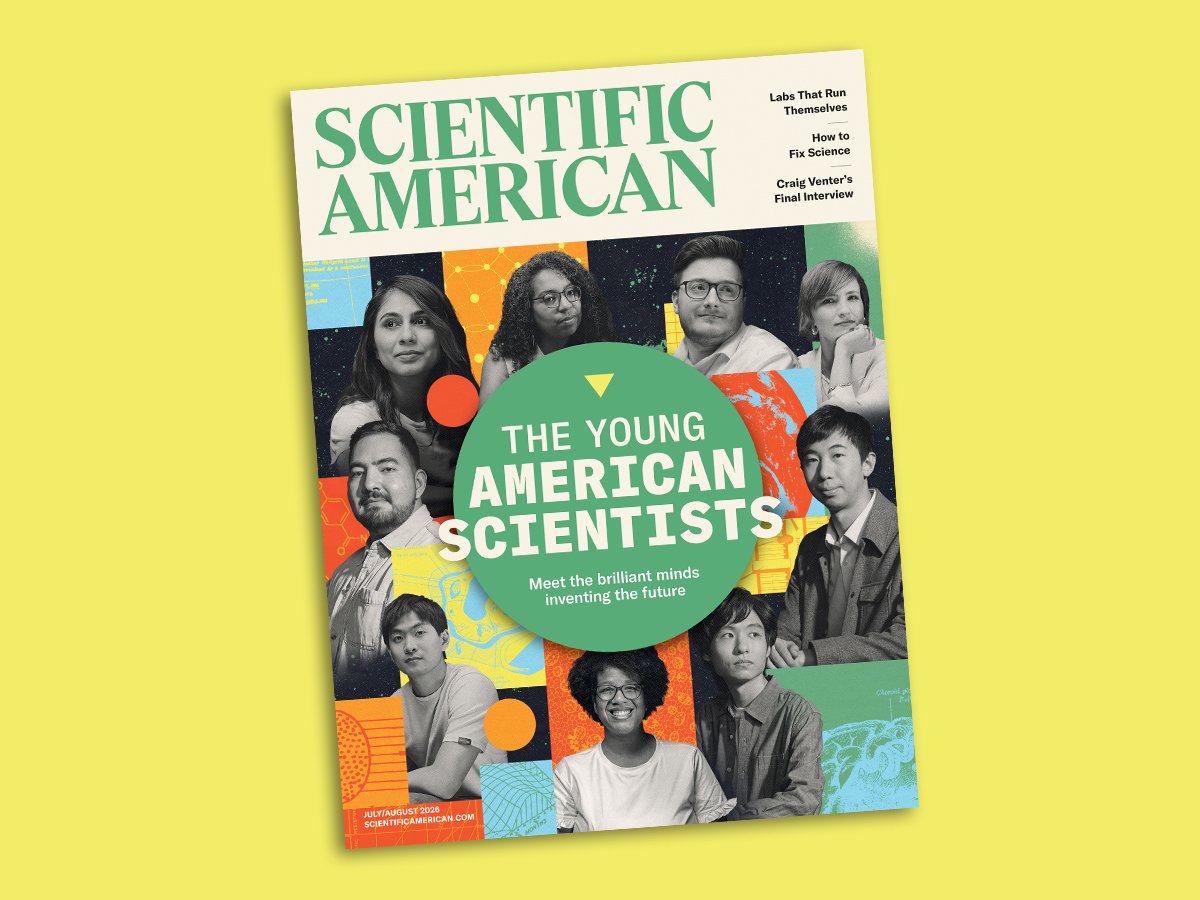
SUSTAINING SCIENCE“The Past Is Our Future,” by Deborah Blum [Young American Scientists], raises many unsettling questions that researchers at all stages of their careers are facing today. The upheaval in research communities resulting from the U.S. federal government’s defunding of research projects, coupled with ongoing threats to scientific advancements, is unprecedented. Blum’s playbook reminds us that throughout our country’s history, other sources of research funding have supported such endeavors. The question is to whom researchers can now turn to fill the breach.Unquestionably, scientists need to do a better job of communicating the importance of their research to the public. The U.S. is suffering from many ills that require research: the burden of chronic and multimorbidity diseases, emerging and reemerging viruses, maternal mortality, mental health crises, and more. Without adequate research capacity and capabilities, we will have a “brain drain spiral” in which the best and brightest leave the country to conduct innovative research and advance their scientific careers elsewhere.On supporting science journalismIf you're enjoying this article, consider supporting our award-winning journalism by subscribing. By purchasing a subscription you are helping to ensure the future of impactful stories about the discoveries and ideas shaping our world today.The collapse of our country’s research enterprise leaves every U.S. citizen without an opportunity to benefit from lifesaving cures, treatments and breakthroughs that have defined the scientific community for centuries. It is our collective responsibility to create a sustainable path for the future of science and to engage trusted partners in its execution.CONNIE M. ULRICH, MARTHA A. Q. CURLEY and MARY D. NAYLOR UNIVERSITY OF PENNSYLVANIA SCHOOL OF NURSINGPOLICY AND INTENTIn “State of American Science” [Young American Scientists], journalist Adam Rogers laments the devastating effects of political interference by the current Trump administration on the American scientific enterprise and its future. But what if the dismantling is not a side effect but the purpose? Surely there is sufficient evidence to demonstrate the deleterious impact of current government policy on the practice of science in America today. One might even say they could not do more damage if they tried.PHILLIP GOLD WESTLAKE VILLAGE, CALIF.FUNDING EXHAUSTIONI had mixed feelings about the July/August issue. I’ve noticed a growing trend toward articles with a political slant, particularly around justifying federal funding from the U.S. government. I am not saying this angle is wrong or without merit, but when so many articles circle back to the same theme, it starts to feel repetitive.I would love to see you return to a wider mix of research topics in future issues. Coverage of a wide range of complex subjects that a layperson like me can understand is what attracts me to this magazine. I say this as someone who genuinely cares about the publication and wants to keep enjoying it for years to come.SUNIL IYENGAR VIA E-MAILMEOW-TIVATION“Feline Assistance,” by Anirban Mukhopadhyay [Advances], illustrates the problem of drawing overly broad conclusions from limited data. Any scientist who concludes that cats will not intervene with humans unless there is a direct benefit to themselves has obviously not woken up in bed to find that their cat has just brought them a half-dead mouse—to share. Cats are more autonomous, but it is not correct to say, as your online headline does, that cats will help “only when there’s something in it for them.”JEAN HALLORAN BROOKLYN, N.Y.STORY OF YOUR LIFEPartly inspired by “Wired for Story,” by Ingrid Wickelgren [September], our online Discussions space asked readers, “What narrative template would you give to your own life? How has story affected your choices or how you see the world?” The following responses were edited for space and clarity.As a child of nine years, I read the Indian epic the Mahabharata in my native language, Tamil. I read it multiple times over many years. The story fascinated me with its battle between right and wrong, demons and magical realism. Even as a nine-year-old, what stayed with me were the final chapters, where the “good” wins over the “evil” in a devastating war but finds it does not bring any joy. It taught me the emptiness and futility of war and has stayed with me ever since.“RAGHU” VIA DISCUSSIONSI listened to all stories carefully as a child, whether from my mum and elders or popular culture on TV, books, etcetera. I was never really a fan of hero stories because I thought them to be unrealistic, and the heroes were usually male. As a little girl, I could not see myself in the pop stories, or it was a role that I was not interested in. Nevertheless, I was searching for my place in this world while always believing in the value of human connection. Funny enough, I was always attracted to stories with animals.“MARIA ZIGGY” VIA DISCUSSIONSAs a child, I loved when the older members of my family would tell their stories. Even then I saw the thread weaving all of us into the Greater Tale. Heroism and failures, bravery and adventurers—they cemented my lifelong love of stories. Now, as a senior member of the family, I can see the influence they have on our life choices and many-storied paths. We keep our generational memories alive in our storytelling.“CER” VIA DISCUSSIONSUnfortunately the article missed the opportunity to highlight the potential for practical application of the described brain studies. I would have loved to learn how we are using neuroscience and narrative psychology to treat memory loss, post-traumatic stress disorder, dementia, etcetera, or mechanisms underlying these conditions.“ALEX” VIA DISCUSSIONSERRATAIn “Spying on the Universe,” by Jonathan O’Callaghan [September], the caption of the photograph of Nancy Grace Roman should have said that she was NASA’s first chief astronomer and that the image shows her at the Goddard Space Flight Center in the 1970s.“Feeding Colossus,” by Austyn Gaffney [October], incorrectly stated that the mayor of Southaven, Miss., estimated the city’s additional revenue would exceed $20 billion in 2028. He had cited more than $20 million.
Readers respond to the July/August 2026 issue
Full Article
Original Source
Read the full article at Scientificamerican →KhanList aggregates and links to publicly available news content. We do not host full articles from third-party sources. Always verify important information with original sources.