
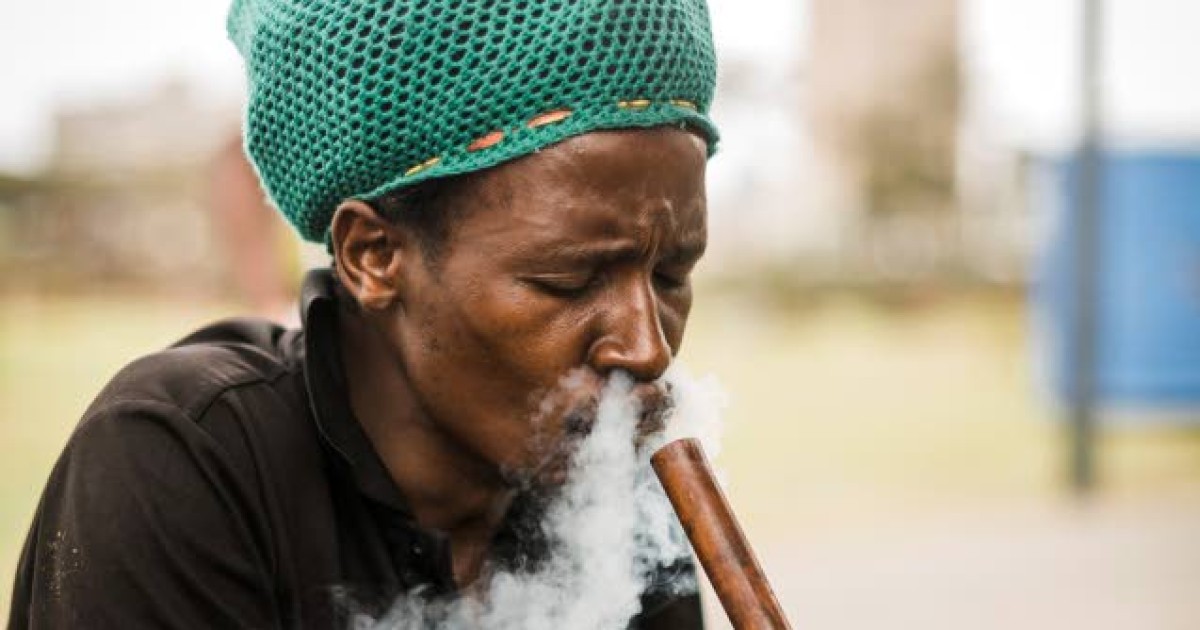
A Rastafarian man smokes marijuana in this 2019 file photo. The House of Seba, in a submission to the parliamentary committee examining the Government’s Green Paper for the National Policy for Culture, Entertainment and the Creative Economy, has called for clearer procedures governing Rastafari’s sacramental use of ganja, including a framework for recognised religious groups to manage its distribution. While calls are being made for ganja to be removed from the Dangerous Drugs Act, the House of Seba is urging a different approach, arguing that Jamaica should promote its use as a Rastafari sacrament rather than recreationally. The group is also calling for police to be better educated about the community’s religious practices and the law. The position was outlined on Thursday by House of Seba leader Ras Jabali Seba during a parliamentary committee meeting examining the Government’s Green Paper for the National Policy for Culture, Entertainment and the Creative Economy, where Opposition Senator Allan Bernard questioned why the organisation had not called for ganja to be removed from the legislation, given the difficulties Rastafari people have experienced with law enforcement. The House of Seba, in its submission to the committee, had called for clearer procedures governing Rastafari’s sacramental use of ganja, including a framework for recognised religious groups to manage its distribution. It also urged the Government to establish an education and engagement programme with the Jamaica Constabulary Force (JCF), arguing that police need a better understanding of Rastafari history, culture, and religious practices, as well as the provisions of the Dangerous Drugs Act relating to the community. But while responding to Bernard, Ras Jabali said he was cautious about unrestricted legalisation, arguing that ganja could have harmful effects when used without proper understanding and purpose. He said the organisation is instead promoting what it considers conscious use of the herb.. Opposition Senator Allan Bernard arguing during Thursday’s parliamentary committee meeting that ganja should be removed from the Dangerous Drugs Act, while contending that its recreational use is also part of Jamaica’s culture. “As you look in the country you can see that ganja is really a serious thing for true, and the unconscious use of ganja can really derail the country in a negative way. So, ganja being fully legal for everyone to use maybe needs more reasoning around that where we might not be fit enough for reasons around the full legalisation of ganja,” he said He added that Rastafari had maintained a relationship with ganja even when its use was illegal, and that the organisation did not support unrestricted consumption. However, Bernard argued that the herb has become an established part of Jamaica’s cultural and entertainment experience, extending beyond the Rastafari community, and questioned whether the culture policy should recommend a review of the law. Bernard said the country needs to recognise that ganja is widely used at entertainment events and that its recreational consumption is also part of Jamaica’s cultural landscape. He later argued that the policy should move beyond provisions for Rastafari’s sacramental use and consider ganja’s wider place in Jamaican culture, including its recreational use. Committee chair and Culture Minister Olivia Grange, however, pointed to provisions already outlined in the Green Paper which propose transferring responsibility for matters relating to Rastafari religious observances from the Ministry of Justice to the Ministry of Culture, Gender, Entertainment and Sport. Under the proposed arrangement, the culture ministry would oversee the issuance and regulation of licences for ganja cultivation for sacramental use by Rastafari, the designation of land for cultivation, and the declaration of exempt events. The necessary legislative amendments would be undertaken in collaboration with the Ministry of Justice and Constitutional Affairs. Bernard said his proposal goes further than those provisions, as he wants the policy to address ganja’s recreational use as part of the country’s wider cultural experience. House of Seba leader Empress Malia Seba speaks during Thursday’s committee meeting, calling for greater dialogue between Rastafari organisations and the Jamaica Constabulary Force to improve understanding of the community’s religious practices and the law. Ras Jabali Seba, however, urged the senator to reconsider the proposal to remove ganja from the law. “I would love for you to change the scope and don’t try to remove ganja, but try to get all Jamaica to use ganja as a sacrament because… the term recreation is the unconscious use of ganja — that’s using ganja in the parties while thinking about your problem. We want the entire Jamaica to start using ganja as a sacrament, and then all our problems will be over,” he explained. Bernard acknowledged his response. Beyond the debate over whether ganja should remain under the Dangerous Drugs Act, House of Seba also called for members of the police force to receive greater education on Rastafari culture and the legal provisions governing sacramental use. Empress Malia Seba, who serves alongside Ras Jabali as a leader and guide of the organisation, said the provisions relating to Rastafari in the legislation are not sufficiently clear, leaving room for different interpretations among the police. She told the committee that some cops recognise the allowances for sacramental ganja use at religious gatherings, while others have threatened to arrest members of the community. “Some police will tell you that yes, you are okay to have X amount for your Nyabinghi, or this meeting or that meeting, while some police — it’s based on their discretion — they may want to still lock you up and take you to the station for you to call a lawyer,” she said. House of Seba leader Ras Jabali Seba addresses the parliamentary committee examining the Government’s Green Paper for the National Policy for Culture, Entertainment and the Creative Economy on Thursday, making the case for the conscious and sacramental use of ganja. Empress Seba said the organisation had experienced several such incidents, forcing it to seek legal assistance to establish that the individuals involved were members of the Rastafari community. She argued that clearer identification of recognised Rastafari organisations and regular dialogue with the police would help prevent misunderstandings and ensure members can practise their religion without unnecessary interference. House of Seba is proposing that the education and engagement programme between recognised Rastafari organisations and the JCF includes providing guidance on the relevant provisions of the Dangerous Drugs Act and establishing communication channels between community leaders and designated police representatives. The organisation also wants regular meetings between Rastafari leaders and police representatives to address concerns and promote consistent application of the law. In its submission to the committee the organisation stressed that it was not seeking special treatment . “Our objective is not to place Rastafari people above the law. It is to ensure that the law is understood and applied fairly, and that genuine religious practices are not mistaken for unlawful commercial activity,” Empress Seba said. The organisation also presented a protocol outlining how it intends to manage its sacramental ganja activities, including procedures for handling, security, documentation and accountability. It asked the committee to consider the document as a possible guide for organised Rastafari groups while acknowledging that the protocol does not replace the law or automatically authorise activities requiring Government approval or a licence.
Rastas reject push to remove ganja from Dangerous Drugs Act
Full Article
Original Source
Read the full article at Jamaicaobserver →KhanList aggregates and links to publicly available news content. We do not host full articles from third-party sources. Always verify important information with original sources.