
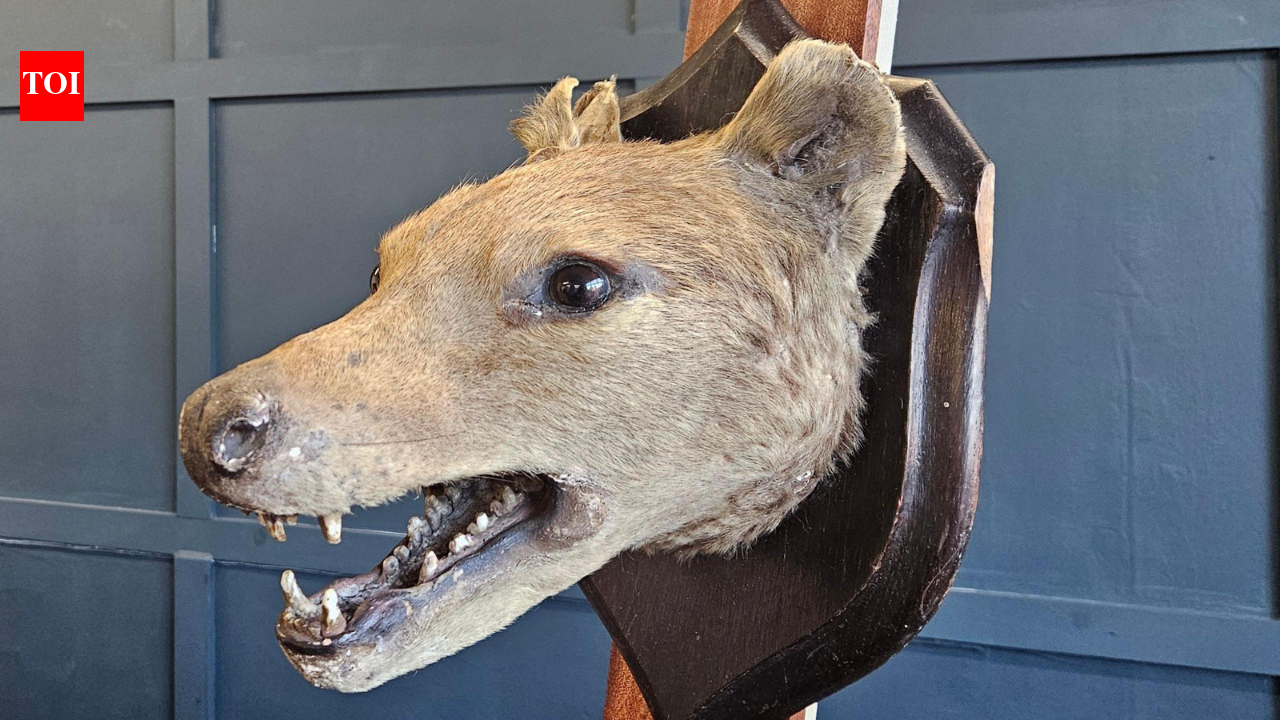
A family living in London has discovered a rare mounted taxidermy head of an extinct thylacine, also known as the Tasmanian tiger, inside a box stored under a bed. The specimen had been forgotten in storage for decades. It is one of only three known mounted thylacine heads in the world. It is due to be sold at Auctioneum in Bath, where experts expect it to sell for between £30,000 and £50,000. The discovery comes after the same auction house sold another mounted thylacine head. That earlier specimen had plastic googly eyes attached by a previous owner. It was bought at an antiques market for £50 before being sold to collector James Cranfield for £50,000. The price reached £60,000 after buyer fees were added.Discovery under a London bedThe family contacted Auctioneum after seeing news reports about the earlier thylacine sale. They brought in a wooden box that had been kept under a bed in their London home for years. The family had not known what was inside or how valuable it might be. Auction house staff gave the newly discovered specimen the nickname "Trevor" while they examined and valued it. X-ray scans showed that the animal's original skull was still intact inside the taxidermy mount. Experts then checked and confirmed the specimen's authenticity. It was also officially added to the global database of known surviving thylacine remains.Rarity of the Tasmanian tigerThe thylacine was a meat-eating marsupial that once lived in Australia, Tasmania, and New Guinea. The animals disappeared from mainland Australia around 2,000 years ago, but a population survived in Tasmania until Europeans settled there. Heavy hunting, encouraged by government payments for killing the animals, along with habitat loss and diseases brought in by other animals, caused their numbers to fall quickly during the 19th and early 20th centuries. The last known living thylacine, named Benjamin, died in captivity at Hobart Zoo in Tasmania in September 1936. Records held by scientific institutions and collected by Auctioneum show that only 756 physical thylacine specimens are known to exist worldwide. Of these, just 101 are taxidermy mounts. Complete mounted heads are even rarer and make up the smallest group of surviving specimens.Authentication and market demandUnlike the earlier discovery, the newly found head is in good condition and has not been changed or altered. Andrew Stowe of Auctioneum spoke about the discovery process during the previous sale. He explained how surprising it was to find such rare items in private homes in the UK. Speaking about the rarity of these mounted specimens, Stowe said: "It is unbelievably rare. To find a complete item like this is almost unheard of, especially here in the UK." Auctioneum representatives said the newly discovered specimen had gone through a full scientific check before being offered for sale. "This one, it's already been authenticated, it's already been added to the database. It's the only one to have come up to have been done properly," Stowe told ABC News.Details of the upcoming saleThe specimen is listed for sale at Auctioneum's upcoming auction on Thursday, 26 November. The auction is expected to attract interest from international institutions, private collectors, and natural history museums. This is partly because strict laws limit the export and sale of historic animal remains. The very small number of thylacine specimens available on the open market also makes the item especially valuable. Auctioneum expects the final sale price to reach or go above its estimated value of £30,000 to £50,000.
Rare Tasmanian tiger head found under London bed could fetch £50,000
Full Article
Original Source
Read the full article at Timesofindia →KhanList aggregates and links to publicly available news content. We do not host full articles from third-party sources. Always verify important information with original sources.