
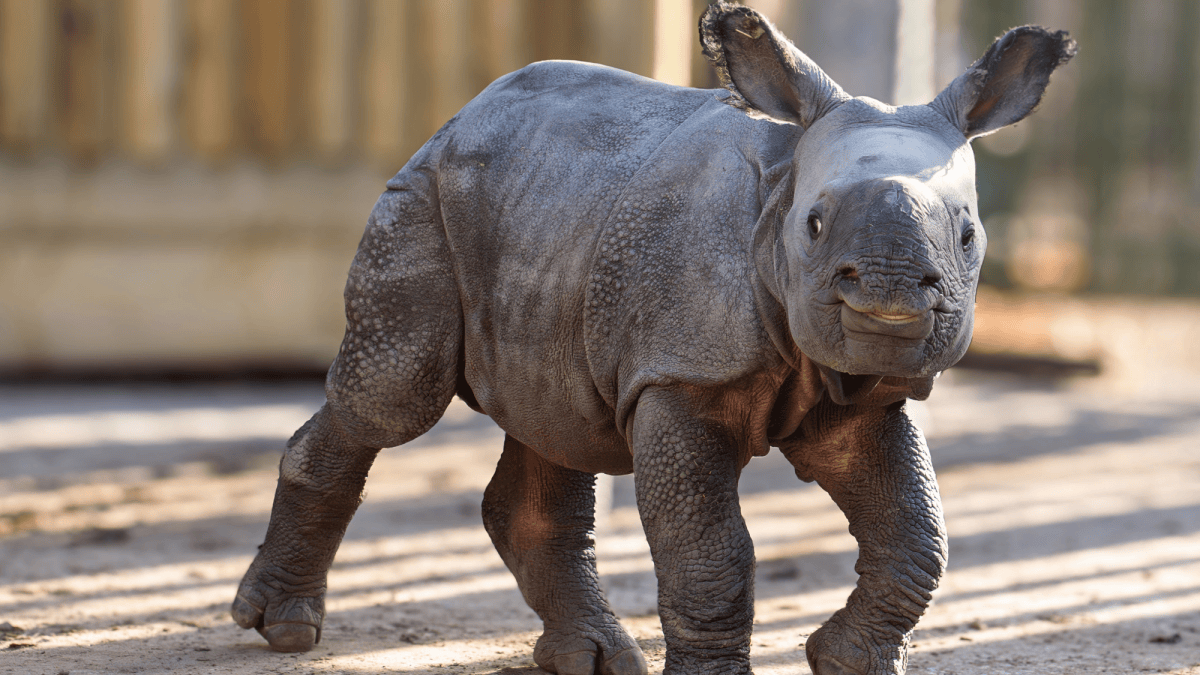
The calf was born on October 11. Image: Chester Zoo On the evening of October 11, a rare greater one-horned rhinoceros (Rhinoceros unicornis) was born at the Chester Zoo in England. Even more exciting, CCTV cameras captured the poignant moment for this threatened species. The footage shows rhino mom Asha giving birth, and the calf’s first unsure steps into the world. Rare rhino birth and first steps The sex and weight have not been announced yet, and the calf also does not have a name. At birth, greater one-horned rhino calves weigh about 100 pounds. By comparison, the largest adult greater one-horned rhinos weigh over two tons, or as much as a car. The team used a combination of experience and non-invasive testing to help plan out the pregnancy. They closely monitored Asha’s behavior and regularly collected samples of her poop. By testing hormone levels in the samples, they could track Asha’s reproductive cycle and identify when she would be most open to mating. This helped the team safely introduce her to Beni the rhino, while a separate analysis helped confirm the pregnancy. “Asha was pregnant for about 15 months, so it’s a long wait! We had our fingers crossed when she showed signs of labour and we knew we were likely to welcome the calf very soon,” Emma Evison, Team Manager for rhinos said in an e-mailed statement. “It was a big moment for us—and for the conservation breeding programme—when the calf arrived. Any birth can be risky, even for an experienced mum, but fortunately everything went smoothly. The calf was up and about within an hour and feeding shortly afterwards. Asha knows exactly what she’s doing.” Rhino calf exploring Both mother and calf are reportedly in good health. They remained inside for the first few days following the birth to stay warm, but are now venturing to a special behind-the-scenes paddock outside of the enclosure. The calf is Asha’s fourth with father Beni. Sadly, Beni died in September following a sudden and brief illness. “Beni was a lovely rhino. He was calm and approachable, helped train animal care specialists and even took part in animal behaviour studies,” added Tom Garland, Assistant Manager of the rhino team at Chester Zoo. “It’s lovely to know that his legacy lives on through this calf.” While not the largest rhino species in the world, greater one-horned rhinos stand about six feet tall at the shoulder and are the biggest in Asia. They have the smallest horns of any rhino, but also have the biggest teeth. The males will sometimes use these chompers to bite each other while sparring. Currently, about 4,000 greater one-horned rhinos are alive today. They live in India and Nepal, in forests, wetlands, and grasslands. In the early 1990s, trophy hunting and habitat loss almost drove them to extinction.. Poaching for their prized horns also threatened their survival. Asha and her calf exploring their surroundings together. Image: Chester Zoo. While the IUCN Red List of Endangered Species currently lists them as Vulnerable, they remain at risk of extinction. Many of the rhinos are concentrated into a relatively small number of protected areas, putting their genetic diversity at risk. A lack of genetic diversity can lead to inbreeding and worse health outcomes in general. This new calf is part of a Europe-wide conservation breeding program to help maintain a healthy and genetically diverse population of greater one-horned rhinos living in human care. “Supporting Asha’s pregnancy has been really exciting,” added conservation scientist John O’Hanlan. “She’s one of relatively few greater one-horned rhinos in Europe actively breeding, so every successful birth is important in maintaining a healthy and genetically diverse population.” 2026 Popular Science Home of the Future Awards 39 products that will improve your everyday life.
Rare rhino birth caught on camera at England’s Chester Zoo
Full Article
Original Source
Read the full article at Popsci →KhanList aggregates and links to publicly available news content. We do not host full articles from third-party sources. Always verify important information with original sources.