
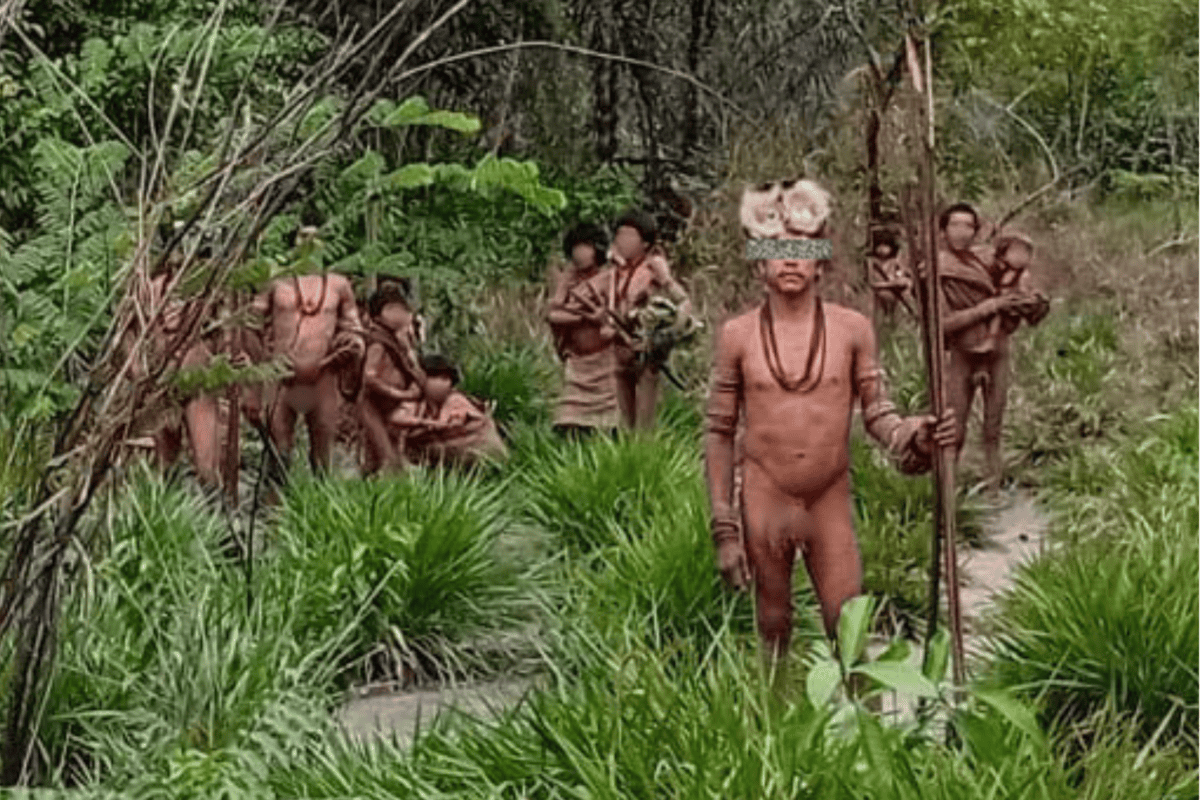
On Nov. 16, a group of roughly 20 Indigenous Awá people living in voluntary isolation approached an Indigenous Guajajara village, in Brazil’s northeastern Maranhão state. The rare encounter has mobilized Indigenous peoples and activists concerned about the safety of the Awá, considered the most threatened group on the planet. The motivation for the unusual interaction is unclear, but Guajajara leaders “expressed concern about the physical condition of some members of the group, especially children and older people, who appeared to be very thin,” according to accounts and images posted on social media by Indigenous organizations. The Guajajara reportedly offered the Awá food and other objects; the Awá remained there briefly before returning to the forest. Brazil’s Indigenous affairs agency, Funai, told Mongabay by email that technical teams are monitoring the situation and that it had activated a contingency plan to “ensure that the relevant agencies are prepared to respond appropriately to any developments in the situation, especially regarding the ethno-environmental protection, health and safety of the Indigenous people involved.” Funai added that the peoples’ right to self-determination would continue to be respected. Unlike other isolated peoples who make frequent contact, this is the first time in decades that the Awá of the Arariboia Indigenous Territory “have appeared in this way and made such close contact with other people,” Sarah Shenker, director and senior researcher at the Indigenous rights organization Survival International Brazil, told Mongabay by phone. Their appearance is cause for concern, Shenker added, because it occurred in one of the main areas inhabited by the Awá in November, when they typically have more water and animals to hunt. “The fact that they have come out in this way is not usual for them. As you’ve seen in the photos and videos, they were asking for yams, and then they went back. Some people are saying they’ve come out of hunger.” However, she cautioned that it is impossible to know exactly why they made contact without hearing directly from the Awá — something that may never happen. Mongabay regularly covers the situation in Arariboia, considered one of the most threatened territories in Brazil where against vulnerable Indigenous residents often go unpunished. “The immediate concern is of course for the health of these particular Awá, this group who’s come out because, as we know, they have very little resistance to diseases,” Shenker said. “Anything that they might catch from people with whom they made contact could be fatal for them.” Indigenous activists say the episode highlights the need to strengthen public policies for Indigenous protection and ensure that any measures adopted prioritize the lives and safety of these peoples. “Protecting isolated Indigenous peoples means guaranteeing their right to live in their territories, preserving their ways of life, their choices and their existence,” the Arariboia Territory and the Coordination of Organizations and Articulations of Indigenous Peoples of Maranhão (Coapima) said in a post. Banner image: Uncontacted Awá Indigenous people on Nov. 16, 2026. Image courtesy of ©Guajajara Indigenous people via Survival International. Credits Topics
Rare encounter with isolated Indigenous Awá people in Brazil exposes vulnerability
Full Article
Original Source
Read the full article at News →KhanList aggregates and links to publicly available news content. We do not host full articles from third-party sources. Always verify important information with original sources.