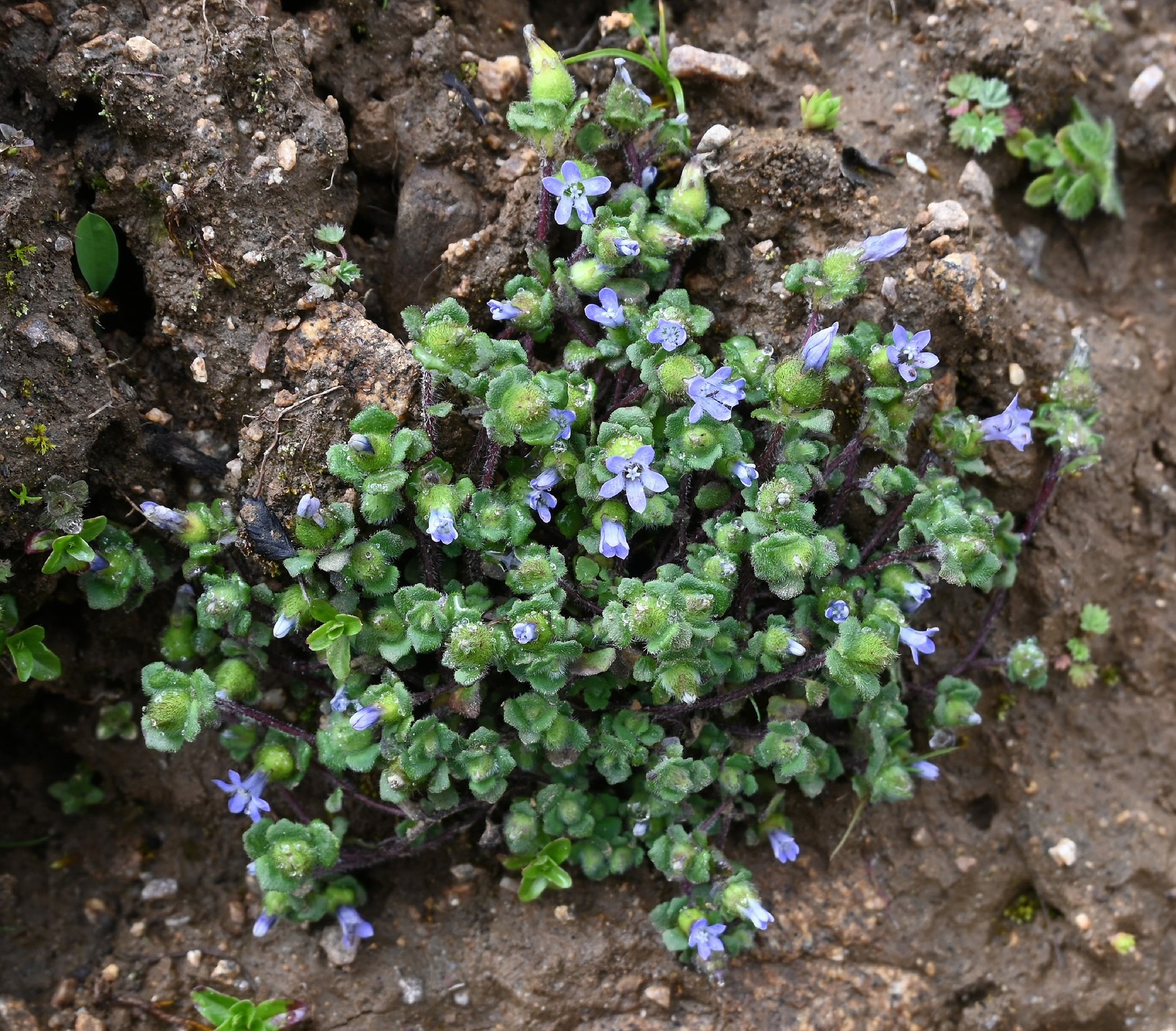
In the rugged, high-altitude meadows of the Eastern Himalayas in India, researchers have confirmed the presence of a tiny plant with purple-blue flowers, last documented in the country more than 150 years ago. The plant, Cyananthus hookeri, was previously recorded in India by British botanist Sir Joseph Dalton Hooker who collected some specimens from the northeastern state of Sikkim in 1867. Last year, a research team located the species at an altitude of 3,600 meters (11,811 feet) in Chuna Valley in Tawang district of Arunachal Pradesh state, also in northeast India. This milestone, documented in a recent update in Oryx, marks the first confirmed record of the species in Arunachal Pradesh and the first record from India in 158 years, the researchers write. Sudhanshu Sekhar Dash, one of the botanists on the research team from the Botanical Survey of India, told Mongabay over email that the rediscovery of Cyananthus hookeri “is an exciting and significant botanical finding.” “What impressed us most was that such a distinctive species had remained undetected despite extensive botanical exploration in the eastern Himalaya,” Sekhar Dash said. “This highlights how remote alpine ecosystems still harbor poorly documented plant diversity.” C. hookeri is a small, short plant that grows in mat-like clumps. It has densely hairy stems, and striking purple-blue flowers with hairy throats. Sekhar Dash said the plant is a highly specialized herb that’s adapted to harsh mountain climates. “It creates robust, hairy cushions that protect it from the severe mountain conditions,” he said. Despite the excitement of the find, Sekhar Dash said their fieldwork revealed an extremely small population of fewer than 50 mature individuals. The species is also restricted to “rugged alpine terrains (~3,600 m), characterized by extreme topography, unpredictable weather, and a critically narrow flowering window,” Sekhar Dash said. This makes the plant highly susceptible to random population fluctuations, impacts of climatic changes, human pressures and other disturbances, he added. Given C. hookeri’s small population size and distribution, the research team recommends categorizing the species as nationally endangered in India. To ensure C. hookeri’s survival, Sekhar Dash urged long-term monitoring of its population, deepening its ecological understanding and community-led conservation efforts. Banner image: Cyananthus hookeri in flower in Chuna Valley, Tawang district, Arunachal Pradesh, India. Image courtesy of Lahiri, S. et al. (2026) via Oryx (CC BY 4.0). Credits Topics
Rare alpine herb confirmed in India after 158 years
Full Article
Original Source
Read the full article at News →KhanList aggregates and links to publicly available news content. We do not host full articles from third-party sources. Always verify important information with original sources.