
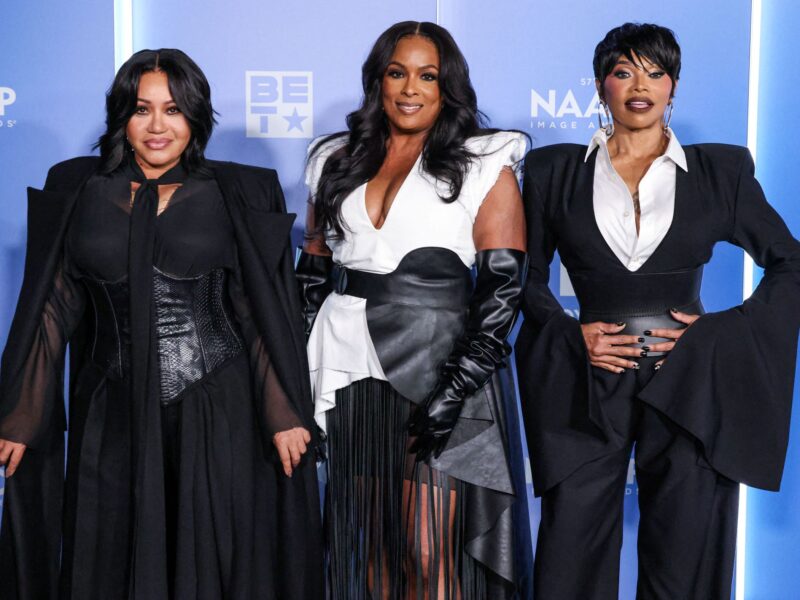
The “Whatta Man” rappers are seeking to reclaim copyright ownership of their first four albums, but one federal judge already ruled against them.MANHATTAN (CN) — The influential rap group Salt-N-Pepa urged a New York City federal appeals court to give them another shot at reclaiming their back catalogue of hit dance records from Universal Music Group.The rap duo — Cheryl “Salt” James and Sandra “Pepa” Denton — sued Universal Music Group in May 2025 to reclaim ownership of master recordings going back to the group’s founding in 1986, citing the Copyright Act of 1976, which allows some artists to reclaim their copyright after 35 years.They sought declarations of ownership as to the group’s first four albums — “Hot, Cool & Vicious,” “A Salt With a Deadly Pepa,” “Blacks’ Magic” and “Very Necessary" — released on Next Plateau Records and London Records, predecessors of UMG, in the 1980s and 1990s.Senior U.S. District Judge Denise Cote granted the UMG’s motion to dismiss in January, finding that Salt-N-Pepa had granted ownership to their first label, Noise in the Attic Productions — owned by the group’s producer Hurby “Luv Bug” Azor — which had a deal with Next Plateau Records.“Even viewed in the light most favorable to plaintiffs, the 1986 agreements do not indicate that plaintiffs ever owned the copyrights to the sound recordings or that they granted a transfer of those rights to anyone else. It was only Azor and NITA that granted a transfer of rights in 1986 to Next Plateau Records,” the Bill Clinton appointee wrote in her opinion.On appeal, James and Denton argue the lower court erred by determining Salt-N-Pepa did not assert copyright ownership. They seek a reversal of Cote’s ruling concerning ownership of the group’s first four albums.“While UMG accuses us of going on a free-ranging search for the best copyright policy, this could not be further from the truth,” Salt-N-Pepa’s attorney Richard Busch told the Second Circuit panel during oral arguments Tuesday afternoon. “We are applying fundamental principles of law and the actual language of the agreements, while the district court and UMG have done the opposite, ignoring crucial language and definitions of the agreement, and misciting the key Acutidecision authored by your honor Judge Lynch, and inventing a requirement that does not exist in the law.”Acuti refers to the 2022 ruling from another Second Circuit panel, which also included U.S. Circuit Judge Gerald Lynch from this panel, that the relatives of a co-writer on Elvis Presley’s 1961 hit song “Can’t Help Falling in Love” could not recover rights to the song from Authentic Brands Group LLC under copyright law.Busch argued the requirement imposed by the lower court to expressly “assert” ownership by the assignor must be reversed as it has no basis in the statute and “turns the congressional intent behind the termination rights on its head.”“Taken to its logical conclusion, to preserve the artists’ termination rights, it would require authors, despite disparity of bargaining power, to demand that assignees (like multibillion-dollar record companies) include language asserting the artists’ copyrights, notwithstanding that including such language would be against the assignee’s interests should they (as UMG has done here) try to argue later that the works were made-for-hire," Salt-N-Pepa wrote in an appeals brief.Busch, a partner at the Nashville-based King & Ballow, previously represented Marvin Gaye’s family in the landmark copyright case over Robin Thicke and Pharrell’s appropriation of Gaye’s “Got to Give it Up” in their 2013 song “Blurred Lines”.U.S. Circuit Judge Joseph Bianco, a Donald Trump appointee, questioned Busch as to how Salt-N-Pepa could have transferred copyrights in material they hadn’t composed yet.Busch said it was such a transfer of “present grant of future rights” is called “gap grant.”Bianco inquired how a “gap grant” is different under copyright law from the “work for hire” exception to the general rule that creator of a work is also the owner of its copyright.“Whatever’s on those two albums, obviously, it seems to me, the artists own the copyright when those recordings are first made,” he said. “They can’t be retrospectively turned into a work for hire. Therefore, unless there was some evidence of some prior agreement, but there’s nothing of that in the pleadings that made them works for hire; those could not transfer to your client, right?”UMG meanwhile asked the appeals panel to affirm the lower court’s holding.“Judge Cote correctly granted UMG’s motion to dismiss because, under the plain language of the agreement annexed to the complaint, there was no grant of copyright executed by plaintiffs — a fundamental requirement of the termination provision of the Copyright Act,” Cowan, Liebowitz & Latman attorney Richard Mandel said Tuesday.The three-judge panel did not immediately rule from the bench on the appeal at oral arguments.Bianco and Lynch, a Barack Obama appointee, were joined on the panel by U.S. Circuit Jose Cabranes, a Clinton appointee.Salt-N-Pepa have reunited with longtime DJ Spindarella and are currently touring the country with their “Whatta Man” collaborators En Vogue and R&B contemporaries TLC.Subscribe to our free newslettersOur weekly newsletter Closing Arguments offers the latest about ongoing trials, major litigation and rulings in courthouses around the U.S. and the world, while the monthly Under the Lights dishes the legal dirt from Hollywood, sports, Big Tech and the arts.Additional Reads
Rap duo Salt-N-Pepa ask Second Circuit to revive UMG copyright case
Full Article
Original Source
Read the full article at Courthousenews →KhanList aggregates and links to publicly available news content. We do not host full articles from third-party sources. Always verify important information with original sources.