
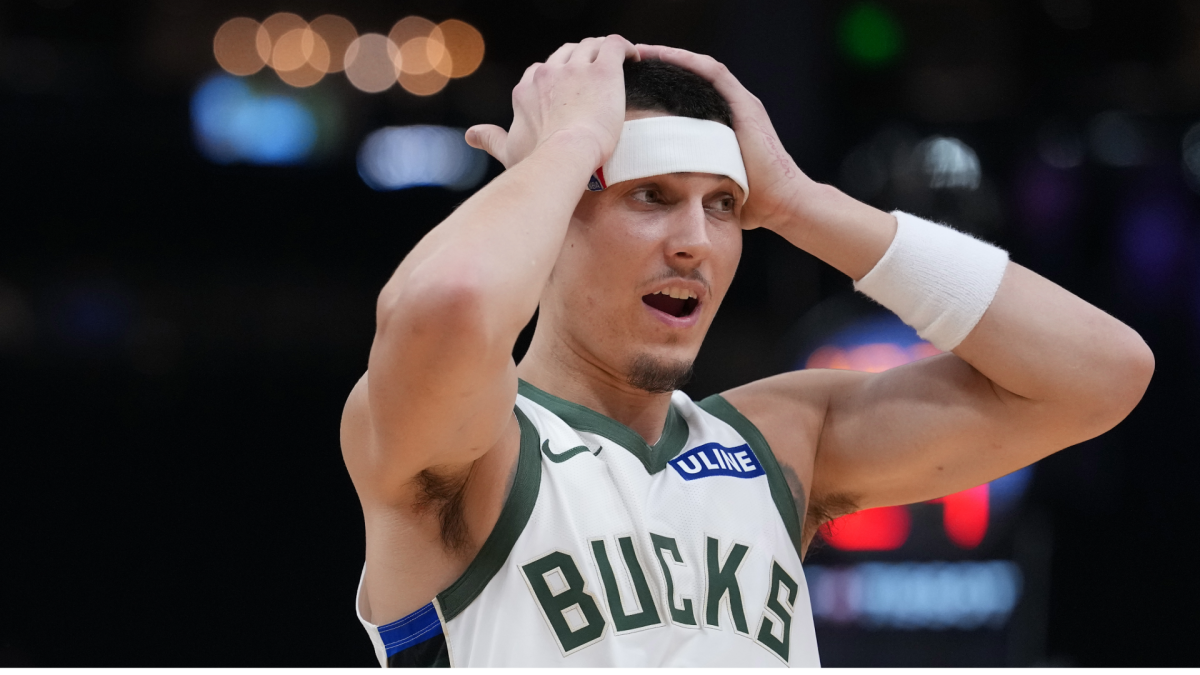
We're talking long-term hopelessness: how likely each team is to reach a conference finals in the next five seasons Nov 19, 2026 at 10:17 am ET • 10 min read The Milwaukee Bucks faced Giannis Antetokounmpo as an opponent for the first time on Wednesday, and it didn't go well. Though the final score showed only a seven-point margin, the Miami Heat led by 26 after three quarters and were never in much danger. The defeat dropped the Bucks to 1-14 on the season. The greatest player in their franchise's history now wears another jersey, and they're at the beginning of what figures to be a very long rebuild. Things are bleak.The question here is how bleak. Milwaukee knew it would spend this season in the cellar. It probably expects to live there for a few years. But how far away from winning seriously are the Bucks really? Are they further from genuine contention than any other team in the NBA? Who, right now, has the bleakest long-term outlook?To be clear here, we are operating in terms of championship equity. We don't care if you have a chance to be a plucky .500 team. No, the barometer we're using here is how likely each team is to reach a conference finals in the next five seasons. We're accounting not only for players on the existing roster, but long-term financial flexibility, available draft assets and the competence of the front office helming these organizations. With all of that in mind, let's rank the NBA's most hopeless long-term outlooks. 5. Los Angeles ClippersThe broad sentiment following their punishment for circumventing the salary cap with Kawhi Leonard was that the Clippers faced the bleakest future in the entire NBA. That's probably overstating things slightly. Remember, we're talking about a Los Angeles team here. Someone, inevitably, is going to want to play for them. All it takes is one player bucking the league-wide trend against superstar free agency and they're back in business. They have an owner who will spare no expense in pursuit of wins, and there's a 26-year-old All-Star in Darius Garland already on the roster. Couple that with the hope generated by No. 5 overall pick Keaton Wagler, and while the path here is extremely narrow, it exists. If the Brooklyn Nets could build a contender without draft picks in the late 2010s, it's theoretically possible for the Clippers to do the same.Of course, the Nets weren't subject to that league-wide pivot away from free agency. They didn't have to trade picks to get Kevin Durant or Kyrie Irving in the door. It's much, much harder nowadays to import talent like that without sacrificing picks that the Clippers frankly don't have. The five first-round picks they were docked in the Leonard investigation left them fully Stepien-locked: while they will have (not especially valuable) first-round picks in odd-numbered years moving forward, they can't trade any of them yet.There's also the reputational hit the Clippers just took. Will players interested in winning want to risk their careers on a team that cheated? Can the Clippers even appeal to such players given their asset deficit? These are going to be real hurdles. Their path to the conference finals might rely on a star who's not especially competitive. After all, anyone serious about winning could find a team closer to doing so. 4. Sacramento KingsThey're a blank slate with one very promising prospect. Darius Acuff is putting up star box-score numbers in his rookie season. That's by no means a guarantee of future stardom, of course. He's as inefficient as you'd expect a rookie to be on this volume. He's taking more shots per game than Jalen Brunson, Tyrese Maxey or Dwyane Wade ever did over a full season. But Acuff has a path to becoming one of the NBA's best offensive point guards. These aren't totally empty calories.There's nothing else here. No other notable prospects aside from a handful of likely long-term bench youngsters (Dylan Cardwell, Maxime Raynaud, Emanuel Sharp). Sacramento mostly controls its own picks (aside from the 2031 swap it inexplicably gave San Antonio in the DeMar DeRozan sign-and-trade), but that means less than it used to in the lottery reform era. Its books slowly clean up in the offseasons to come, with Zach LaVine and De'Andre Hunter expiring after this season and Domantas Sabonis and Malik Monk joining them in the summer of 2028, but Sacramento's forays into cap space have typically been unsuccessful. This isn't exactly a desirable destination. That's what happens when you miss the playoffs 19 times in 20 years.That's what separates Sacramento from fellow "one possible star, otherwise blank slate" candidates like the Chicago Bulls. With the hire of Bryson Graham to run basketball operations, the Bulls at least appear to be trending towards becoming a normal organization. Normalcy has eternally eluded Sacramento. The burden of proof is on the Kings. When you've been a mess for 20 years, it's on you to prove that you've cleaned up your act. We'll trust the Kings when they've earned it and not a second sooner. For now, they can at least start by actually keeping their success stories in the building. They've kept only one first-round pick this decade through the end of his rookie contract: Keegan Murray, who is now pretty substantially overpaid. Meanwhile, Tyrese Haliburton has blossomed into a superstar in Indiana, while their entire 2021 draft class (Davion Mitchell and Neemias Queta) now starts for Eastern Conference championship hopefuls. They had the unanimous Coach of the Year and the Executive of the Year and fired both within two years. The Kings can't help themselves. 3. New Orleans PelicansThere's far more talent in the cupboard here than in Sacramento, but the same organizational concerns apply. The Joe Dumars regime makes mistakes -- the two-year minimum for DeAndre Jordan, not waiting until after the 2025 Finals to trade Indiana its 2026 pick back, everything Shamit Dua has reported about the infamous Derik Queen trade -- that typical teams would never dream of.There is not a discernible plan here besides, seemingly, "acquire players who can put the ball through the hoop." There are a lot of decent individual creators on this roster. None of them synergize well because so few of them can consistently make 3s and all of them are on-ball players with stylistic clashes. The Pelicans have seemingly made the determination, for instance, that Queen cannot play significant minutes alongside Zion Williamson. That's a reasonable choice... but then why is Williamson still on the team? Or, if the Pelicans view him as a fixture, why make such a risky trade for Queen in the first place? The trickle-down effect of putting all of these dribblers on the same team is that none of them seem happy to be on it. Dejounte Murray asked for a trade. Jordan Poole is making googly eyes at the Warriors. Trey Murphy has reportedly signaled a desire to move. What is the plan here? What kind of team are the Pelicans trying to build? What do they view as their path to genuine winning?That's what distinguishes New Orleans from Sacramento. If the Kings get a few more high draft picks and use them on players that complement Acuff, I'd see the vision. It would require Acuff becoming an All-NBA scorer and those picks hitting, but I see the sort of teams they could build, even if they're unlikely to actually do so. I have no earthly idea what the Pelicans would do with a few high picks because talent is not currently the problem. It's how they're using and nurturing it. It's just hard to envision a team with so little understanding of how to balance skill sets and bring out the best in their players making a serious playoff push. Something significant in the organization would have to change. 2. Phoenix SunsThey're the best team on this list in the present, and they've clawed their way back to .500 after a miserable start that included leaks about the team's lack of a point guard. Again, we're dealing in upside here. That's what the Suns lack. They control none of their own first-round picks in the seven-year tradable window except for their 2032 selection... which is frozen because they spent the 2024-25 season above the second apron. Even if they had picks, the Suns under Matt Ishbia have never displayed any discipline in using them. Ishbia traded nearly a full draft for Kevin Durant mere days after acquiring the team, spent an unprotected 2031 pick on three far lesser choices that amounted to Mark Williams and a Jusuf Nurkić cap dump, and then spent their 2033 pick as soon as they could access it to get Miles Bridges, whom they've been meaningfully better without thus far this season.The most talented players here are all right around their physical peaks. Devin Booker is 30. Dillon Brooks turns 31 this season, and Bridges turns 29. They're going to get worse, not better, and without draft picks, their means of replacing them are minimal. Even the diamonds they've dug out of the rough are on the older side. Collin Gillespie is 27. Jordan Goodwin is 28. The truly young players, like Khaman Maluach and Rasheer Fleming, have thus far underwhelmed. The younger, star-level talent here is Jalen Green, who plays Booker's position and has been a disaster on both ends this season. Why exactly is he still starting over Gillespie? Are the Suns just trying to salvage his trade value?Teams like the Clippers, Kings and Pelicans are at least young enough and financially flexible enough to grow. The Suns, at least from an asset and financial standpoint, are essentially all-in on a Play-In-caliber roster. That Play-In-caliber roster is going to get worse as it gets older and more expensive and, without access to top talent in the draft, replenishing it is going to be borderline impossible. 1. Milwaukee BucksThe Bucks cherry-pick traits from all of our other selections. The Clippers circumvented the cap; the Bucks are getting investigated for doing so with Gary Trent Jr. The Pelicans have a roster full of overlapping skill sets; the Bucks have a million shooting guards, which made the decision to re-sign Trent for $64 million all the stranger. The Suns don't control any of their own picks and the Bucks won't until 2031 at the earliest. The Kings have the NBA's least-successful owner in Vivek Ranadivé, while the Bucks may have the NFL's in Jimmy Haslam, though he technically won't become governor until 2028 due to Milwaukee's bizarre ownership structure (another point against them, as successful teams tend to have stable leadership rather than rotating five-year terms).Who is going to be the best player on the team in five years? Brayden Burries is the best long-term prospect, but he profiles as more of a high-end role player. Tyler Herro was an All-Star in the sense that Norman Powell and D'Angelo Russell were All-Stars: they put up big numbers in a weak Eastern Conference. Kel'El Ware was the lottery ticket from the Giannis Antetokounmpo trade and he's been so bad that he's somehow playing less than he did on a Heat team that was trying to win. Without access to their own picks or a market that tends to draw free agents, they're basically hoping someone internal (Nate Ament? Ryan Rollins?) breaks out or that they hit on a pick far later than you should rely on.You could argue that just by virtue of being in the Eastern Conference, the Bucks have a cleaner path to the final four than those West teams do because they don't have to worry about Victor Wembanyama or the specter of healthier versions of the Oklahoma City Thunder down the line. That's fair, but as we've seen this year, injuries loom over every season. You know what else the West has aside from those two juggernauts? The four other teams on this list. The Bucks, by a wide margin, are the most hopeless team in their own conference. They're starting from the absolute bottom. This was potentially avoidable. Had they acted sooner and traded Antetokounmpo in 2025 when the whole world knew a deal was eventually coming, they could have secured a stronger return and set themselves up for a quicker turnaround. Alas, the Bucks chose to waive-and-stretch Damian Lillard, locking them into $22.5 million in dead money through the end of the decade so they could sign Myles Turner to a contract that is increasingly looking like $28 million or so per year in... close to dead money. Milwaukee got its championship in 2021, but at this rate, it's going to be a while before it sniffs another one.
Ranking the NBA's most hopeless teams: Which franchise is in the bleakest situation? And who can't fix it?
Full Article
Original Source
Read the full article at Cbssports →KhanList aggregates and links to publicly available news content. We do not host full articles from third-party sources. Always verify important information with original sources.