
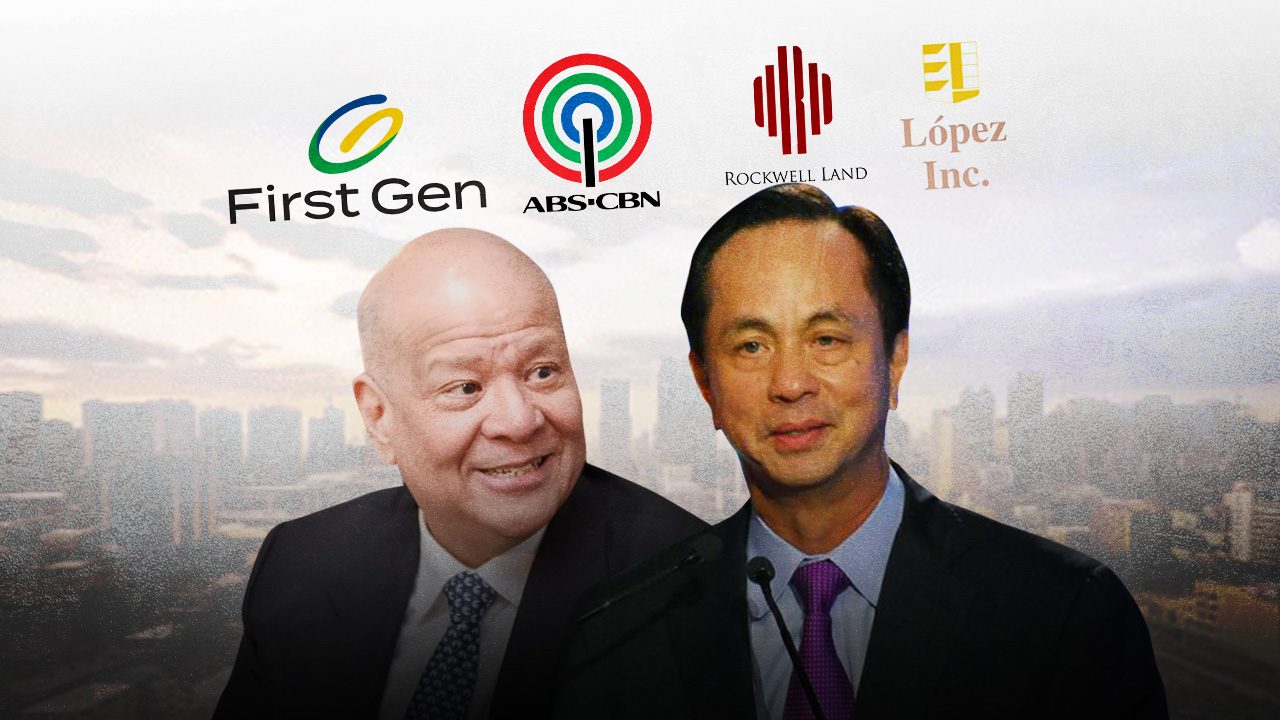
Ramon Ang has been trying to own a piece of Philippine media for more than a decade. This week, he finally got a piece of something Lopez, just not the piece anyone expected. He has chased a broadcast network, been rumored to be behind a cable news channel, and once got close enough to a newspaper deal that the price was already being haggled over. None of those closed. What closed instead, on Monday, August 10, was a 25.68% stake in Lopez Inc., the private company that sits at the very top of the Lopez Group, bought from the family branch led by Eugenio “Gabby” Lopez III rather than negotiated with any media owner at all. It is not the entry point expected, and it is not the first time Ang has shown up near a Lopez-controlled business either. Media is the chapter people remember, but it is not the oldest one. Not his first time near a Lopez asset In October 2008, San Miguel Corporation (SMC), then a food and beer conglomerate in its early years of diversifying under Ramon Ang, bought the government’s 27% stake in Manila Electric Company (Meralco) out from under Manuel V. Pangilinan, who believed he had already secured it. Ang had flown to Cebu the weekend before the deal closed to meet GSIS president Winston Garcia directly, after GSIS’s long, public fight with the Lopez family over control of Meralco’s board. (READ: The Lopezes, presidents, and the cost of dissent) A separate entity, Global 5000 Investment Corp., staffed by people close to San Miguel’s leadership, picked up another chunk of government shares soon after, splitting the total purchase in a way that kept it under the threshold that would have required offering the same price to Meralco’s other shareholders. Around the same time, Ang had also gone after another Lopez asset directly, offering a late, above-market bid for the family’s stake in Manila North Tollways Corp. after Pangilinan’s group had already all but closed that purchase. The Lopez family’s own advisers dismissed the offer as not genuine, arriving too late to be taken seriously, and turned him down. Once the Meralco deal closed, San Miguel’s board representatives sat for a period alongside directors from the Lopez family’s own branches, including the Manolo Lopez branch, the same branch known within Lopez Inc. today as Mantes Corporation. Power, not media, is also where the Ramon Ang and the Lopez family’s current empires actually collide at scale. Ang runs his energy business mainly through San Miguel Global Power Holdings Corp. (SMGP) and Petron Corporation, together controlling roughly 5,057 megawatts (MW) of installed and contracted generating capacity, close to a fifth of the entire Philippine grid and more than a quarter of Luzon’s. That capacity leans heavily on coal, Masinloc, Limay, Davao Greenfield, and Mariveles among the plants SMGP owns outright, plus a contracted share of the Sual coal plant, alongside the Ilijan gas plant, now running on imported LNG, and a 1,000-MW-hour battery storage rollout across 32 sites. Petron adds the country’s largest oil refinery, in Limay, and a nationwide retail network on top of that. Federico “Piki” Lopez, Gabby’s cousin who focused on the energy side, built First Gen Corp. (First Gen) and Energy Development Corp. (EDC) in the opposite direction, and did so publicly. First Gen’s installed capacity ran to roughly 3,500 to 3,600 MW before the family sold 60% of its gas business to Prime Infra and redirected the proceeds into pumped-storage hydro. Its pure renewable capacity today stands at about 1,764 MW, with a stated target of 13 GW by 2030. EDC alone carries 1,302.8 MW of geothermal capacity, which the company describes as the largest vertically integrated geothermal operation in the world, plus roughly 300 MW of conventional hydro and a 2,000-MW pumped-storage pipeline still under development. In 2016, under Piki, First Philippine Holdings Inc. (FPH) adopted an explicit “No to Coal” policy, ruling coal out of the group’s power strategy entirely in favor of geothermal, hydro, gas, and renewables. That makes the two men’s energy strategies close to opposites: Ang’s coal-and-gas-anchored, multi-fuel grid operator built for scale, Piki’s renewables-first platform built partly as a rejection of exactly the fuel mix Ang’s business depends on. Ang’s Lopez Inc. stake does not merge the two companies, or give him any direct say over First Gen’s fuel choices; the ownership sits several layers above First Gen’s own board. But it puts him, for the first time, inside the ownership structure of a power company whose entire public identity has been built in opposition to the kind of power company he runs. The media chase: four attempts, zero completions Ang’s pursuit of a media company has followed the same rhythm every time: serious talks, a near-agreement, and then no deal. In January 2014, he confirmed personal talks with the three founding families of GMA Network for a stake in the country’s second-largest broadcaster, offering at least 30% at a premium price. The talks stretched past a year and collapsed in June 2015. GMA’s majority shareholders had said Ang kept revising terms after they had already accepted his proposals, while Ang insisting the opposite was true. It was, by GMA’s own account, the fifth time the network had walked away from a suitor. Before GMA, Ang had said in 2012 that he wanted a personal stake in Radio Philippines Network (RPN-9), a partly government-owned broadcaster. That did not happen either, though he reportedly built a personal investment in Solar TV Network, a blocktimer that later became a minority RPN owner. When Solar TV was renamed Nine Media Corporation and struck a deal to carry the CNN brand in the Philippines starting 2015, rumors circulated that Ang was behind the new channel. Nine Media’s own SEC filings showed no trace of him: its parent company was wholly owned by five individuals with no visible Ang connection. The Philippine Daily Inquirer looked, briefly, like the one that would finally close. In July 2017, the Prieto family confirmed it was in talks to sell its 85% majority stake in the Inquirer Group of Companies to Ang, in his personal capacity rather than through San Miguel, and by November that year Ang told reporters the deal was done, pending clearance from the Philippine Competition Commission. It wasn’t done. Due diligence turned up receivables Ang’s team considered uncollectible, and the price was renegotiated down from an initial indicative figure before the Prietos pulled the group’s real estate out of the deal entirely, cutting the offer further to a level the family ultimately judged too low. Talks broke down for good in 2018, and the Inquirer has remained under Prieto and Pangilinan-linked ownership ever since. That gives Ang an unbroken record across four separate media pursuits, GMA, RPN, CNN Philippines by way of Solar TV and Nine Media, and Inquirer, in which serious, sustained negotiations never once converted into actual ownership. The political backdrop to the Inquirer talks is still worth noting for context: then-president Rodrigo Duterte spent 2017 attacking the paper over its drug-war coverage, and Ang was, by his own account and Duterte’s, a friend and campaign donor, which is part of why the near-deal drew so much attention even though it never closed. Duterte would later cite Ang’s name anyway when he told ABS-CBN it should simply sell rather than fight for its franchise renewal, apparently unaware, or unconcerned, that the Inquirer precedent he was gesturing at had fallen apart. A footprint that already overlaps the Lopez Group What makes the Lopez Inc. stake different from the media chase is that Ang did not need it to gain exposure to the Lopez Group’s businesses. His own empire already sits across nearly every sector the Lopez companies operate in. In power generation, First Gen and EDC compete in the same broad space as SMC Global Power’s gas, hydro, solar, coal, and battery storage portfolio, and Petron’s fuel refining and retail business runs alongside First Gen’s own energy interests. In real estate, Rockwell Land and First Philippine Industrial Park sit in the same market as San Miguel Properties and San Miguel’s large-scale reclamation and aerotropolis projects around Bulacan. In construction and infrastructure, First Balfour and ThermaPrime’s drilling business compete in a space where SMC runs Eagle Cement, Northern Cement, and a tollway and airport portfolio that includes Skyway, SLEX, TPLEX, and the new Bulacan airport. In media and telecommunications, ABS-CBN and Sky Cable sit opposite a San Miguel history that once included Liberty Telecoms and Vega Telecom before those assets were sold to PLDT and Globe, alongside SMC’s sports broadcasting interests. Even in manufacturing, First Philec‘s transformer business and San Miguel Yamamura’s packaging operations occupy adjacent industrial ground. The two groups have been, in effect, neighbors across almost the entire Philippine economy for years before this week. Held against that backdrop, a 25.68% stake in Lopez Inc. reads less like an outsider buying his way into unfamiliar territory and more like the latest entry in a long-running relationship between two of the country’s most diversified conglomerates, one that has included open rivalry (power), at least one failed courtship of a Lopez asset (NLEx), a shared board table (Meralco, 2008), and now a shared shareholder registry (Lopez Inc). Control at every level Lopez Inc. sits above two very different kinds of empire, media and energy alike, and it holds voting control over nearly all of both, even where its economic stake has thinned to a fraction of that. On the media side, Lopez Inc., directly and through ABS-CBN Holdings Corp., which it owns 59.5% of, commands 78.5% of ABS-CBN’s voting shares. That is close to outright control. Lopez Holdings carries a separate 53.55% economic claim on ABS-CBN through Philippine Deposit Receipts (PDRs), but no vote unless those PDRs are exercised, since the Constitution reserves voting control of mass media for Filipino owners, and Lopez Inc. is the fully Filipino entity that qualifies. Lopez Inc. holds the vote. Lopez Holdings gets most of the money. On the energy and property side, the arithmetic runs differently. Lopez Holdings owns 60.67% of FPH outright. Lopez Inc.’s own indirect economic stake in FPH, run through its 54.74% of Lopez Holdings, comes to roughly 33%, though its practical control of FPH’s board remains total. FPH owns 67.84% of First Gen; carry the dilution one layer further and Lopez Inc.’s indirect economic stake in First Gen lands at roughly 22-23%. First Gen’s Red Vulcan vehicle holds 65% voting and 45.8% economic interest in EDC; carry it a fourth layer and Lopez Inc.’s ultimate economic interest in EDC, the asset now drawing a reported multibillion-dollar offer from an Indonesian conglomerate, comes to roughly 10%. Outside capital already fills most of what the family’s chain does not reach: PREHC, a Macquarie-and-GIC-linked vehicle, holds close to 55% of EDC’s economics; KKR holds a 19.9% economic and 14.1% voting interest inside First Gen itself; and Prime Infra, Enrique Razon’s company, already controls 60% of First Gen’s gas businesses and 67% of its new pumped-storage hydro venture, leaving First Gen a minority, non-controlling partner in both. Control, in other words, survives every layer of this structure. Money does not. The family’s actual economic claim on its own crown jewel, the asset outsiders are currently competing to buy into, is down to roughly a tenth. LOPEZ INC. The Lopez empire shareholder tree. Graph by Lala Rimando The rift was always about ABS-CBN’s money The dispute that has consumed the Lopez family since February traces back to a single question: whether Lopez Inc. should inject roughly P2 billion into ABS-CBN to stabilize its finances after its 2020 franchise denial under the government of Rodrigo Duterte. Gabby’s branch and allied cousins pushed for the infusion; Piki opposed the plan as structured, arguing more than half the money would go to executives and insiders rather than a clear turnaround. The urgency behind that fight is documented in ABS-CBN’s own numbers. A complaint Piki filed with the SEC put the network’s immediate liquidity gap at roughly P1.5 billion, pointing to P8.5 billion in interest-bearing loans classified as current liabilities and due within 2026, against liquid assets of only about P7 billion. (READ: Family friend to referee? SEC’s Francis Lim has peace plan for Lopez war.) ABS-CBN’s own 2025 annual report describes ongoing loan refinancing talks with its creditor banks and management’s assessment that it can meet its obligations over the next twelve months, without disclosing a specific rescue figure of its own. FPH, First Gen, and Rockwell carry none of that strain. Their businesses, power generation and real estate, have continued largely undisturbed by the family fight. The disruption has stayed concentrated at the top, in Lopez Inc.’s boardroom and courtroom filings, and at ABS-CBN, the one asset in the group that needs money it does not have. So far, what has actually changed hands is one family branch’s stake in the private company at the very top of the pyramid, nothing more. Whether it becomes anything closer to a direct ABS-CBN rescue is a question about what Ang, and the family, do next, not about what has been confirmed so far. As of writing, whether any portion of what Ang paid for the Crème stake is meant to reach ABS-CBN,t through a future capital call, a loan, or some other mechanism, is not yet known. ABS-CBN’s own disclosure, filed also on August 10, backs up the “nothing more, for now” reading. After a news report on the sale prompted the Philippine Stock Exchange (PSE) to direct ABS-CBN to confirm or clarify the transaction and disclose any effect on its business, ABS-CBN responded that it is not a party to the transaction and is unable to comment on it, and that because the sale sits at the Lopez Inc. level, the company does not foresee any impact on its business, financial condition, operations, or ownership structure. That is the company’s own words, not this piece’s inference: as things stand, the sale has not touched ABS-CBN at all. The vehicle, and who approached whom San Miguel Corporation’s own disclosure to the exchange, filed the same day as the sale, names the vehicle: Illumina Investment Holdings Inc., a corporation wholly owned by Ang, executed a Deed of Assignment with members of Gabby Lopez’s family for the Crème Investment Corp. shares. The filing also settles a question the earlier reporting had left open: the deal was struck “upon the invitation of the ELopez Family,” San Miguel’s own language for it. Meaning, Gabby’s side approached Ang, not the other way around. ILLUMINA INVESTMENT. San Miguel Corp. discloses to the Philippine Stock Exchange Ramon Ang’s personal investment in ultimate Lopez parent firm, Lopez Inc., on August 10, 2026. Screenshot from SMC disclosure San Miguel’s board itself was not briefed on the details until a meeting scheduled for Thursday, August 13, three days after the deal closed, consistent with how Ang has handled his previous media-adjacent investments: personally, outside the conglomerate’s own governance process, with the board informed after the fact rather than asked beforehand. What Ang actually bought into Strip away the family names and the press statements, and what Ramon Ang bought on August 10 is a seat at the top of a pyramid that controls almost everything beneath it and owns less and less of it the further down the shareholder tree. He now holds a piece of a media company whose votes the family guards completely and whose bank accounts are running dry, sitting atop an energy empire the family still commands from the boardroom while owning, in real terms, a shrinking sliver of its most valuable asset, an asset a foreign conglomerate is already circling with an offer measured in billions. Razon is already inside the gas and hydro businesses. KKR is already inside First Gen. An Indonesian bidder is already asking about EDC. Ang did not buy his way past any of them. He bought a seat at the table one level above all of it, in a private company where the vote still belongs entirely to the family, for now, and where the money increasingly does not. Eighteen years ago, Ang flew to Cebu on a weekend, not to take the company from the Lopez family, but to beat now Meralco chair Manuel Pangilinan to GSIS’s hostile stake before the Lopezes could broker their own exit for it. This time, he did not have to fly anywhere, or beat anyone to it. A family feud did the work for him. One cousin wanted out, and Ramon Ang, who has been circling this family’s businesses for 18 years, was there to buy. – Rappler.com
Ramon Ang buys his way into Lopez Inc., which owns what he already builds
Full Article
Original Source
Read the full article at Rappler →KhanList aggregates and links to publicly available news content. We do not host full articles from third-party sources. Always verify important information with original sources.