
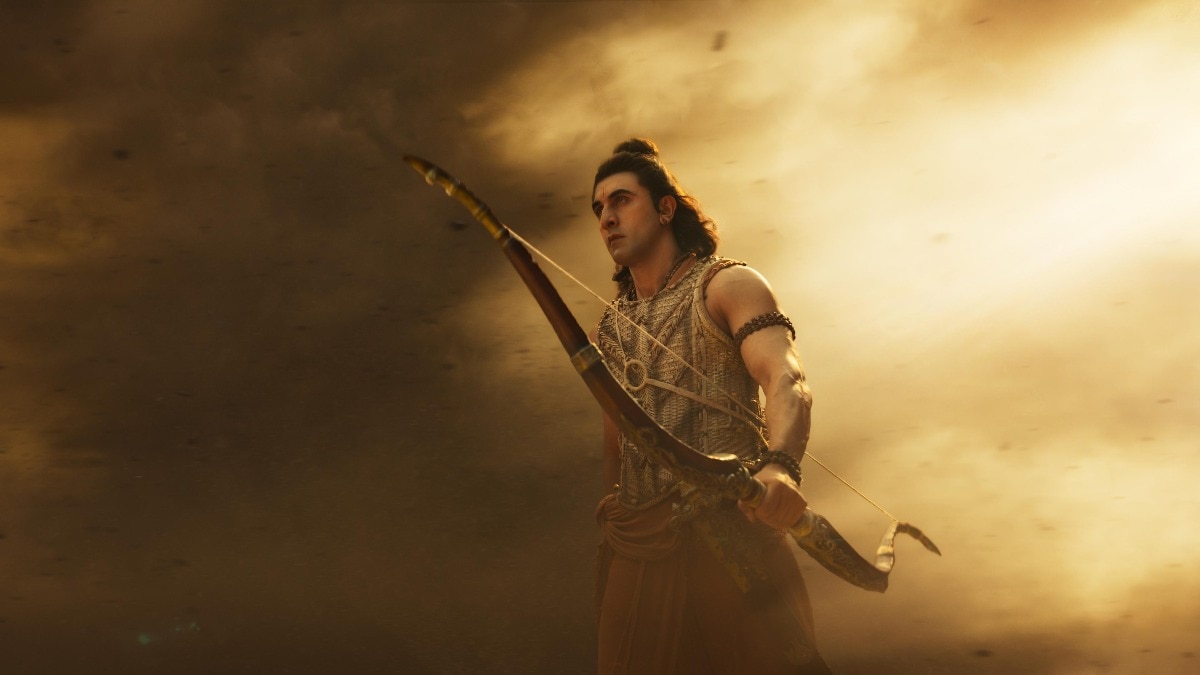
For a film based on one of India's most enduring epics, finding an audience beyond its cultural familiarity has always been an important part of the ambition. And Ramayana has been making a concerted effort to do just that. Nitesh Tiwari's mythological spectacle was promoted in overseas markets as an Indian epic, with its cultural roots, scale and storytelling forming the core of its international campaign. Now, with the film entering the international awards conversation, the makers have another opportunity to keep it in the spotlight.Ramayana has secured places in two technical shortlists at the 32nd Critics Choice Awards – Best Visual Effects and Best Stunt Design. It has also made it to the top 20 contenders in the Best Visual Effects category at the 99th Academy Awards, putting it in the company of some of Hollywood's biggest productions.For producer Namit Malhotra, whose visual effects company DNEG has worked on some of the world's biggest cinematic spectacles, this recognition is significant. But what does it actually mean for Ramayana? And how could an international awards campaign help a film rooted in Indian mythology find a larger global audience, particularly at a time when its overseas box-office momentum appears to be slowing?From a theatrical spectacle to an international contenderThe first important shift is in how the film is being discussed internationally. In overseas markets, Ramayana was never positioned merely as another big-budget spectacle. Its identity as an Indian epic was central to its promotions, with the makers banking on the familiarity of the story among the Indian diaspora and the curiosity it could generate among audiences unfamiliar with the mythology. The film's international campaign also had the advantage of its star cast, led by Ranbir Kapoor as Ram and Yash as Ravana, and the scale of Nitesh Tiwari's adaptation. Now, the awards recognition gives it another talking point.The Critics Choice shortlists are particularly interesting because the film has found recognition in both visual effects and stunt design. These are two departments central to bringing a world as expansive as Ramayana to the screen. From the scale of its battles to the mythical creatures and elaborate environments, the film depends heavily on the work of hundreds of artists and technicians. The Oscars' Visual Effects shortlist takes that recognition a step further. Being among the 20 films considered for the category places Ramayana in a conversation with technically ambitious Hollywood productions. It is not an Oscar nomination yet, let alone a win, but making it this far is an important acknowledgement of the work involved.For Indian cinema, this also offers an opportunity to move the conversation beyond the usual discussion of box-office numbers, star power and opening weekends. Why the Critics Choice Awards matterThe Critics Choice Awards could be an important stepping stone in this journey. The awards are voted on by members of the Critics Choice Association, which represents around 500 media critics and entertainment journalists. Its shortlists are followed by nomination voting, with the final nominations scheduled to be announced on December 4, 2026.For Ramayana, a nomination would mean another round of international attention. A win would be an even bigger endorsement. More importantly, recognition from critics and industry professionals could help the film gain visibility among audiences who might otherwise have overlooked an Indian mythological film.However, it is important to remember that a Critics Choice shortlist is not an Oscar prediction. It is an opportunity to build momentum and establish the film's credentials.The Oscar shortlist: A bigger opportunity for Indian VFXThe Academy recognition is perhaps the more significant development for the film's technical ambitions.As per a Variety report, Ramayana has made it to the top 20 contenders for Best Visual Effects at the 99th Academy Awards. The next stage is to make the final list of nominees. The competition includes some of the most technically ambitious productions from around the world.The presence of DNEG is particularly noteworthy. The visual effects studio, led by Namit Malhotra, has previously worked on films such as Dune and Interstellar. Its Oscar wins have established it as one of the leading names in global visual effects.This gives Ramayana an interesting advantage. It is not an Indian production attempting to enter an unfamiliar technical space. It has an established international VFX studio behind its visual world, with artists who understand the expectations of the Academy's craft categories.An Oscar nomination could also bring greater attention to the Indian artists and technicians involved in creating large-scale cinematic experiences. Indian cinema has frequently been discussed internationally through its storytelling, music, performances and cultural identity. Recognition in a technical category offers another way to showcase the country's filmmaking capabilities.And that matters beyond one film. It could help strengthen the case for Indian studios and technicians to be considered for more international collaborations and large-scale productions. Can awards recognition revive Ramayana's overseas box office?This is perhaps the most immediate reason why the awards campaign matters.While Ramayana made its presence felt in overseas markets through its theatrical release and international promotions, sustaining that interest has become a challenge. Its overseas collections have declined from the initial theatrical phase, and the film now needs fresh reasons to remain in the conversation.An international awards campaign could provide exactly that. Recognition at the Critics Choice Awards and the Oscars gives Ramayana another opportunity to make headlines, attract media coverage and reach audiences who may not have followed its theatrical journey closely.The distinction is important. The film has already been introduced to international audiences as an Indian epic. The awards campaign is not about creating that identity from scratch; it is about reinforcing it through a different kind of recognition.For instance, a viewer who may not necessarily be interested in a retelling of the Ramayana could still be curious about a film competing in the same visual effects category as some of Hollywood's biggest productions. Similarly, an Oscar nomination or a Critics Choice win could give international audiences another reason to explore the film.Awards recognition also creates opportunities for renewed conversations around the film's making, its technical achievements and the scale of its production. Distributors and exhibitors could potentially benefit from that renewed visibility, particularly if the campaign gathers momentum.Of course, a shortlist does not automatically translate into ticket sales. Nor can awards recognition guarantee that audiences will return to theatres. But at a time when the overseas box-office momentum is slowing, the makers would hope that the renewed attention generates curiosity and brings in additional footfalls.The real benefit, therefore, could be a combination of prestige and commercial opportunity. The more the film stays in the international conversation, the greater its chances of reaching audiences beyond those who were already interested in the epic.More than a box-office milestoneThere is another reason why this awards journey matters. Ramayana is not a standalone project. It is the first instalment of a two-part cinematic adaptation, with the second chapter scheduled for Diwali 2028.Produced by Namit Malhotra and Yash, the film has been mounted with ambitions that extend beyond a single theatrical release. Its musical score, composed by Hans Zimmer and AR Rahman, and its extensive visual effects work are also part of that larger vision.International recognition at this stage could help build anticipation for the next instalment. It gives the makers an opportunity to establish the franchise as a serious contender in global filmmaking conversations, rather than having its scale measured only through its box-office performance.It also offers a different kind of validation for Yash, who has backed the project as a producer alongside Malhotra, and for Tiwari, who has taken on the challenge of bringing one of India's most significant epics to the big screen.Ultimately, Ramayana does not need an Oscar to establish its cultural significance or commercial achievements. But an Oscar nomination, or even a win, could give the film something that box-office records cannot: recognition from one of the world's most influential film institutions.For an Indian epic that has already made its way into overseas theatres, the next challenge is to sustain that interest. The awards campaign gives it another chance to do so. And if that renewed international attention translates into more theatrical footfalls, it could be a victory that goes beyond the awards stage.- Ends
Ramayana's global awards campaign begins: Can it revive declining overseas run?
Full Article
Original Source
Read the full article at Indiatoday →KhanList aggregates and links to publicly available news content. We do not host full articles from third-party sources. Always verify important information with original sources.