
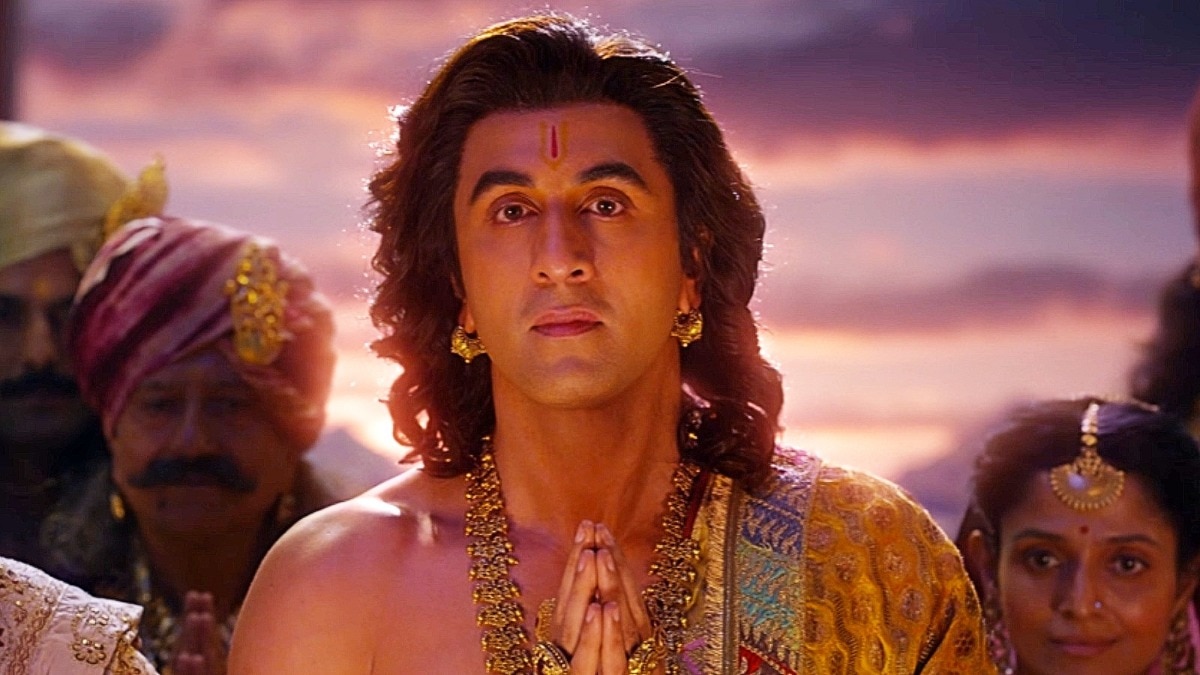
AR Rahman's latest song for Ramayana, Mangal Rang, has sparked two very different debates. Some listeners think it sounds too familiar, drawing comparisons with Kun Faya Kun from Rockstar and his Tamil song Enna Solla Pogirai. Others have questioned its perceived qawwali influences, asking whether that musical style fits a film about the Hindu epic.So, what exactly is the problem? Is it the music, its religious associations, or the enormous expectations surrounding Ramayana? Let's break it down.Composed by Rahman, sung by Shreya Ghoshal and Arijit Singh, and written by Kumar Vishwas, Mangal Rang celebrates the union of Rama and Sita, played by Ranbir Kapoor and Sai Pallavi. The video traces their relationship from the swayamvar to their wedding, with visuals that are as grand as one would expect from a film of this scale.Yet, the song's reception has been far from unanimous. Is Rahman sounding a little too familiar?One criticism is that Mangal Rang reminds listeners of Rahman's earlier work. For a composer whose music has shaped Indian cinema for decades, that raises a fair question: when does a recognisable musical sensibility start sounding repetitive? Does a song reminding us of something familiar automatically make it unoriginal, or does it depend on how the composition works within the story?That's one debate. The other is more complicated.Why are listeners hearing qawwali? Some listeners have pointed to the chorus, the repeated use of "rang" and the overall arrangement, saying these elements remind them of qawwali. The word has also prompted comparisons with Aaj Rang Hai, a well-known Sufi composition.Qawwali is rooted in Sufi devotional practice and can feature repeated refrains, group vocals and music that builds in intensity. But these elements are not exclusive to qawwali, and a song sounding qawwali-like to some listeners does not automatically make it a traditional qawwali.The lyrics offer another clue. Mangal Rang focusses on Rama and Sita's union, with references to sindoor, saubhagya and maryada. There is no obvious invocation of an Islamic deity or Sufi saint. The debate, then, is less about explicitly Islamic lyrics and more about the musical influences some listeners believe they hear.And that brings us to the bigger question: if the words celebrate Rama and Sita, does the musical style matter?For some viewers, it does. Ramayana is not just another story being adapted for cinema. For millions, it is sacred, deeply personal and woven into generations of faith. A song celebrating Rama and Sita's wedding may therefore be held to a different standard from an ordinary romantic number. These viewers may expect the music to reflect the religious and cultural traditions they associate with the epic.Others may see music as a creative language that can draw from different traditions without taking away from the story. Both perspectives are worth understanding, even if they lead to different conclusions. Are we scrutinising Ramayana too much?There is no denying that expectations are unusually high. Every casting choice, visual-effects shot, costume and now musical phrase is being examined before audiences have seen the film in full. The reported Rs 4,000-crore investment across the two parts, including release and promotional expenses, only adds to the anticipation.But does that mean the scrutiny is excessive? Not necessarily. The cultural significance of Ramayana gives people a reason to care about how it is represented. At the same time, judging an entire film through individual elements released ahead of its debut may not give its larger vision a fair hearing.Both things could be true: the makers must understand the weight of the story they are telling, and audiences can leave room for creative choices to make sense within the film itself.For now, Mangal Rang has opened up a conversation about musical originality, religious associations and what viewers expect from an adaptation of an epic they hold dear. Whether the song works for the film, and whether the criticism holds up once we see it in context, is something audiences will ultimately decide.Ramayana: Part 1 releases worldwide on November 5.- Ends
Ramayana song, qawwali claims and Rahman: Too much scrutiny or too much to dismiss?
Full Article
Original Source
Read the full article at Indiatoday →KhanList aggregates and links to publicly available news content. We do not host full articles from third-party sources. Always verify important information with original sources.