
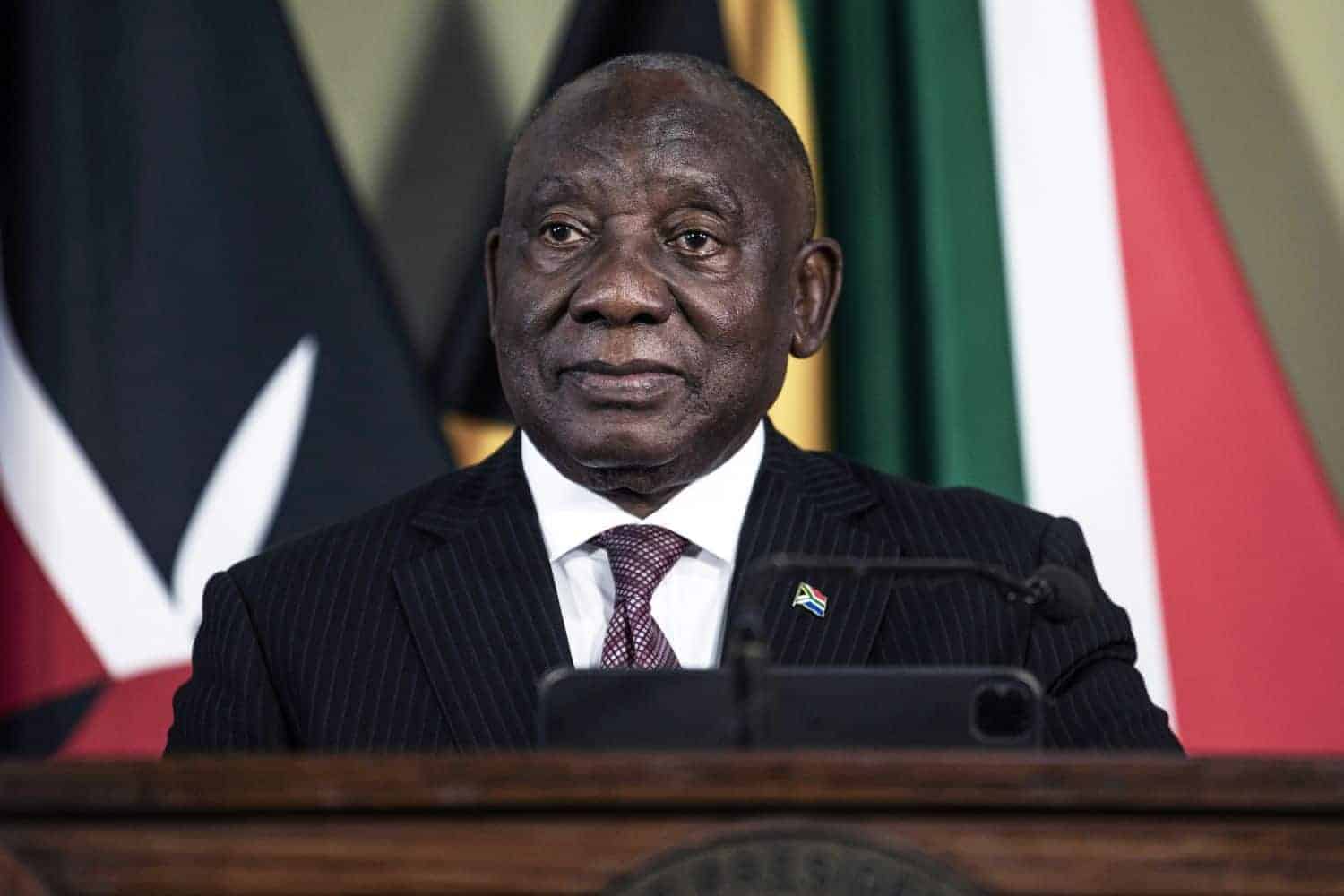
Ramaphosa tied his Heritage Day reflections to fresh tensions with Washington, after the US imposed visa restrictions President Cyril Ramaphosa has condemned lobby groups that peddle false narratives of African persecution abroad, warning that language which glorifies killing or stirs hostility is dangerous and irresponsible. Writing in his weekly newsletter on Monday, Ramaphosa tied his Heritage Day reflections to fresh tensions with Washington, after the US imposed visa restrictions on South African policymakers in mid‑September. Constitutional values Ramaphosa reminded South Africans that Heritage Day is not only about celebrating culture but also defending constitutional values. “Our greatest inheritance is not only language, tradition or custom, but the values of equality, dignity and non‑racialism. Heritage is not only what we celebrate. It is also what we defend,” he wrote. He stressed that the choice made in 1994 – to build one nation from diverse communities – must be renewed daily. He expressed “disappointment” in President Cyril Ramaphosa’s handling of relations, saying Washington has “run out of patience”. Violence against women He was blunt about the dangers of rhetoric that undermines unity. “We cannot allow violence against women to define who we are. The abuse, rape and killing of women is a stain on our national conscience,” he said. “We refuse to be defined by xenophobia and intolerance. Inflammatory statements about foreign nationals are dangerous and irresponsible.” White genocide The president linked his message to international developments, criticising those who spread claims of “white genocide” overseas. “At a time when unemployment is high, and we need to grow our economy and attract investment, travelling to foreign capitals to spread the falsehood of a ‘white genocide’ and discourage investment in one’s own country is neither responsible nor patriotic,” Ramaphosa said. Visa restrictions His remarks followed US Secretary of State Marco Rubio’s announcement of visa restrictions on South African officials accused of race‑based discrimination and uncompensated land seizures. The policy marked Washington’s sharpest rebuke yet of Pretoria’s handling of minority rights. Weeks into his second term, President Donald Trump announced that nearly all refugees admitted to the US would be White South Africans, radically reshaping a decades‑long programme that had largely served people fleeing war and persecution. Refugees By late June, more than 7,700 Afrikaners had been admitted, while pathways for other nationalities were largely shuttered. US ambassador Leo Brent Bozell III warned Pretoria that the visa restrictions were “just the beginning” and signalled “America’s firm resolve in this matter.” He said the visa restrictions announced by Washington are part of a broader process that began with President Donald Trump’s executive order in January 2025. “President Trump, in January of 2025, put forward the executive order, laying out what the issues were, in broad terms. It was the Afrikaner issue, and the attacks overall on rural farmers. “It was the growing hostility toward investments from the United States. And thirdly, it was the geostrategic issues, and the military issues, and the like,” Bozell said ‘Simple process’ He said the order was followed by months of dialogue throughout 2025, culminating in December with five specific asks from Washington. “In my meeting with President Ramaphosa, I tried to emphasise just how simple this process was. “The first ask was for government to leave the US refugee programme alone after a dispute in December. Asked and answered, done,” Bozell said. Land expropriation Bozell said the second dealt with expropriation without compensation. “To us, it would be a direct threat to investment in your country. In our country, you’ve got to have a justified expropriation, and then fair market compensation for it. Now, this one’s in the courts. People believe the courts are going to rule it unconstitutional, and that’s going to be the end of it.” Kill the Boer The third ask was for President Ramaphosa to condemn the “kill the boer” chant. “Kill the boer, kill the farmer” as incitement to violence. This is a concept that is endorsed by three‑quarters of the South African people. I’ve seen the polling data,” Bozell said. Pretoria has consistently rejected claims of systemic discrimination, with Ramaphosa insisting there is “no evidence of persecution against white people” and warning that narratives of white victimhood threaten post‑apartheid unity. Ramaphosa emphasised that measures to correct past injustices cannot be equated with apartheid oppression. “There is no moral equivalence between redress and discrimination. There is no equivalence between legitimate, constitutionally grounded measures of redress and the systematic racial oppression of apartheid,” he declared. Bozell stressed that the demands were straightforward and aimed at addressing Trump’s concerns over rural safety, investment security, and broader strategic issues. Vigilance He urged vigilance against divisive rhetoric. “We must guard against words and actions that polarise communities, inflame public opinion and reopen the wounds of our past. Freedom of expression comes with responsibility.” The announcement is likely to deepen diplomatic strain between Washington and Pretoria, already at odds over land reform and South Africa’s genocide case against Israel.
Ramaphosa blasts white genocide lobbying, warns against language that glorifies killing
Full Article
Original Source
Read the full article at Citizen →KhanList aggregates and links to publicly available news content. We do not host full articles from third-party sources. Always verify important information with original sources.