
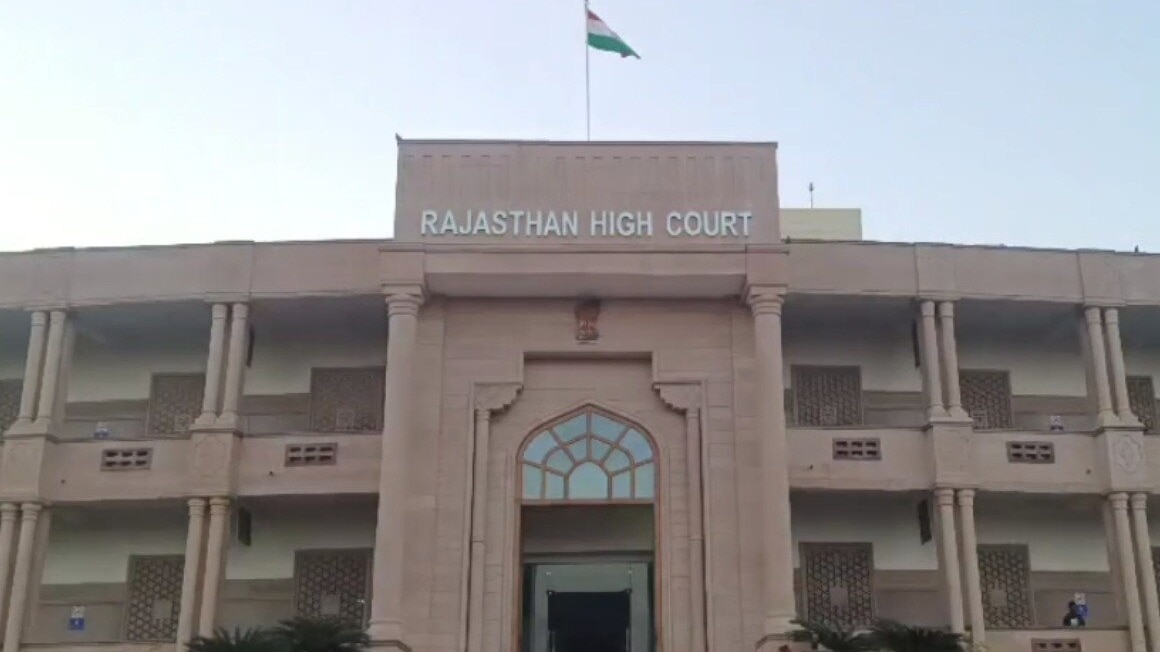
The Rajasthan High Court has widened a case to address junk food, screen time, paper leaks and school gaps – issues of Gen Z, Gen Alpha and Gen Beta. The intervention pushes the state to protect students' health, learning and trust in education.On Monday, the Rajasthan High Court issued a series of directions, including a ban on the sale of high-fat, high-sugar and high-salt food items in school canteens and within 50 metres of school gates. (File photo)The Rajasthan High Court in Jodhpur has taken note of a range of concerns affecting Gen Z, Gen Alpha and Gen Beta, including junk food in and around schools, rising screen time, repeated paper leaks, weak infrastructure in rural schools and the possible decline of basic learning skills in the age of artificial intelligence.On Monday, a single bench of Justice Anoop Kumar Dhand issued a series of directions, including a ban on the sale of high-fat, high-sugar and high-salt food items in school canteens and within 50 metres of school gates. The ban covers carbonated drinks, chips, bakery products containing trans fats and other junk food.The court directed every school to set up a School Food Safety and Nutrition Committee within four weeks, with teachers, parents and student representatives as members. Details of these committees must be uploaded on the Education Department website.Within eight weeks, school canteens have also been asked to display menu boards showing the calorie count, ingredients and nutritional value of food items, and to introduce a traffic-light labelling system. Notices were issued to departments handling health, education, public distribution and consumer affairs, along with the state chief secretary, asking them to respond within eight weeks on the directions.The state government has also been told to file an affidavit within six weeks on the steps taken to implement the 2020 regulations on safe and balanced food in government, aided and private schools. The court said mid-day meals and other nutrition schemes must follow FSSAI guidelines on a balanced diet, and ordered the creation of a dedicated portal and helpline for complaints related to food safety violations. The bench also expressed concern over growing mobile screen time among children and excessive dependence on technology. While noting that AI and digital learning are important for preparing students for global competition, it said technology should not replace basic learning skills.The court stressed the need to preserve handwriting, book reading, note-making, independent thinking and written examinations, while maintaining a balance between digital education and traditional learning methods. It also flagged repeated paper leaks, saying they affect students' mental health and academic schedules and weaken public confidence in the examination system, and called for a foolproof mechanism to prevent them.The court further directed authorities to address gaps in rural and remote government schools, including vacant teacher posts, smart classrooms, computers, internet connectivity, health check-ups, toilets, drinking water and sports facilities.District collectors have been asked to carry out surprise inspections of rural schools and submit reports within eight weeks, while a quarterly monitoring cell headed by the chief secretary will oversee compliance.The bench also asked the Centre and the state government to prepare a plan on Gen Z-related challenges such as the education-employment gap, social security for gig workers, affordable hostels and housing, digital detox programmes, data privacy and cyber security.Advocates have been appointed as amici curiae to assist the court, and the matter will now be placed before the acting chief justice for listing before an appropriate bench.- EndsPublished By: India Today Web Desk Published On: Aug 25, 2026 13:10 IST
Rajasthan HC takes up Gen Z, Gen Alpha concerns, bans junk food near schools
Full Article
Original Source
Read the full article at Indiatoday →KhanList aggregates and links to publicly available news content. We do not host full articles from third-party sources. Always verify important information with original sources.